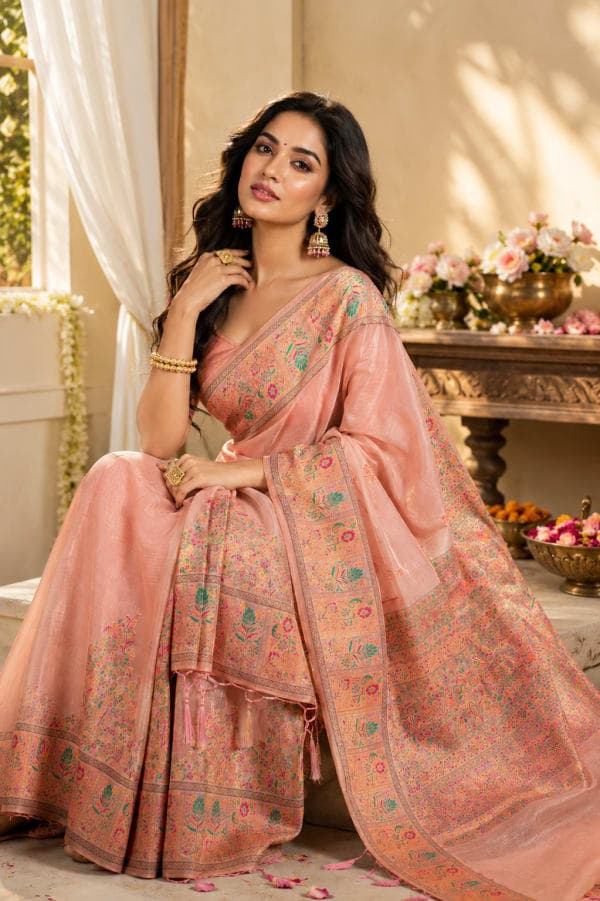
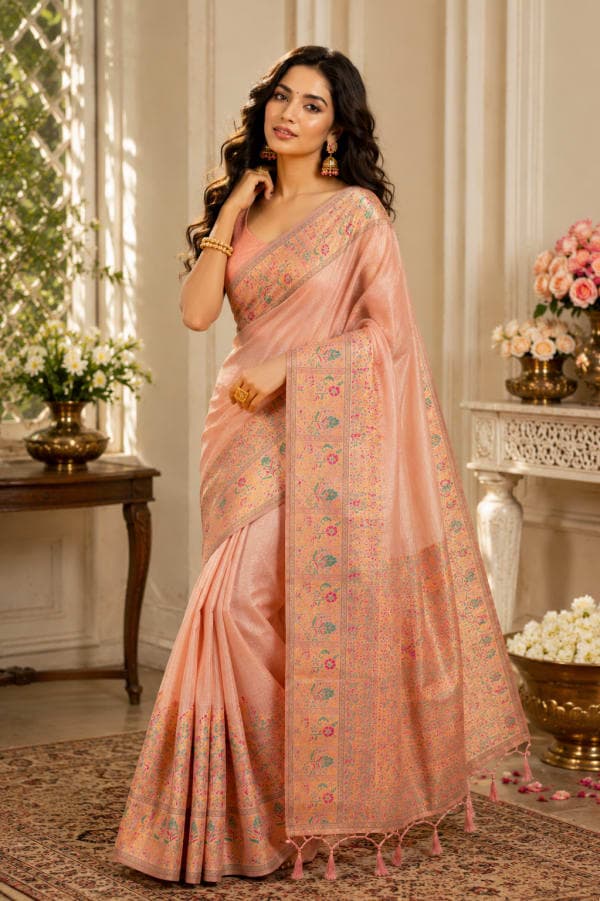
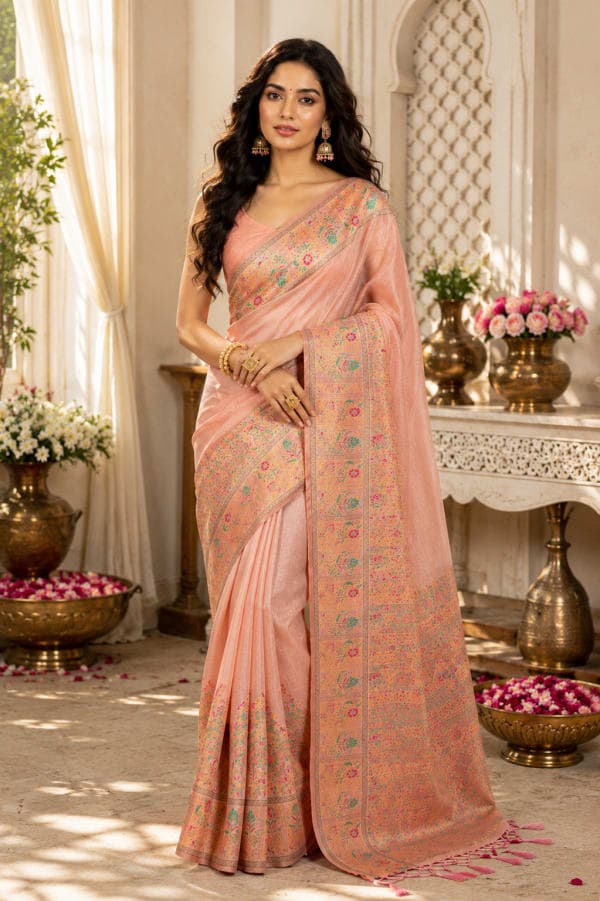
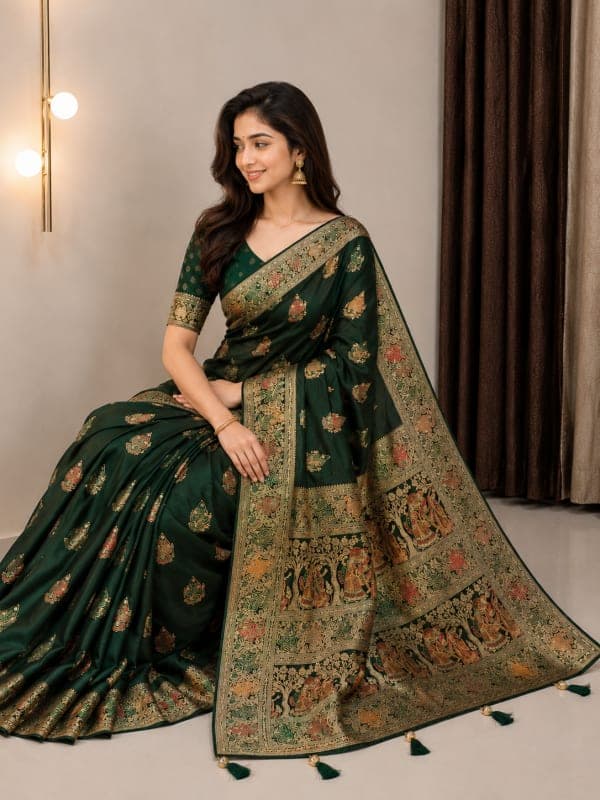
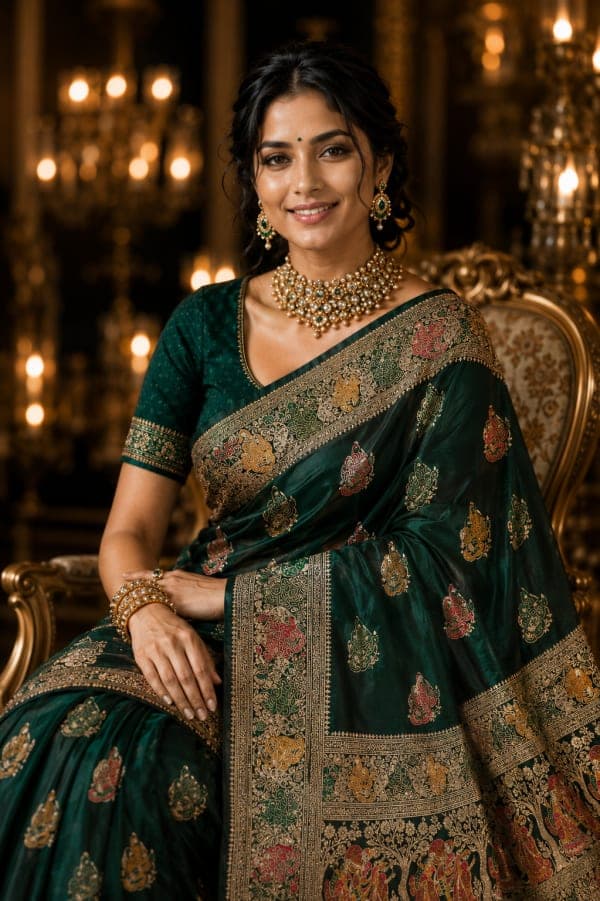
How Much Does a Good Saree Cost in India in 2026?
Understand saree pricing in India in 2026 by comparing fabric, weaving, craftsmanship, zari, embroidery, brand positioning and occasion.
Read Article

Luxury Saree Atelier
Dev Deepawali Saree Shopping Guide 2026: How to Choose the Right Fabric, Quality, Design and Budget
Buying a saree for a festival can be an enjoyable experience, but choosing the right one requires careful consideration.
Dev Deepawali is a special occasion associated with traditional celebrations, family gatherings and the illuminated ghats of Varanasi. Many women prefer wearing a beautiful saree for the festival, whether they are attending a home celebration or an evening gathering.
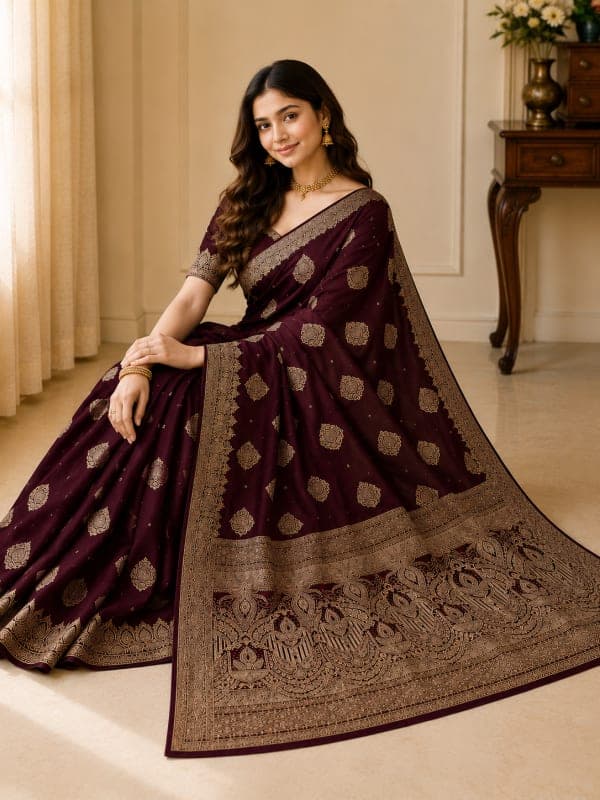
The saree market offers a wide variety of options, from Banarasi silk and traditional silk to organza, tissue, Chanderi and cotton silk.
However, a beautiful photograph does not always tell you everything about a saree. Fabric composition, weaving quality, zari, length, blouse-piece details and care requirements all matter.
This buying guide explains what to check before purchasing a saree for Dev Deepawali.
Before browsing sarees, think about the type of celebration you are attending.
For a traditional family function, you may prefer Banarasi silk or a rich traditional saree.
For a simple home celebration, a lightweight silk or cotton-silk saree may be sufficient.
For an evening event, tissue and organza can offer a luminous appearance.
For a long celebration involving walking and standing, a manageable fabric may be more practical.
Understanding the occasion helps narrow down your options.
Different fabrics create different appearances and require different levels of care.
A traditional option known for decorative weaving and elaborate designs.
Suitable for women who prefer a rich festive appearance.
Offers a classic look and is available in many colours and weaving styles.
A lightweight and structured option that can feature embroidery and decorative borders.
Known for its characteristic sheen and festive appearance.
A delicate traditional option that may be easier to manage than some heavy sarees.
A practical option for women who prefer a relatively simple traditional look.
Always check the actual material composition before buying.
Product descriptions can sometimes use similar-sounding terms for different materials.
For example, pure silk, silk blend, art silk and cotton silk are not identical.
Ask the seller for the actual composition rather than relying only on a marketing description.
If a product is advertised as pure silk, check whether the seller provides relevant product information or certification where applicable.
Do not assume that a shiny appearance means the saree is made from pure silk.
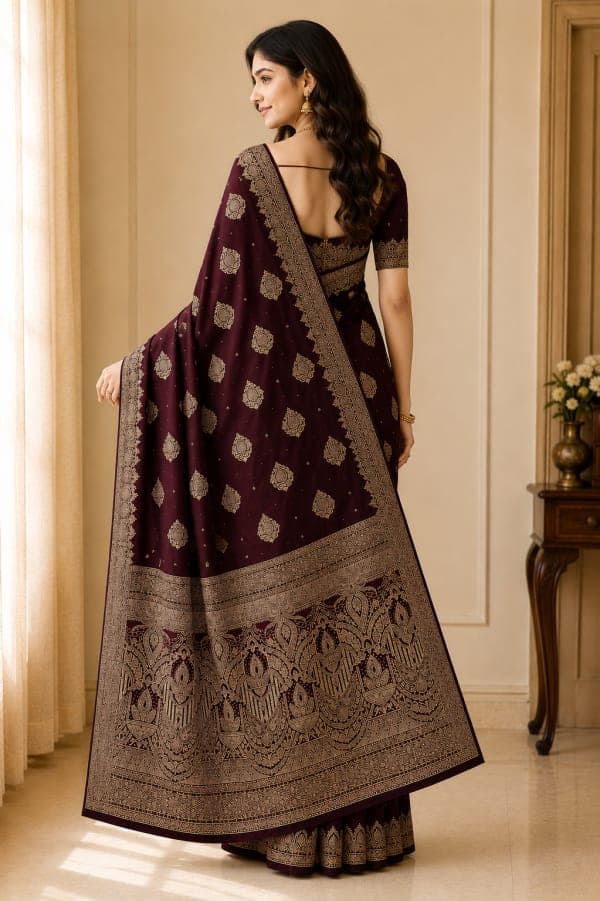
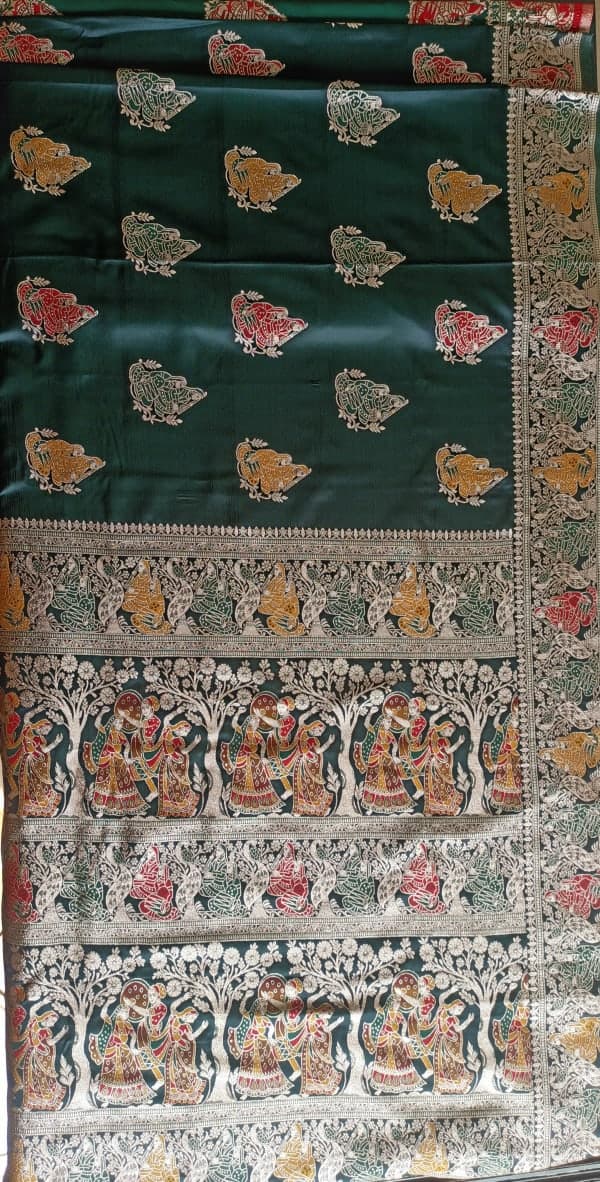
Banarasi sarees are valued for their weaving and traditional design details.
When buying one, examine:
Ask whether the saree is handwoven or made using another production method if that distinction matters to your purchase.
A seller should be able to explain the product accurately.
Zari is a decorative element found in many traditional sarees.
However, different sarees may use different types of metallic or imitation threads.
Before purchasing, ask:
Do not assume that every golden border has the same material or craftsmanship.
A saree purchased for one festival can become a useful part of your wardrobe.
Instead of selecting a colour only because it is popular, think about how often you might wear it.
Classic red, green and maroon sarees can work for several traditional occasions.
Pink and royal blue can offer versatility for festive gatherings.
Gold, champagne and ivory can be styled for formal events.
Choose a shade that suits your personal preference and can be combined with different blouse designs.
Saree length is an important purchasing detail.
Before ordering, check:
Do not assume every saree includes a ready-to-stitch blouse piece.
If you need a particular blouse design, confirm the available fabric before purchasing.
A good purchase is not necessarily the most expensive one.
Set a budget before shopping and compare sarees based on their material, design and construction.
For a lower budget, consider simple cotton silk, lightweight blends or printed festive sarees.
For a mid-range budget, explore organza, tissue and selected traditional woven designs.
For a premium purchase, consider well-documented silk sarees and traditional weaving.
The actual price depends on fabric, craftsmanship, design and seller.
Avoid comparing sarees only by appearance. Two similar-looking sarees may differ considerably in material and construction.
Online shopping provides access to a wide variety of designs, but it also requires careful checking.
Before placing an order:
Read the product description: Confirm the fabric and design details.
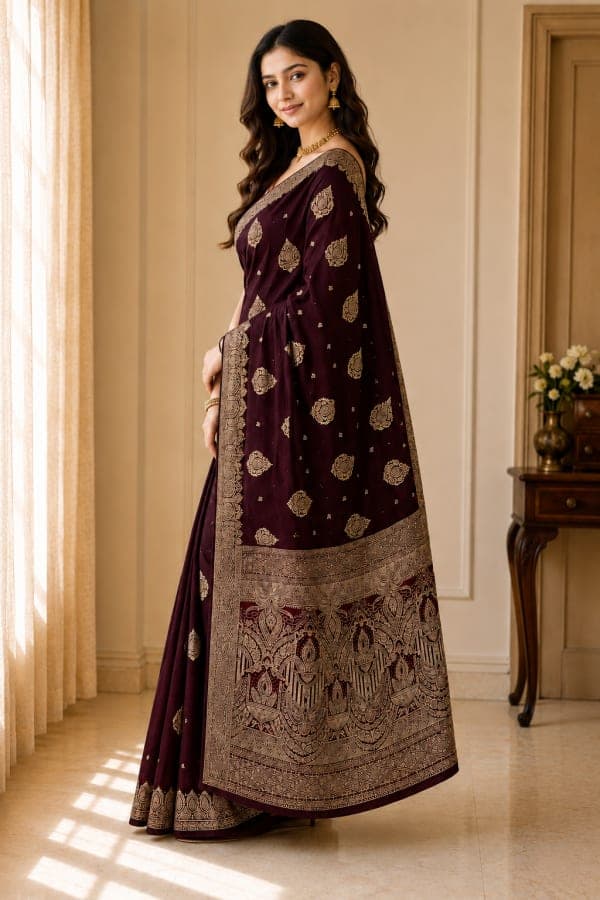
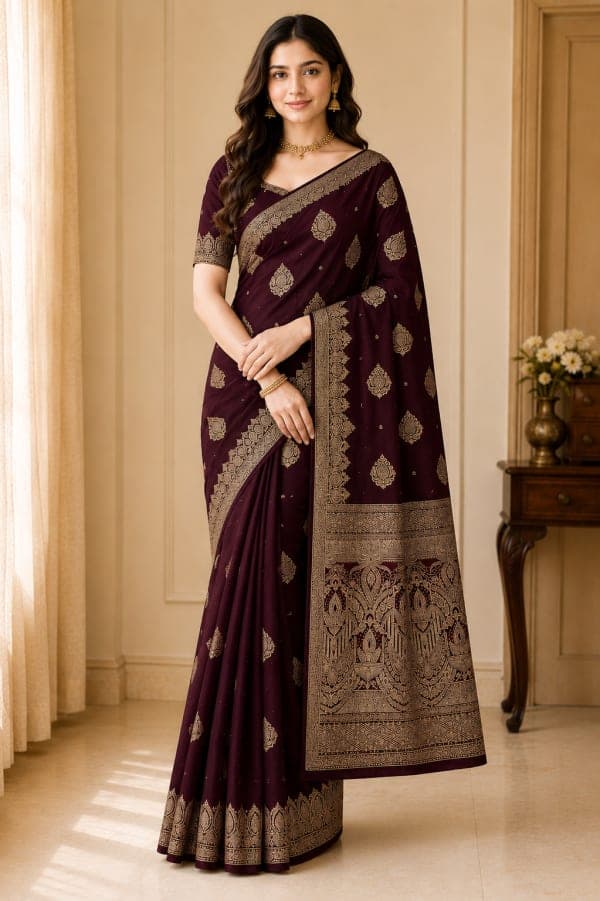
Check multiple photographs: Examine the border, pallu, body and blouse piece.
Review the measurements: Confirm the length and width.
Check the return policy: Understand the conditions before ordering.
Look for seller information: Choose a seller that provides clear product details.
Ask questions: If the composition or design is unclear, request clarification.
Review colour information: Screen settings and photography can affect how colours appear.
These steps can help reduce misunderstandings after delivery.
Some common mistakes include purchasing only because a saree looks attractive in a photograph, ignoring fabric composition, overlooking the blouse piece and failing to check measurements.
Another mistake is choosing a very heavy saree without considering the duration of the event.
Avoid rushing your purchase. Compare available options and understand what you are buying.
Consider how long you will wear it.
A heavy saree may be suitable for a short family function but less convenient for an event involving extended walking.
A lightweight saree may be more practical for an evening spent moving between locations.
Consider the weather, footwear, blouse fit and jewellery before making a final decision.
Once the celebration is over, store your saree correctly.
Follow the manufacturer's cleaning instructions.
Do not store a saree while it is damp.
Keep delicate fabrics away from excessive sunlight and moisture.
Avoid using harsh cleaning products on zari or embroidery.
Refold stored sarees periodically and use professional cleaning when recommended.
Good storage helps maintain the fabric and appearance.
Before completing your purchase, verify:
A little preparation can help you choose a saree that meets your expectations.
Banarasi silk, traditional silk, organza, tissue and Chanderi are all possible choices.
Read the fabric description, examine product photographs, verify measurements and ask the seller for missing details.
It can be a worthwhile purchase if you value its design and craftsmanship and choose a product that suits your budget.
Check fabric composition, weaving, finishing, zari, length and care instructions.
It depends on the celebration. For long events or walking, a lighter saree may be more practical.
A thoughtful saree purchase begins with understanding your needs.
For Dev Deepawali, choose a saree that matches the celebration, suits your personal style and feels comfortable to wear.
Look beyond photographs and marketing descriptions. Check the fabric, weaving, zari, measurements, blouse-piece details and care instructions.
A well-selected saree can become a valuable part of your wardrobe and remain useful for many festive occasions.
How Much Does a Good Saree Cost in India in 2026?
Understand saree pricing in India in 2026 by comparing fabric, weaving, craftsmanship, zari, embroidery, brand positioning and occasion.
Read ArticleSaree Shopping Guide 2026: 15 Things to Check Before Buying Online
Use this 2026 saree shopping checklist before buying online. Learn what to check for fabric, measurements, blouse piece, pallu, colour, return policy and product details.
Read ArticleHow to Buy a Saree Online in 2026: Complete Buyer Checklist
Use this complete online saree buying checklist to evaluate fabric, measurements, blouse piece, colour, price and return policies.
Read Article