

How Much Does a Good Saree Cost in India in 2026?
Understand saree pricing in India in 2026 by comparing fabric, weaving, craftsmanship, zari, embroidery, brand positioning and occasion.
Read Article

Luxury Saree Atelier
Should You Choose a Saree With Heavy Embroidery or Woven Motifs?
When shopping for a premium saree, decorative details can strongly influence your choice.
Some sarees feature intricate embroidery, with decorative threads and embellishments added to the fabric. Others have motifs created directly through the weaving process.
Both can produce beautiful results, but they offer different textures, appearances and maintenance requirements.
If you are comparing an embroidered saree with one featuring woven motifs, it is important to understand how each is made and what you should check before buying.
This guide explains the differences and helps you decide which option suits your preferences and occasion.
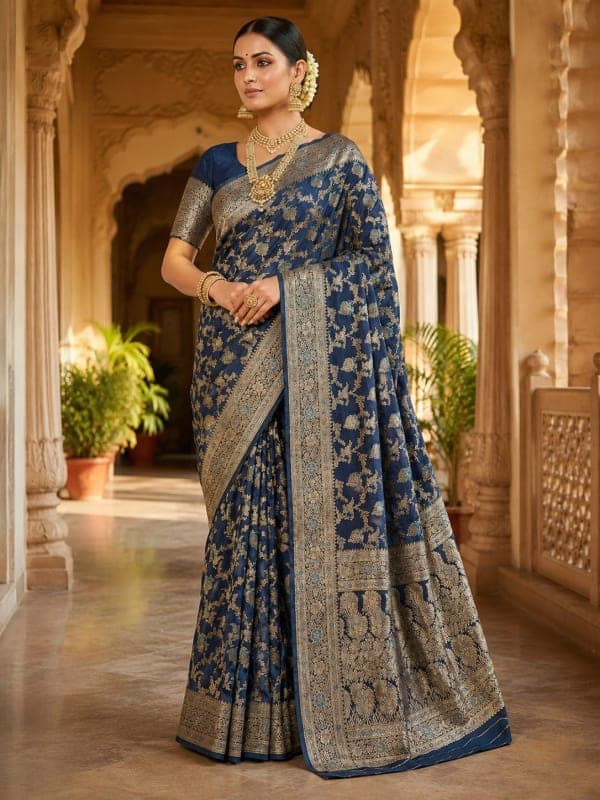
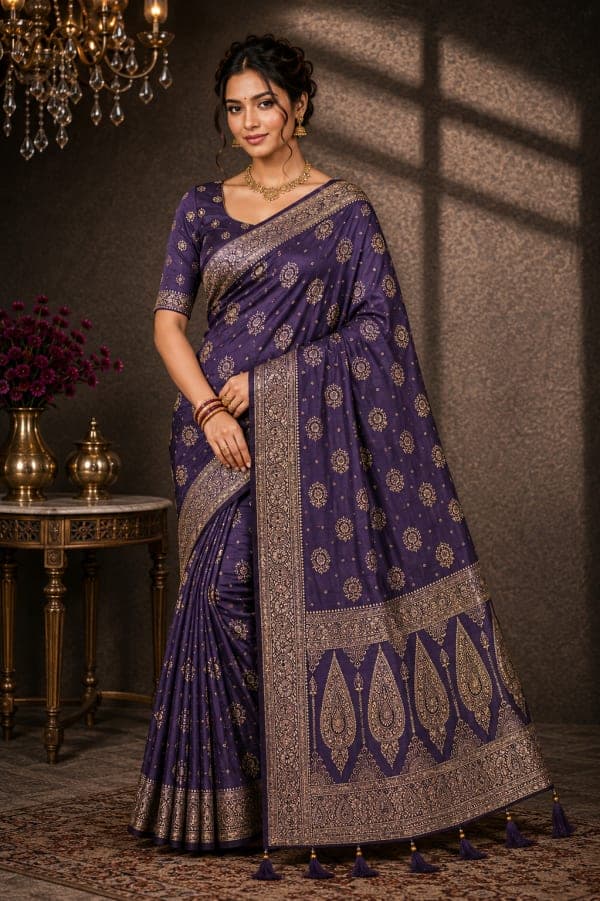
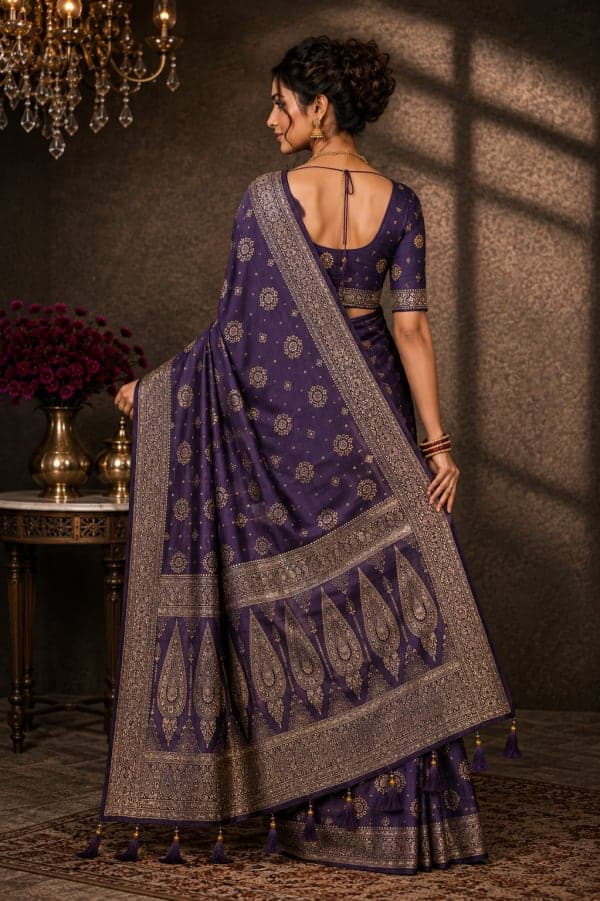
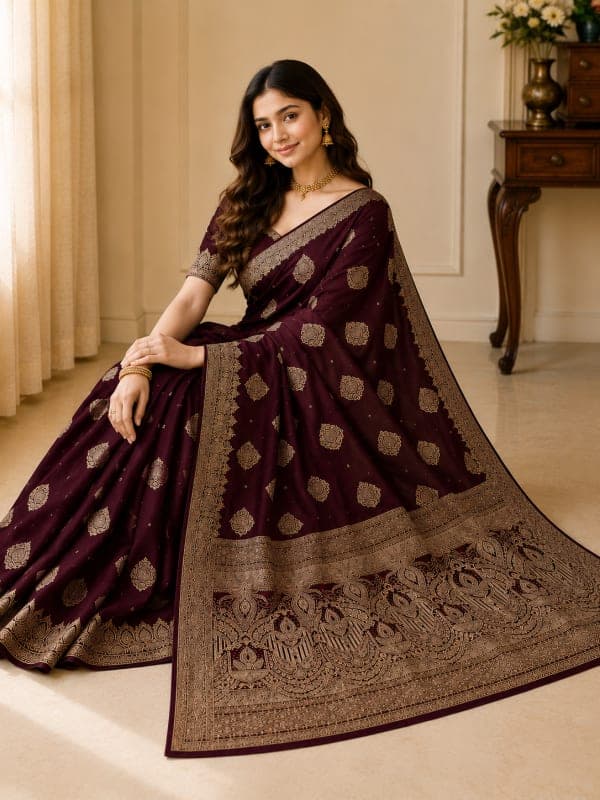
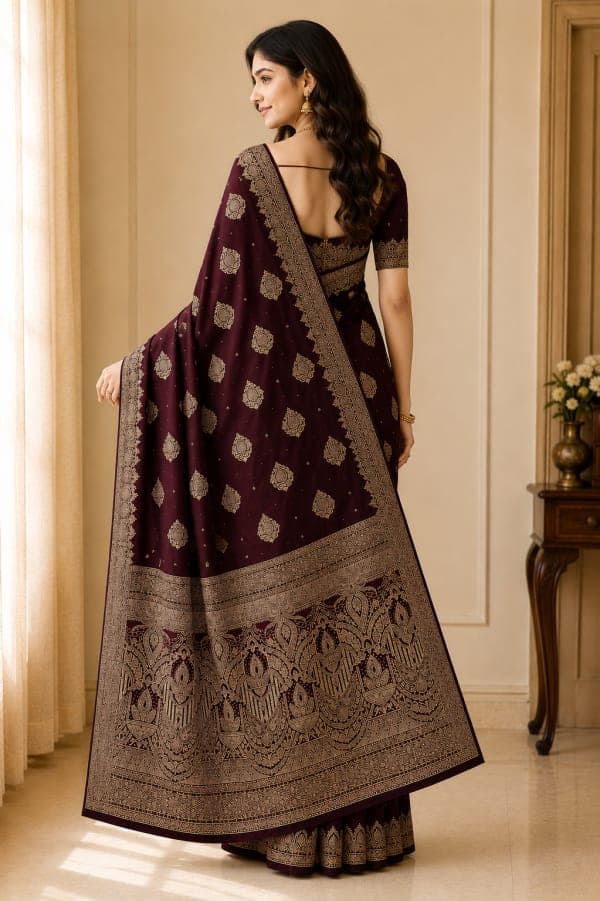
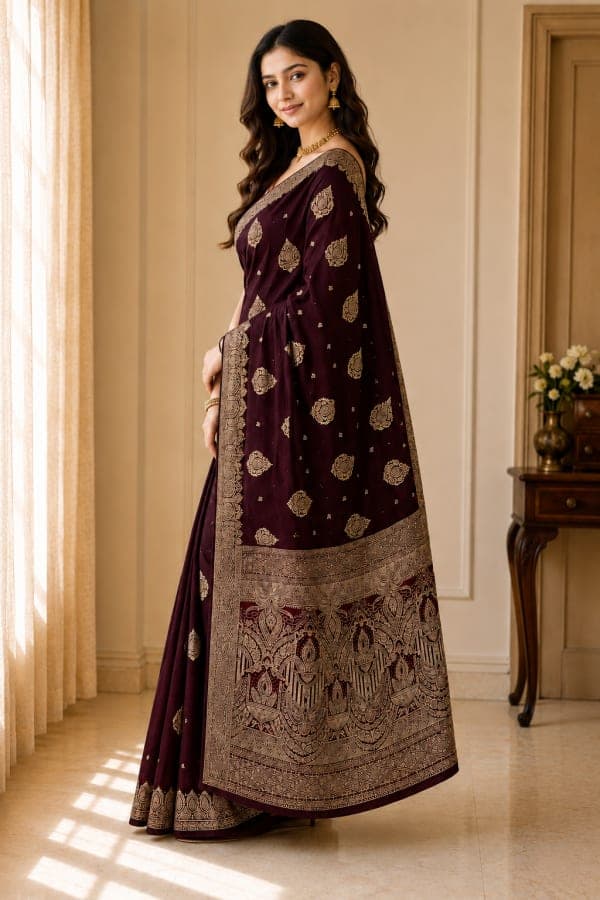
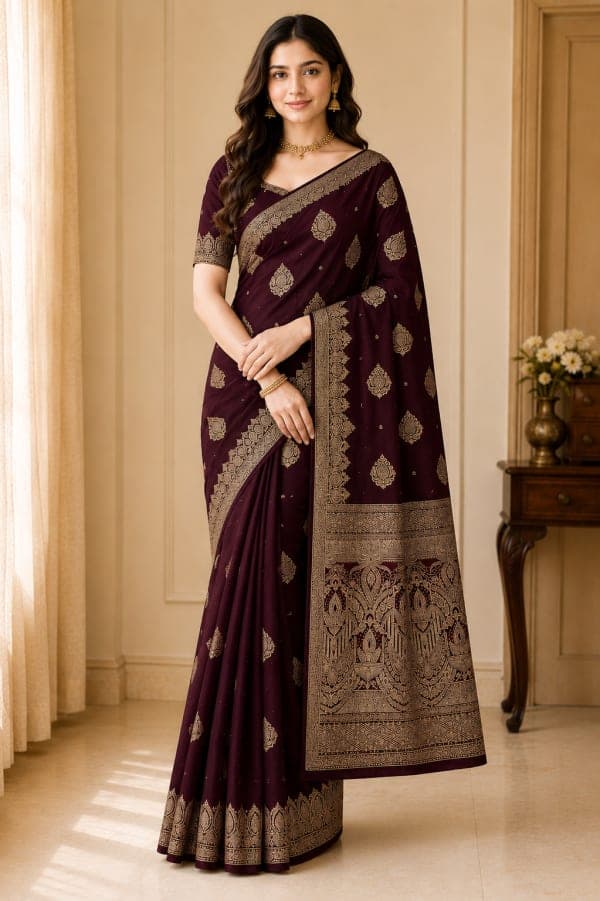
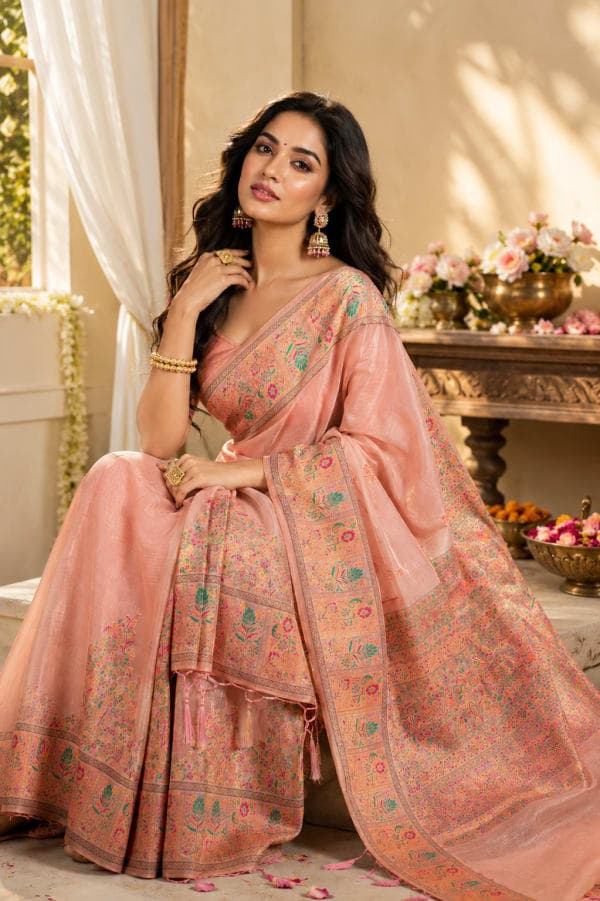
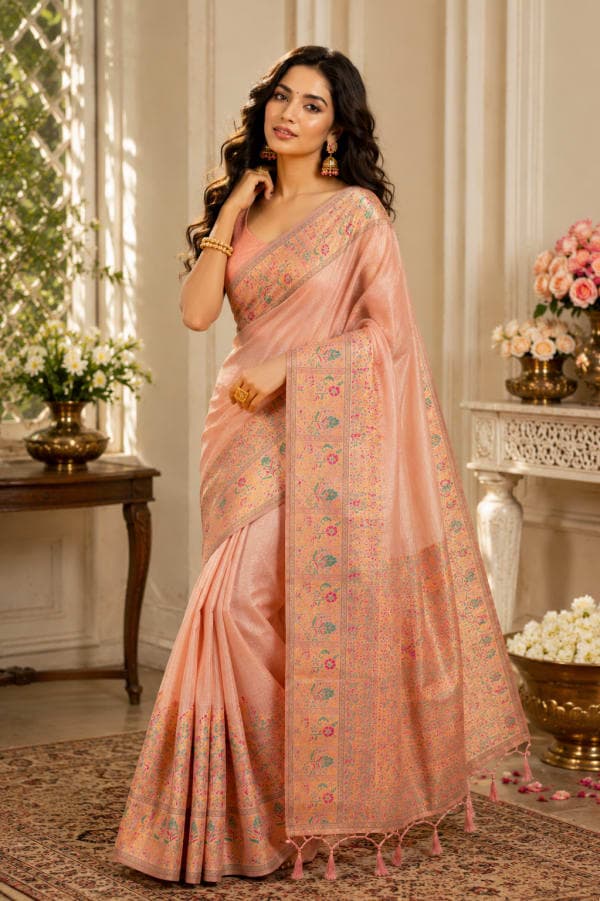
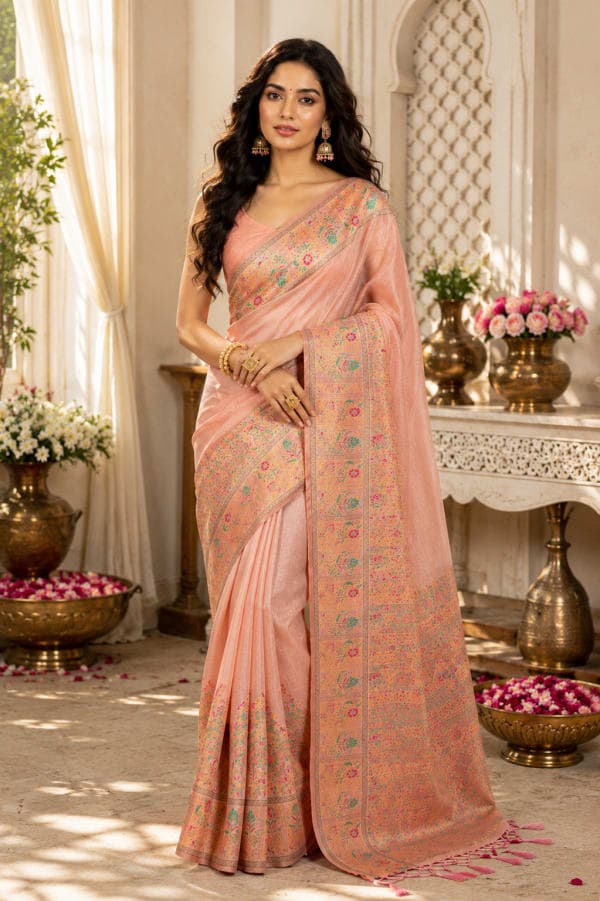
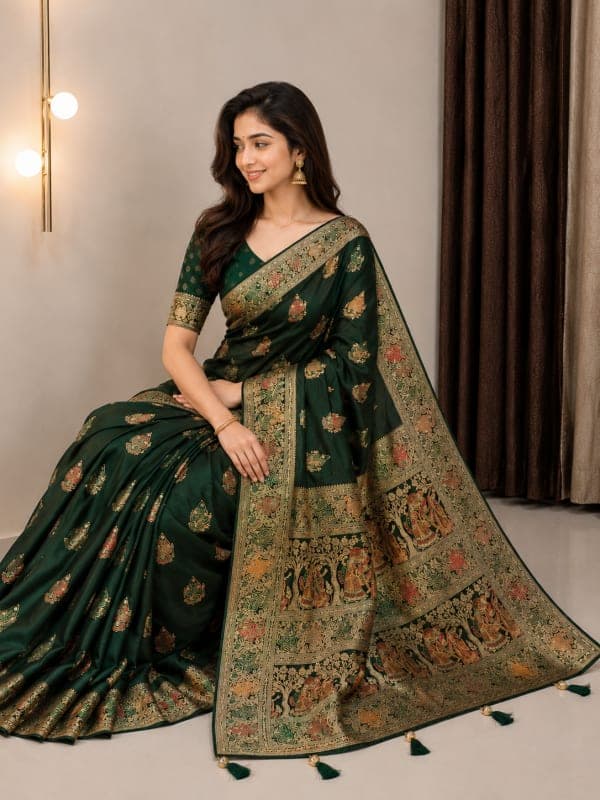
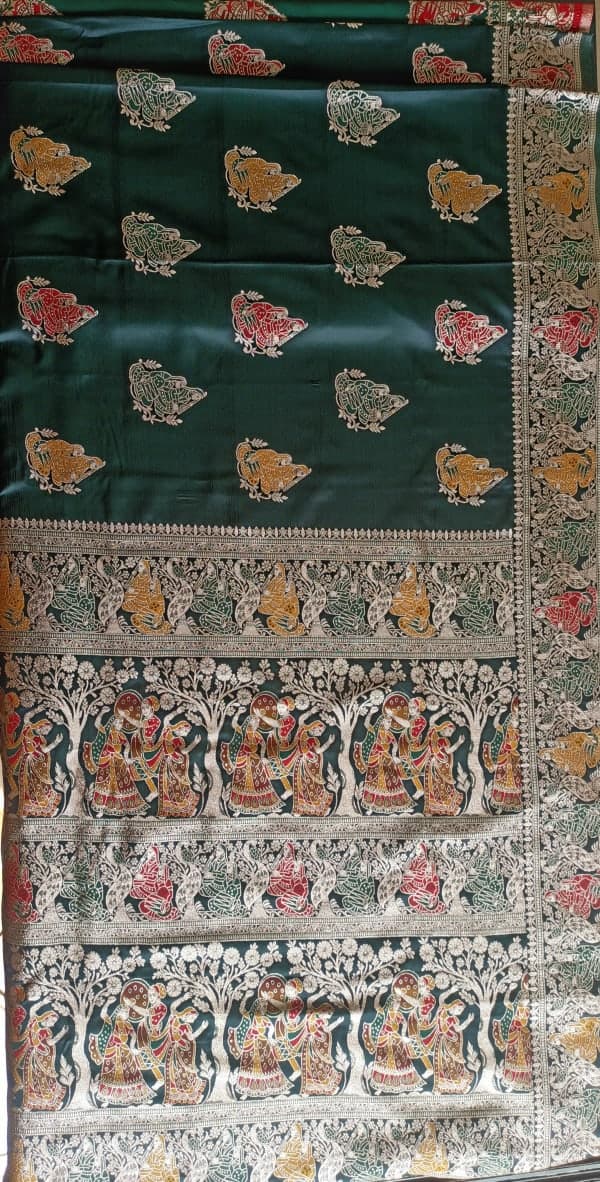
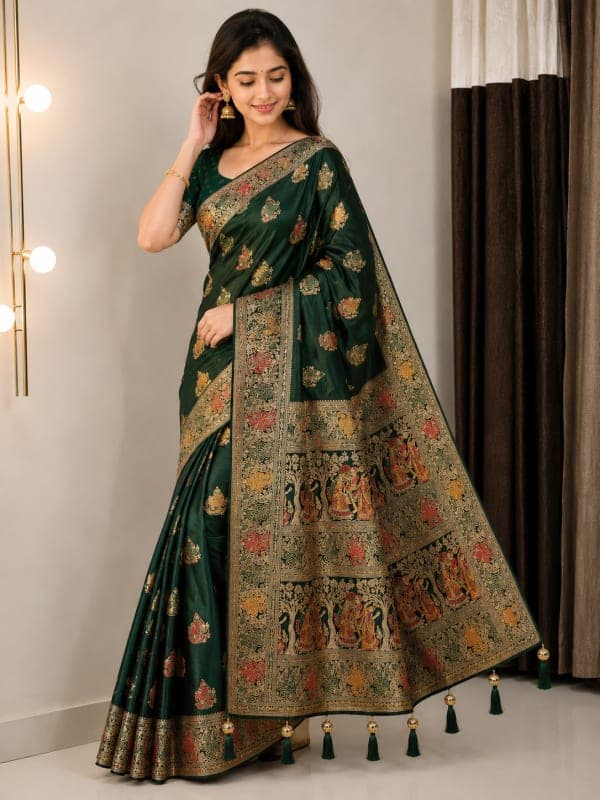
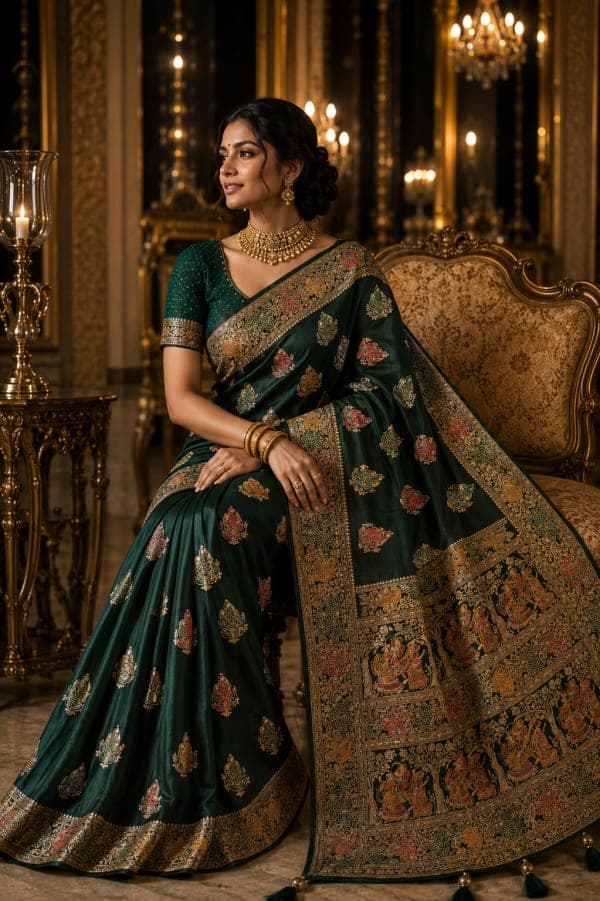
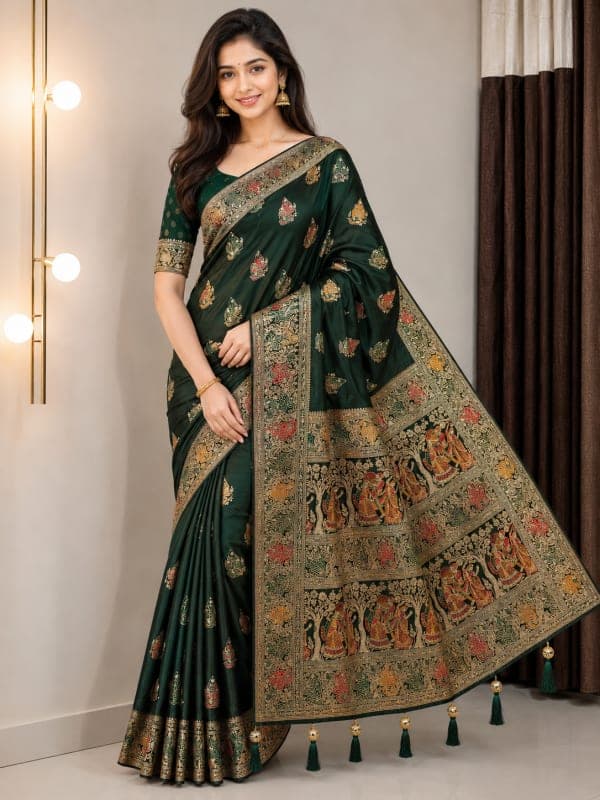
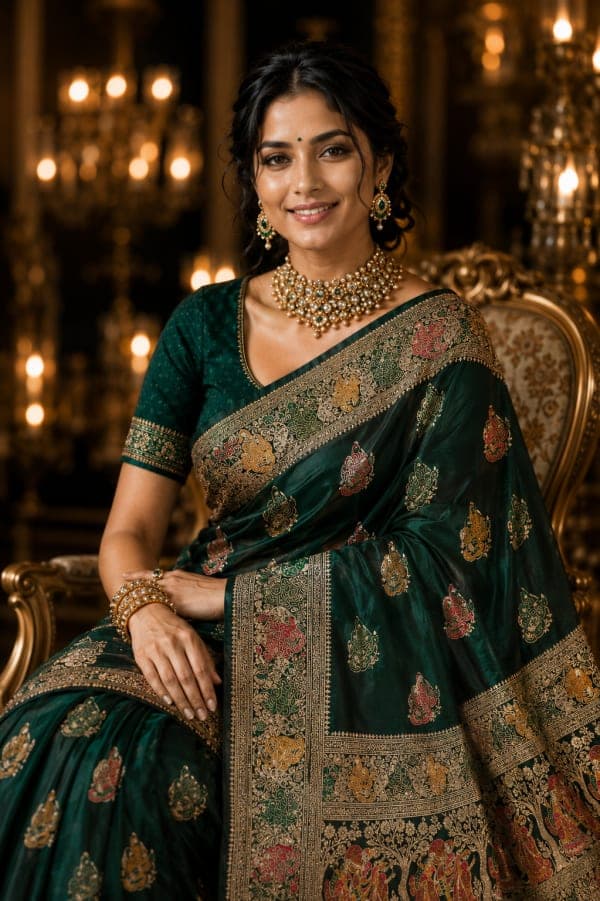
Woven motifs are patterns created during the weaving process.
The design is incorporated into the fabric structure using the arrangement of yarns.
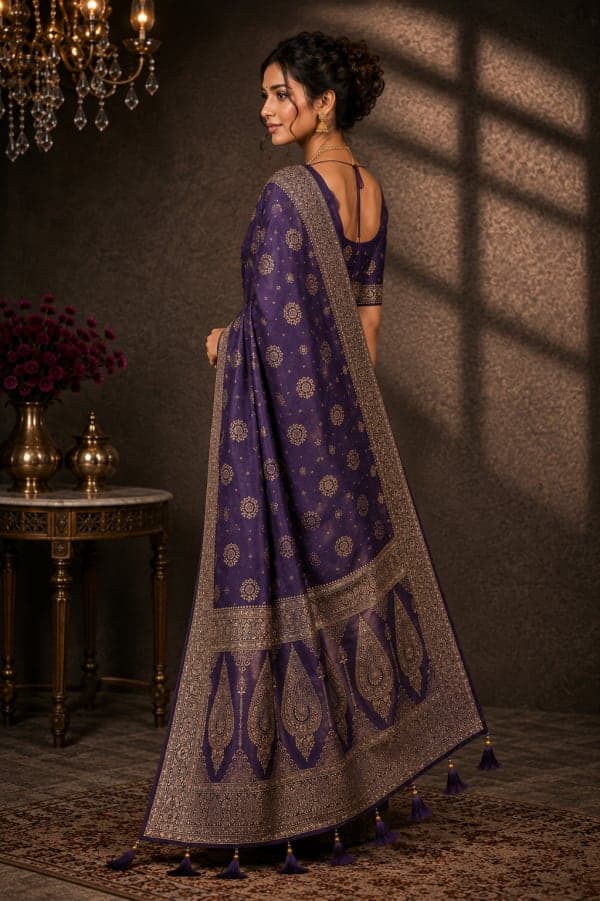
Depending on the weaving technique, motifs may appear across the body, border or pallu.
Some woven designs are relatively simple, while others require detailed planning and skilled workmanship.
Traditional sarees often feature woven floral patterns, geometric designs, paisley-inspired motifs and other decorative elements.
Because the design is part of the fabric construction, woven motifs may have a different texture and appearance from surface embroidery.
Embroidery involves adding decorative threadwork or other embellishments to a fabric surface.
Depending on the technique, embroidery may be done by hand or machine.
An embroidered saree can feature:
The amount and type of embroidery can vary considerably.
A lightly embroidered saree may have subtle details, while a heavily embroidered design can cover substantial portions of the fabric.
Always check what materials have been used and how the decorative elements are attached.
Woven motifs and embroidery can create different visual effects.
Woven patterns are integrated into the fabric. They may appear subtle, textured or highly detailed depending on the weave and yarn.
They can create a cohesive appearance across the saree.
Embroidery can introduce raised textures, additional colours and decorative depth.
It may stand out more prominently from the base fabric.
The choice depends on the appearance you prefer.
If you like a design that feels integrated with the fabric, woven motifs may appeal to you.
If you prefer visible decorative detailing and textured embellishment, embroidery may be a better choice.
Both methods can involve significant skill.
Woven motifs may require specialised weaving knowledge and careful control over the pattern.
Embroidery may involve detailed handwork or machine-assisted processes.
The time and effort required depend on the complexity of the design.
Do not assume that every embroidered saree involves hand embroidery or that every woven motif represents traditional handloom work.
Ask the seller to explain the production method.
Important questions include:
These details help you compare products accurately.
Woven and embroidered sarees can feel different when worn.
A woven motif may change the texture of the fabric without adding separate surface embellishments.
Embroidery can create raised areas, particularly when the design includes dense threadwork, beads or sequins.
However, the overall comfort depends on the base fabric, weight, lining and construction.
When evaluating a saree, consider:
If possible, examine the saree in person or request a close-up video.
Maintenance is an important factor when choosing a heavily decorated saree.
The care requirements depend mainly on the fabric and weaving construction.
A woven silk saree may require delicate handling and professional cleaning.
Embroidery can require additional care, particularly when it includes delicate threads, beads or sequins.
Some decorative elements may be sensitive to friction, moisture or improper handling.
Before buying, ask the seller for specific instructions.
Do not assume that a woven saree is always easier to maintain or that every embroidered saree is difficult to clean.
The actual fabric and decorative materials determine the care requirements.
Both options can work beautifully for weddings.
A saree with woven motifs may appeal to buyers who prefer traditional patterns and a cohesive textile appearance.
An embroidered saree may suit buyers who want prominent decorative details and a statement look.
Consider the function and the overall outfit.
For a traditional ceremony, you may prefer woven patterns that complement the event.
For a reception or contemporary celebration, an embroidered design may suit your preferred aesthetic.
These are suggestions rather than strict rules. Either type can work for different wedding functions.
The price of a saree depends on more than whether it is embroidered or woven.
Factors include:
A complex woven saree can be expensive because of its weaving process.
A heavily embroidered saree may cost more because of the additional decorative work.
Compare the actual construction rather than assuming one technique is always more valuable.
Before buying, check:
If the saree is advertised as handwoven, ask for supporting details about its production.
Pay particular attention to the decorative elements.
Check:
Ask for close-up photographs of the embroidery.
If possible, request a video showing the fabric moving naturally.
The amount of decoration does not automatically determine craftsmanship or value.
Woven patterns can be produced using different methods. Verify the production process.
The underlying fabric is just as important as the decorative work.
Understand how the saree should be cleaned and stored.
Two sarees may look similar from a distance but differ in construction and materials.
| Factor | Woven motifs | Embroidery |
|---|---|---|
| How design is created | Integrated during weaving | Added to the fabric surface |
| Texture | Depends on weave and yarn | May be raised or textured |
| Design possibilities | Depends on weaving technique | Wide range of decorative work |
| Weight | Depends on base fabric and weave | Can increase with dense embellishment |
| Maintenance | Fabric-dependent | Fabric and embellishment-dependent |
| Production | Weaving process | Hand or machine embroidery |
| Appearance | Integrated textile pattern | Decorative surface detail |
Choose a saree with woven motifs if you prefer:
Consider an embroidered saree if you prefer:
You may also find sarees that combine both techniques. These can feature woven fabric with additional embroidery on selected areas.
Woven motifs and embroidery offer different approaches to saree design.
Woven motifs are created as part of the fabric structure, while embroidery adds decorative work to the surface.
Neither is automatically better. The right choice depends on the appearance, texture, comfort, maintenance and craftsmanship you value.
Before purchasing, examine the base fabric, verify how the design is produced and check the quality of the finishing.
A well-chosen saree should appeal to you not only in photographs but also in its construction and wearing experience.
Not universally. Woven motifs are integrated into the fabric, while embroidery adds surface decoration. The better choice depends on your preferences and the quality of the product.
No. Embroidery can be done by hand or machine. Ask the seller which technique has been used.
Not necessarily. Weight depends on the base fabric, weave and amount of decorative work.
Both can be suitable. Choose according to the occasion, design preference and comfort.
Look at close-up photographs and ask whether the design is integrated during weaving or added later through embroidery or printing.
Some do, particularly those with delicate threads, beads or sequins. Follow the care instructions for the specific fabric and embellishments.
How Much Does a Good Saree Cost in India in 2026?
Understand saree pricing in India in 2026 by comparing fabric, weaving, craftsmanship, zari, embroidery, brand positioning and occasion.
Read ArticleSaree Shopping Guide 2026: 15 Things to Check Before Buying Online
Use this 2026 saree shopping checklist before buying online. Learn what to check for fabric, measurements, blouse piece, pallu, colour, return policy and product details.
Read ArticleHow to Buy a Saree Online in 2026: Complete Buyer Checklist
Use this complete online saree buying checklist to evaluate fabric, measurements, blouse piece, colour, price and return policies.
Read Article