


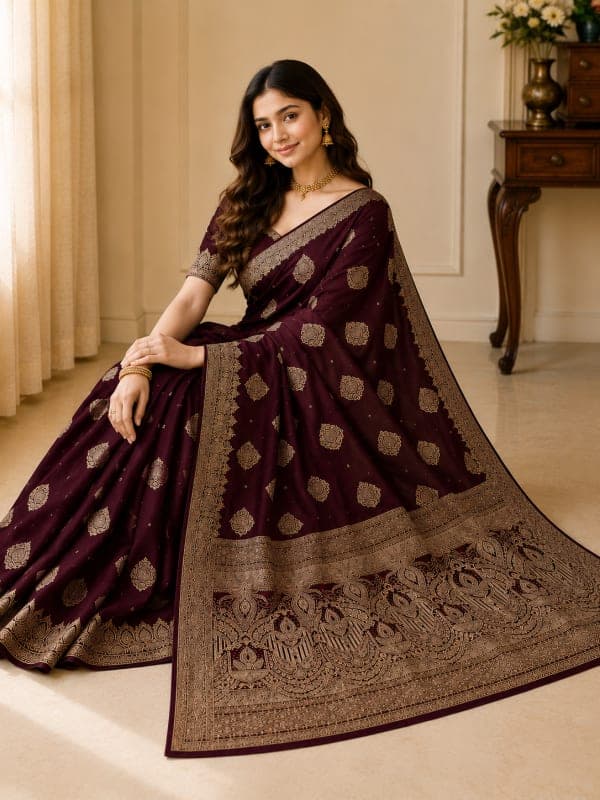
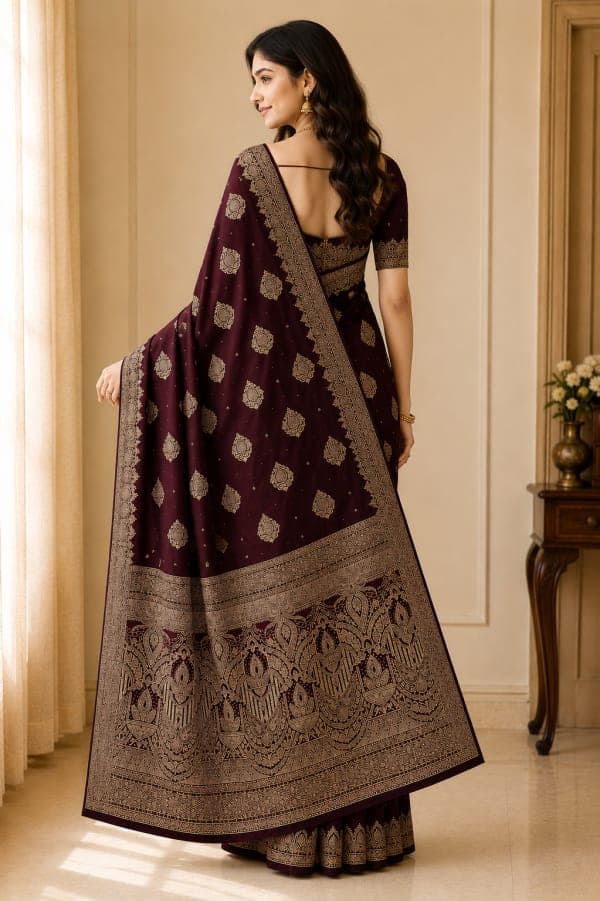
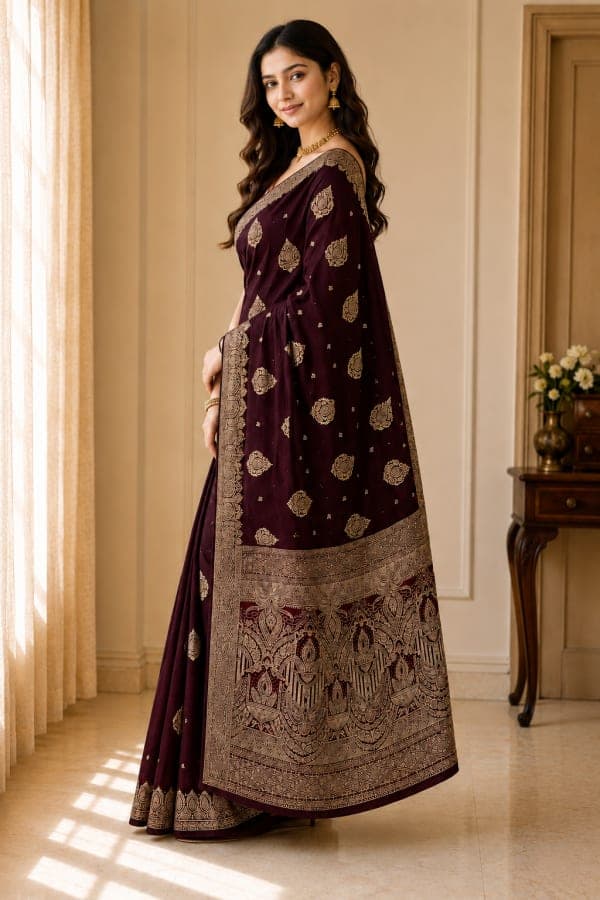
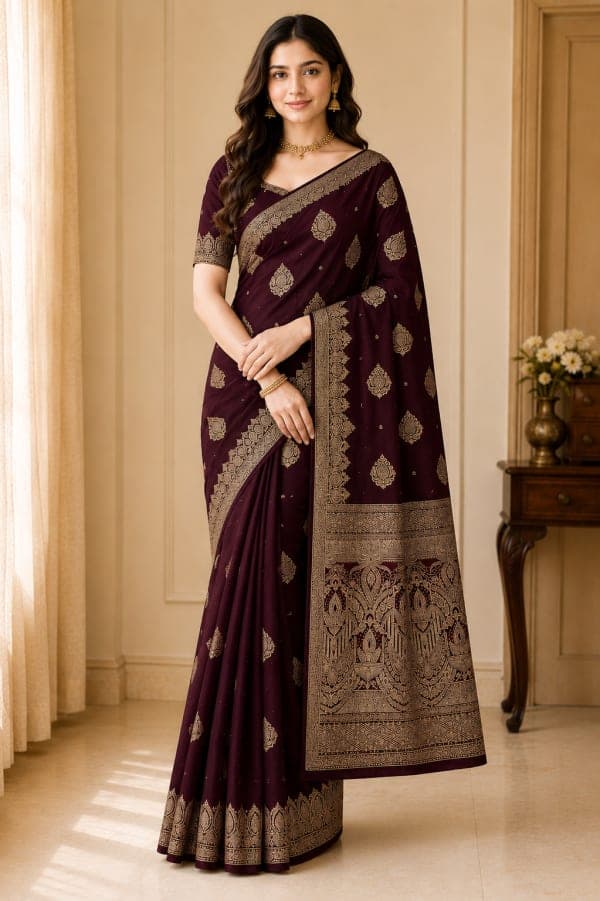
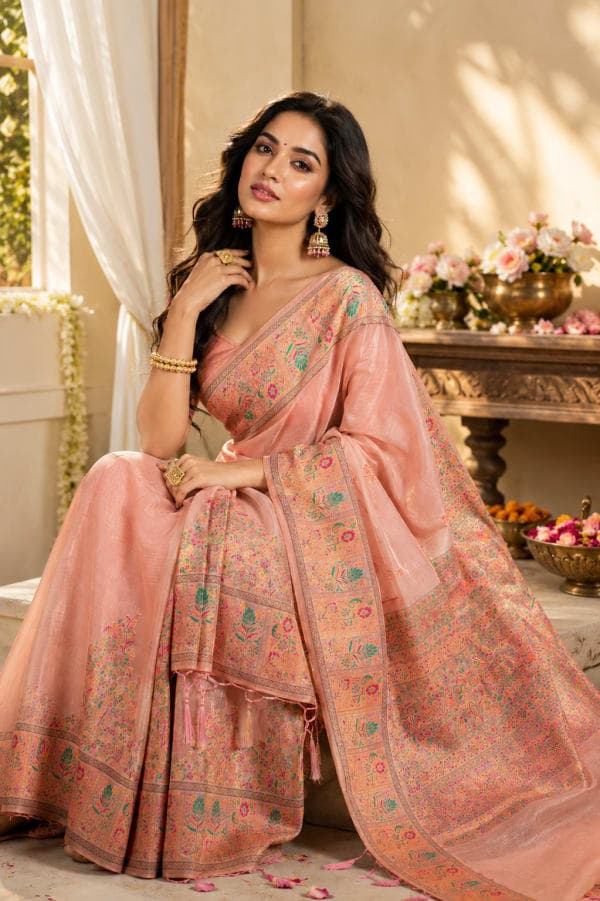
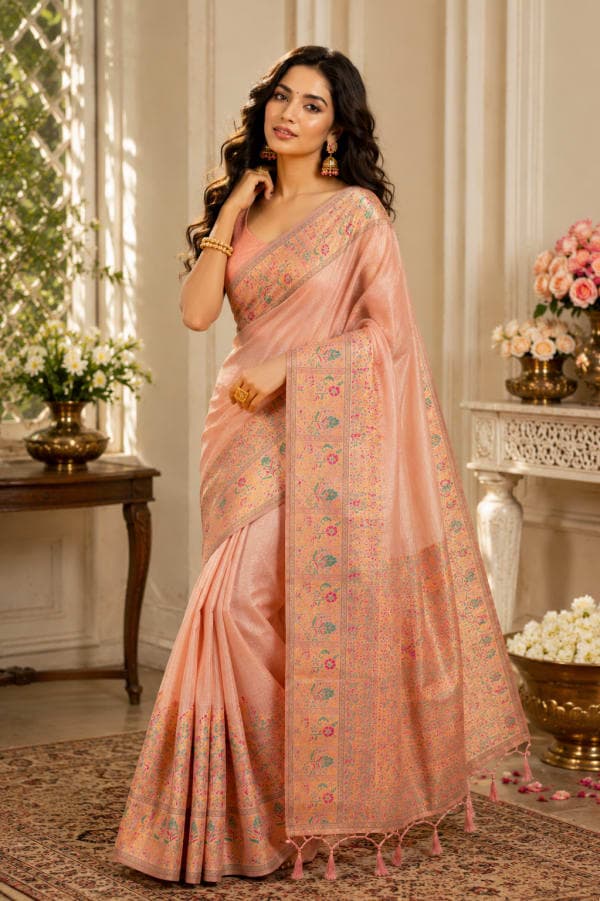
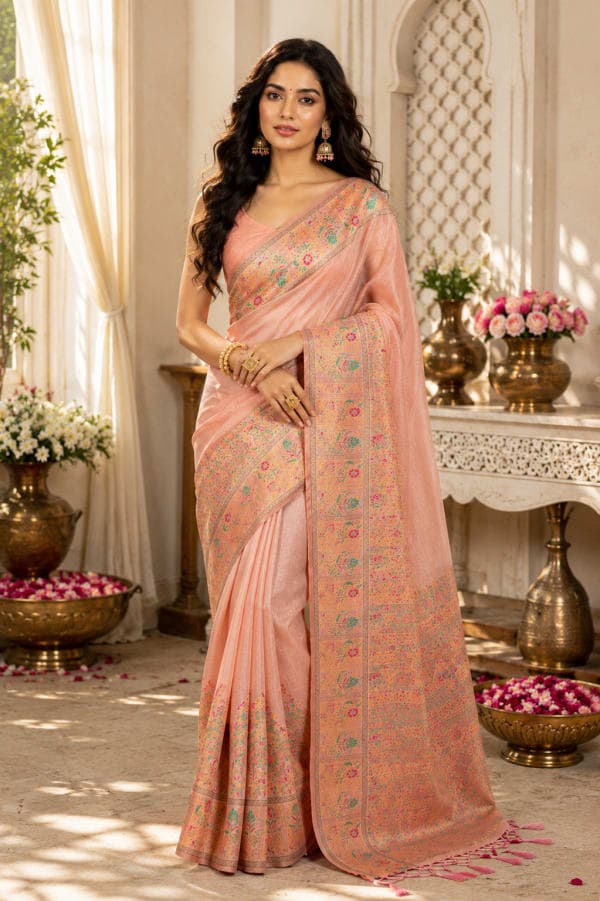
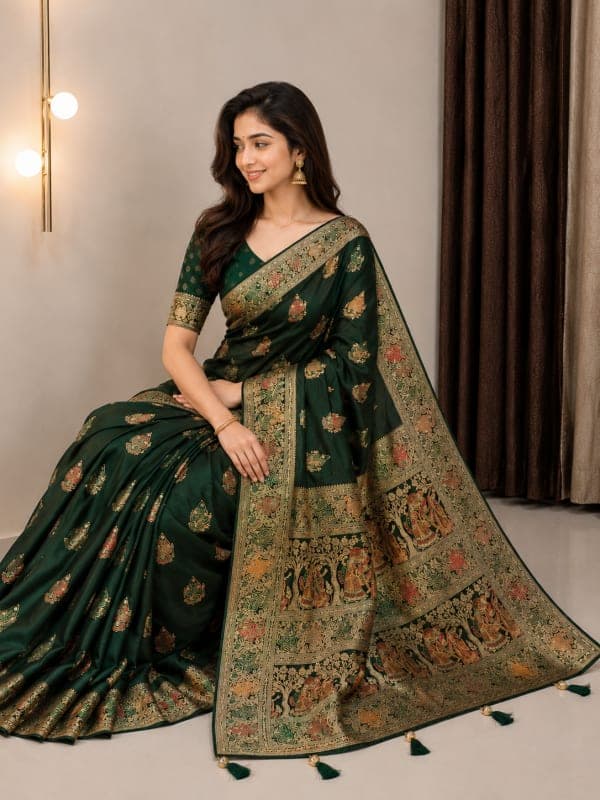
How Much Does a Good Saree Cost in India in 2026?
Understand saree pricing in India in 2026 by comparing fabric, weaving, craftsmanship, zari, embroidery, brand positioning and occasion.
Read Article

Luxury Saree Atelier
How to Read a Saree Fabric Composition Label: Silk, Cotton, Polyester and Blends Explained
When buying a saree, the product description may contain several fabric-related terms.
You might see descriptions such as pure silk, cotton blend, polyester, silk blend or viscose.
These terms describe the fibres used in the fabric, but they are sometimes presented in ways that make comparisons difficult.
Learning how to read fabric composition information can help you understand what you are purchasing, how the saree may feel and what kind of maintenance it requires.
Fabric composition describes the fibres used to make a textile.
A saree may contain:
For example, a saree may have a polyester base with embroidery using metallic-effect thread.
The composition of the base fabric and decorative elements should not be confused.
A fabric label may list its composition using percentages.
For example:
These are illustrative examples, not specifications for any particular product.
Percentages indicate the relative composition of the textile under the applicable labelling method.
If a product contains several fibres, understanding the proportions can help you compare it with another product.
A listing that simply says silk blend without giving further information may not provide enough detail for a premium purchase.
Silk is a natural protein fibre valued for its characteristic appearance, texture and draping qualities.
Silk sarees can vary significantly depending on the type of silk, yarn preparation, weave and finishing.
If a product is described as pure silk, look for accurate composition information and relevant supporting claims.
Cotton is a natural plant-based fibre.
It is widely used in Indian sarees and can provide different textures depending on the yarn and weave.
Cotton sarees may be crisp, soft, lightweight or relatively structured.
Polyester is a synthetic fibre.
It is used in many types of sarees because it can be manufactured with different textures, appearances and performance characteristics.
Its comfort depends on the construction, weight and conditions in which it is worn.
Viscose is a regenerated cellulosic fibre.
It is produced from processed cellulose and is used in fabrics designed to provide different levels of softness and drape.
It should not automatically be described as silk simply because it has a smooth appearance.
Linen is produced from flax fibres.
It is known for its characteristic texture and can be used in sarees with a natural, structured appearance.
Blends combine two or more fibre types.
The purpose may be to achieve a particular combination of appearance, cost, texture, durability or handling characteristics.
The actual properties depend on the fibres and construction used.
A silk-blend saree contains silk combined with another fibre.
The exact proportions matter.
A product with a small percentage of silk and a large percentage of synthetic fibre should not be described in the same way as a predominantly silk product.
When purchasing a silk blend, ask:
Clear answers help buyers understand what they are paying for.
Different fibres have different physical properties.
However, comfort is not determined by fibre alone.
It also depends on:
For example, a lightweight synthetic fabric may feel different from a heavy synthetic fabric.
Similarly, two cotton sarees may have different textures and draping behaviour because of their construction.
Fibre composition can influence the care requirements of a saree.
Silk products may require careful handling and specific cleaning methods.
Follow the garment's care instructions.
Cotton sarees may have different washing requirements depending on dyes, finishes and decorative elements.
Some polyester sarees may be easier to maintain, but this should not be assumed for every garment.
Viscose fabrics may require careful washing and handling depending on their construction.
For blends, care should reflect the requirements of the complete textile rather than only one fibre.
If the saree contains delicate embroidery or zari, additional care may be needed.
Before purchasing, look for these details:
| Product information | What to check |
|---|---|
| Main fabric | Exact fibre or blend |
| Composition percentage | Proportion of each fibre |
| Blouse piece | Whether it matches the saree |
| Border material | Same fabric or separate component |
| Embellishments | Thread, zari, beads or other materials |
| Weaving method | Handloom, powerloom or other process |
| Care instructions | Washing and maintenance |
| Dimensions | Saree length and width |
If a listing contains only a general material name, request clarification before making an expensive purchase.
Imagine two sarees that look similar in product photographs.
One is described as 100% silk, while the other is described as a silk blend.
These products may have different material costs, textures, maintenance requirements and draping characteristics.
A meaningful comparison should include:
Do not compare products only by their names or photographs.
Terms such as silk-look or silk-style may describe appearance rather than composition.
A blend may contain very different percentages of each fibre.
The blouse material may differ from the saree fabric.
Embroidery and metallic-effect yarns may use separate materials.
Handloom describes the production method, not the fibre composition.
These questions are especially useful when purchasing expensive sarees online.
It indicates that the relevant textile component is described as entirely silk under the applicable labelling requirements. Check the product's supporting information and whether the claim covers the full saree.
No. A silk blend is a textile made using silk together with other fibres. It should simply be described accurately.
No. Viscose is a regenerated cellulosic fibre, while silk is a natural protein fibre.
No. Quality depends on fibre characteristics, proportions, construction and finishing.
Yes. Some products include blouse pieces made from a different fabric or blend.
For an expensive purchase, it is better to request clear composition information before ordering.
A saree's fabric composition is one of the most useful details to understand before purchasing.
Knowing whether a product contains silk, cotton, polyester, viscose or a blend helps you evaluate its material, comfort and maintenance requirements.
Read the complete product description, ask for fibre percentages where relevant and distinguish fabric composition from weaving technique.
An informed buyer can appreciate the design while understanding exactly what the saree is made from.
How Much Does a Good Saree Cost in India in 2026?
Understand saree pricing in India in 2026 by comparing fabric, weaving, craftsmanship, zari, embroidery, brand positioning and occasion.
Read ArticleSaree Shopping Guide 2026: 15 Things to Check Before Buying Online
Use this 2026 saree shopping checklist before buying online. Learn what to check for fabric, measurements, blouse piece, pallu, colour, return policy and product details.
Read ArticleHow to Buy a Saree Online in 2026: Complete Buyer Checklist
Use this complete online saree buying checklist to evaluate fabric, measurements, blouse piece, colour, price and return policies.
Read Article