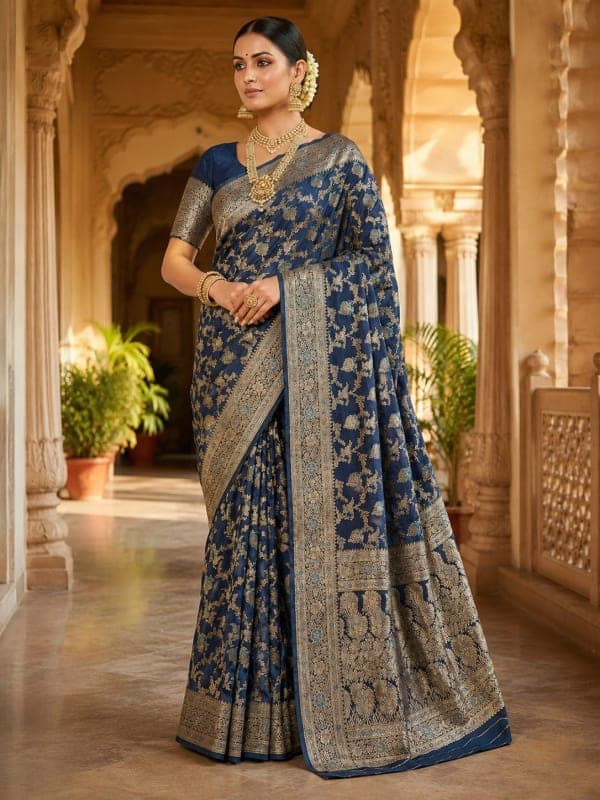
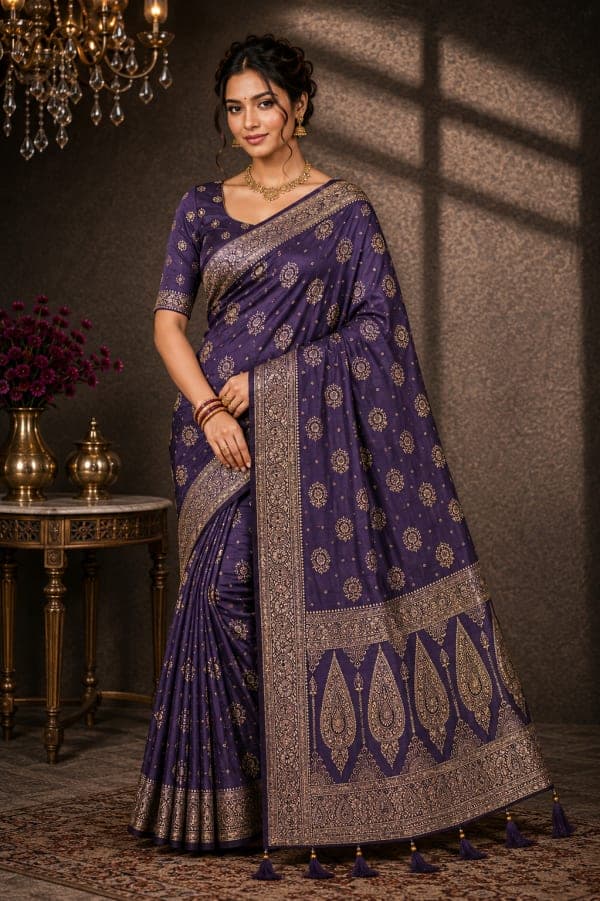
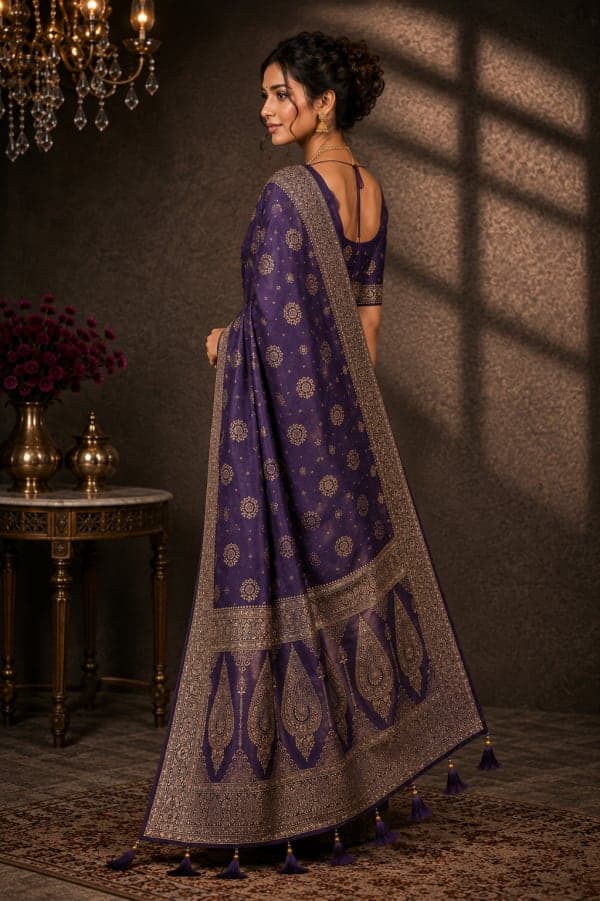
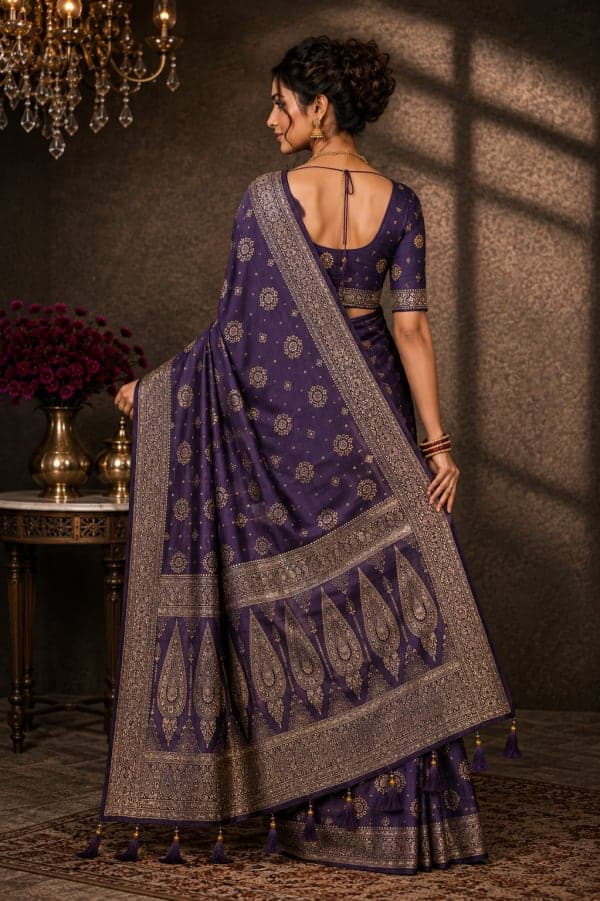
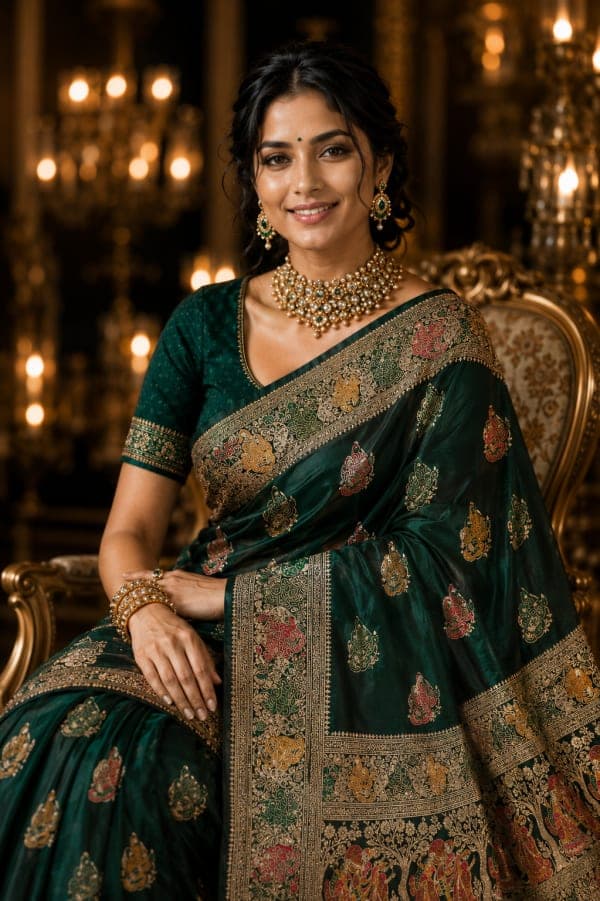
How Much Does a Good Saree Cost in India in 2026?
Understand saree pricing in India in 2026 by comparing fabric, weaving, craftsmanship, zari, embroidery, brand positioning and occasion.
Read Article

Luxury Saree Atelier
How to Shop for Sarees in a Store: A Complete In-Person Buying Checklist
Shopping for a saree in a physical store can be a memorable experience. You can touch the fabric, examine the weave, compare colours and understand how the saree moves when opened.
Unlike online shopping, in-store buying allows you to inspect several important details before making a payment.
However, the experience can also become overwhelming. A large selection of colours, fabrics, designs and price ranges can make it difficult to compare products objectively.
Whether you are buying your first saree or investing in a premium silk piece, a systematic approach can help you make a better decision.
This guide explains what to check when shopping for sarees in person.
Start by understanding why you need the saree.
A saree for a wedding may require different characteristics from one intended for regular family gatherings or professional occasions.
Consider:
For example, a heavily embellished saree may be suitable for a reception but less practical for a daytime family event.
Having a clear purpose makes it easier to narrow down your options.
Sarees are available across a wide range of price points.
Before entering the store, decide how much you are comfortable spending.
Consider separating your budget into:
Ask the store whether the displayed price includes the blouse piece and any finishing services.
For a premium purchase, compare the material, craftsmanship and construction rather than selecting the highest-priced option automatically.
The word fabric is often used broadly in saree descriptions.
Before purchasing, ask what the saree is actually made from.
Common categories include:
If the saree is described as pure silk, ask whether supporting identification or documentation is available.
If it is a blend, ask for the fibre composition.
Do not assume that a saree is pure silk simply because it has a silk-like shine.
One of the biggest advantages of in-person shopping is the ability to handle the saree.
Ask the salesperson to open a sufficient portion of the fabric.
Observe:
A fabric that feels comfortable in your hands may also be easier to wear, although the final drape should be considered separately.
Avoid judging quality through softness alone. Some fabrics are naturally crisp, structured or textured.
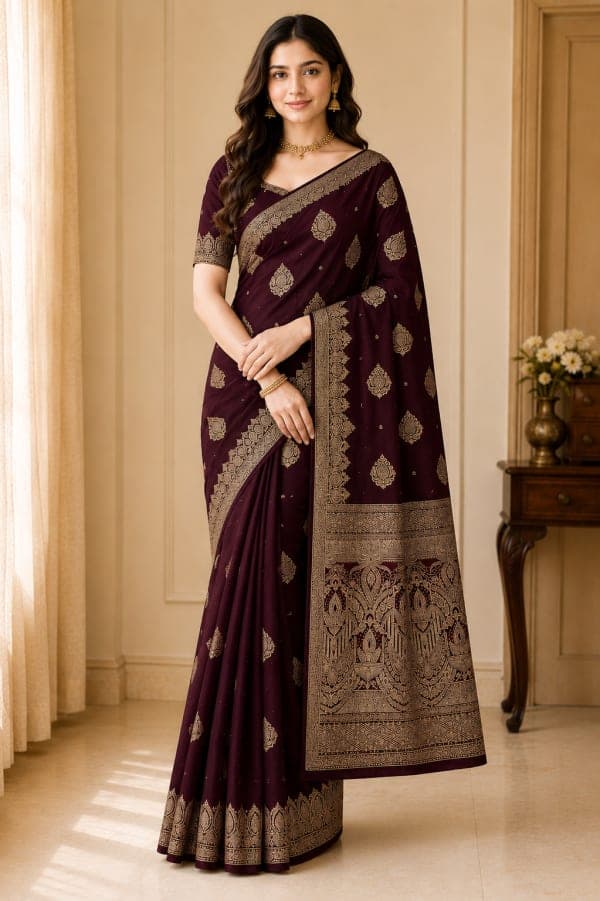
A folded saree can hide important details.
Request that the store open the saree so you can inspect:
This helps you understand how the saree will look when draped.
It also makes it easier to identify unexpected design differences or visible defects.
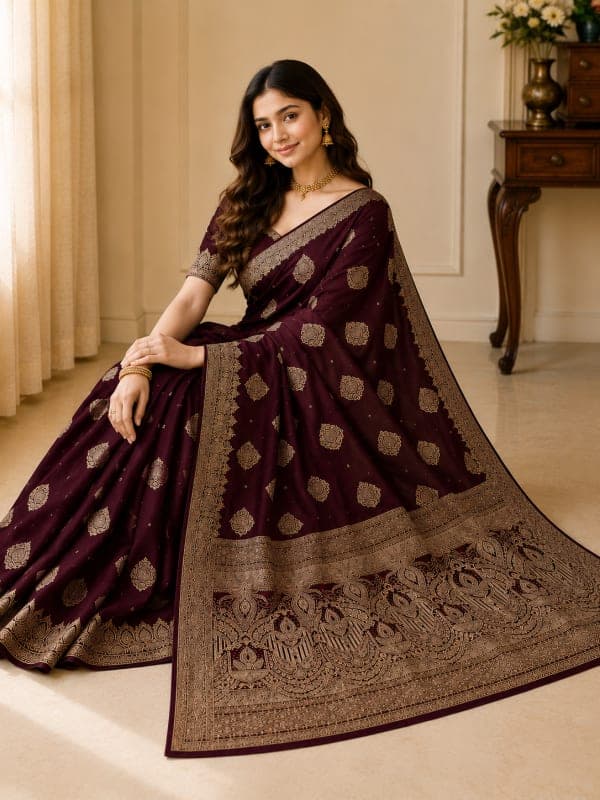
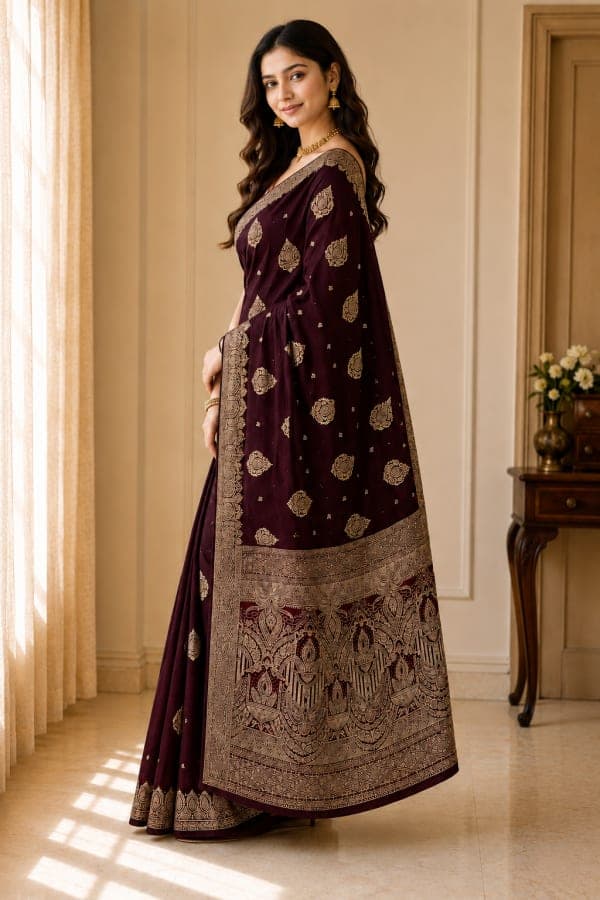
The border contributes significantly to the saree's overall appearance.
Check whether:
A wide border may create a traditional appearance, while a narrow border can feel more understated.
Neither is automatically better. Choose according to the overall design and your personal preference.
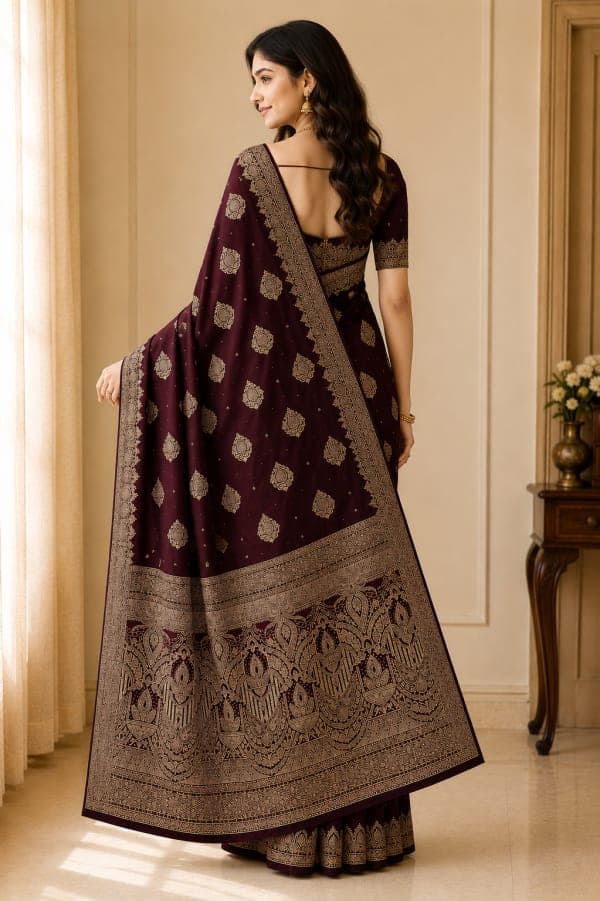
The pallu is often one of the most decorative parts of a saree.
Look at the motif arrangement, fabric construction and finishing.
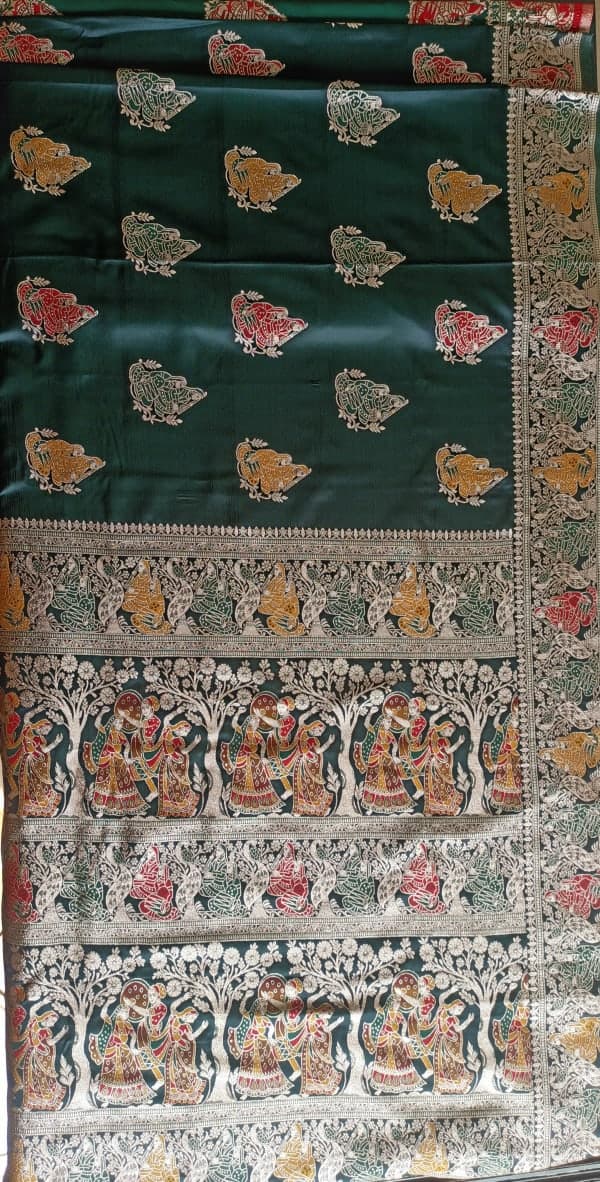
Check whether the pallu is woven, embroidered, printed or embellished.
Ask the salesperson to show its reverse side if the construction is important to your purchase.
For expensive sarees, examine the finishing carefully rather than relying only on the decorative appearance.
Many sarees include an attached or separate blouse piece.
Before buying, confirm:
A blouse piece that appears visually attractive may not always provide enough fabric for a complicated design.
If you intend to stitch a particular blouse style, discuss the fabric requirement with your tailor.
The reverse side can provide useful information about construction and finishing.
Look for:
Some woven techniques naturally have visible threads or floats on the reverse side.
Do not confuse normal construction characteristics with defects.
If you are unsure, ask the salesperson to explain the weaving or embroidery method.
If the saree includes zari, embroidery or other embellishments, ask what material and technique have been used.
Zari may be described as:
These terms should not be treated as identical.
Ask for a clear description of the decorative material and whether any supporting documentation is available.
For embroidery, examine:
Decorative work should be secure enough for the intended use and care routine.
Do not make a decision based on the first attractive saree you see.
Ask the store to show a few alternatives within the same broad category.
Compare:
| Comparison Point | What to Examine |
|---|---|
| Fabric | Fibre composition and texture |
| Weight | Comfort and intended use |
| Weave | Construction and motif detail |
| Border | Width and finishing |
| Pallu | Design and workmanship |
| Blouse | Included fabric and length |
| Care | Washing and maintenance requirements |
| Price | Value relative to product details |
This approach makes the differences easier to understand.
If a saree is marketed as Banarasi, Kanjivaram, Paithani or another regional weave, ask where it was produced.
A traditional design does not automatically establish geographical origin.
For products carrying regional or GI-related claims, ask about the relevant identification and documentation.
The seller should explain whether the product is an authentic regional weave, an inspired design or a contemporary interpretation.
Clear descriptions help avoid misunderstandings.
Before paying, ask what happens if you discover a defect after returning home.
Understand:
Do not assume that every physical store offers the same policy.
Ask for the policy in writing or keep the purchase documentation.
Always collect an invoice.
It should ideally describe the product accurately and include the price and applicable tax details.
For a premium saree, retain any product description, certificate or other supporting document provided by the seller.
This information can be useful later if you need to clarify the product composition, request an exchange or understand care instructions.
Some stores may use limited-stock claims, festival offers or special discounts to encourage immediate decisions.
Take enough time to inspect the saree.
A genuine purchase should make sense based on the product, price and intended use.
If the saree is expensive, consider visiting another store or comparing similar products before deciding.
A short pause can help prevent an impulsive purchase.
If the store permits photography, take a few reference pictures.
Capture:
These photographs can help you compare options later.
Remember that photographs may change the appearance of colours. Use them as references rather than exact colour standards.
Once you bring the saree home, inspect it again in good lighting.
Check that the product matches the invoice and description.
Keep the packaging and supporting documents until you are satisfied with the purchase.
Before stitching, fall attachment or other alterations, confirm that the saree is correct and free from visible damage.
Follow the care instructions provided for the specific fabric and embellishments.
Use this checklist before making payment.
Start with the fabric composition, intended use, price and overall construction. Then inspect the border, pallu, blouse piece and finishing.
No. The best fabric depends on your budget, comfort, occasion and maintenance preferences. Cotton, organza, blends and other fabrics can also be suitable choices.
Examine the texture, weave, border, pallu, reverse side and finishing. Ask the seller about the material and production method.
Yes, whenever possible. Opening the saree helps you inspect its overall design, colour distribution and construction.
Confirm whether it is included, its length, fabric composition and whether it is sufficient for your preferred blouse design.
Compare material, craftsmanship, construction, finishing, documentation and seller transparency. Price alone does not establish quality.
No. A higher price should be supported by meaningful product characteristics such as material, craftsmanship and design.
Shopping for a saree in person offers an excellent opportunity to understand the fabric before purchasing it.
Take time to open the saree, examine its construction, compare similar products and ask specific questions about its material and origin.
A thoughtful buying process helps you avoid unnecessary surprises and choose a saree that suits your occasion, preferences and budget.
The goal is not simply to find the most attractive saree in the store. It is to understand the product well enough to feel confident about your purchase.
How Much Does a Good Saree Cost in India in 2026?
Understand saree pricing in India in 2026 by comparing fabric, weaving, craftsmanship, zari, embroidery, brand positioning and occasion.
Read ArticleSaree Shopping Guide 2026: 15 Things to Check Before Buying Online
Use this 2026 saree shopping checklist before buying online. Learn what to check for fabric, measurements, blouse piece, pallu, colour, return policy and product details.
Read ArticleHow to Buy a Saree Online in 2026: Complete Buyer Checklist
Use this complete online saree buying checklist to evaluate fabric, measurements, blouse piece, colour, price and return policies.
Read Article