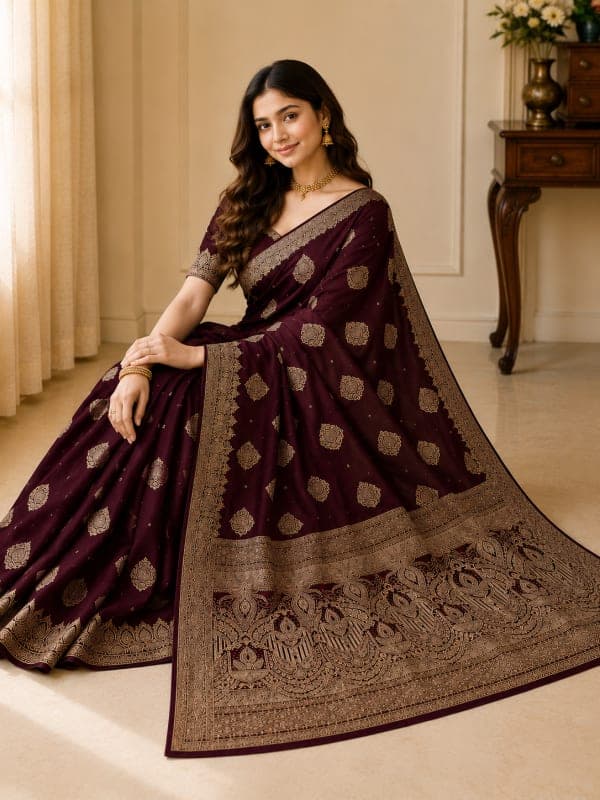
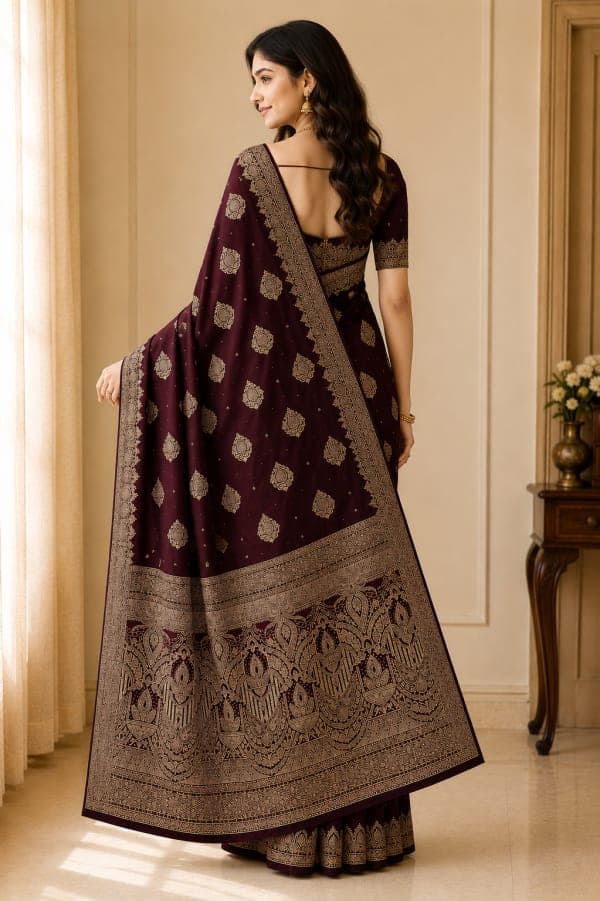
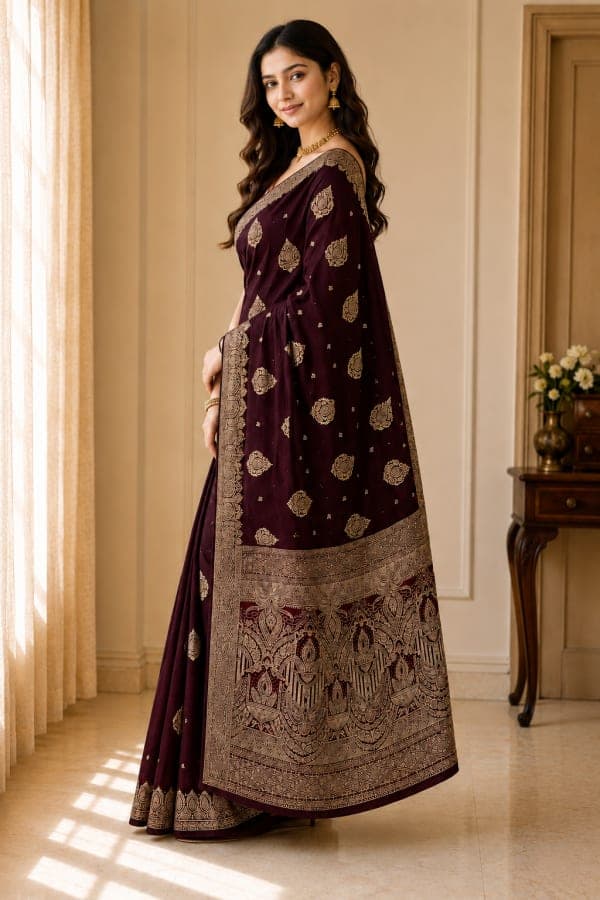
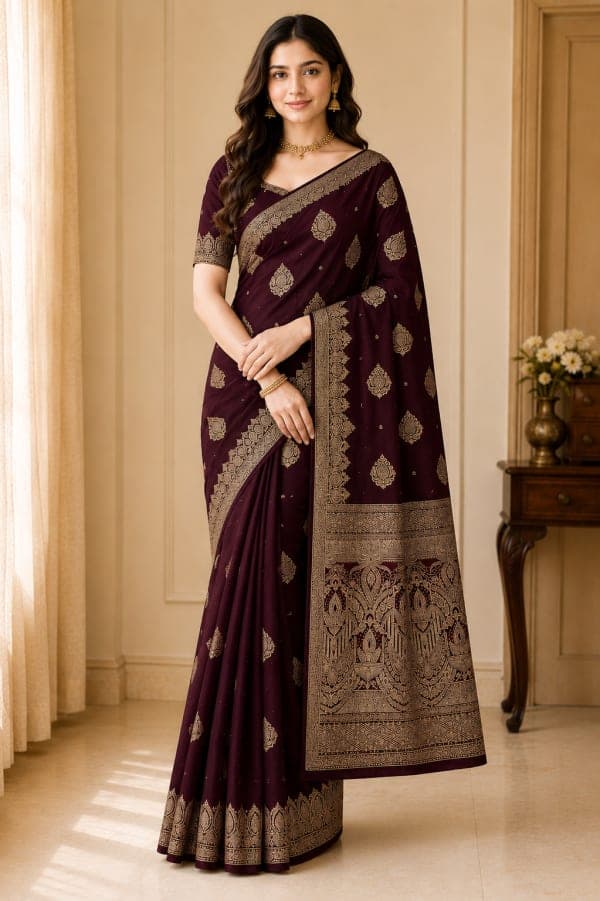
How Much Does a Good Saree Cost in India in 2026?
Understand saree pricing in India in 2026 by comparing fabric, weaving, craftsmanship, zari, embroidery, brand positioning and occasion.
Read Article

Luxury Saree Atelier
Is Pure Silk Worth the Extra Cost? Comparing Pure Silk and Silk Blends
Buying a silk saree can be a significant purchase. Two sarees may look equally beautiful in photographs, feature similar colours and patterns, and appear suitable for the same occasion, yet their prices can be very different. One may be made from pure silk, while another may use a silk blend.
This creates an important question for buyers: is pure silk actually worth paying more for, or can a silk-blend saree offer better value?
The answer depends on what you expect from the saree. Your budget, intended occasion, preferred texture, maintenance expectations and frequency of use all matter. A higher price does not automatically make a saree the right purchase, and a more affordable blend is not necessarily a poor choice.
This guide explains the practical differences between pure silk and silk blends so you can make a more informed buying decision.
Before comparing prices, understand what these terms mean.
A pure silk saree is primarily made using silk yarn. Silk is a natural protein fibre known for its characteristic lustre, smoothness and drape.
Depending on the weaving tradition and construction, pure silk sarees can have different textures, weights and finishes. A traditional silk saree may feature intricate woven motifs, decorative borders and a richly designed pallu.
However, not all pure silk sarees are identical. The type of silk, yarn quality, weaving method, workmanship and finishing can influence the final product considerably.
A silk-blend saree combines silk with one or more other fibres. The additional fibre may be natural or synthetic, depending on the product.
Blends can be developed to achieve particular characteristics, such as a different texture, lighter feel, particular appearance or a more accessible price.
The exact composition matters. A saree containing a small percentage of silk is different from one that combines silk with another fibre in nearly equal proportions.
Always check the actual fabric composition rather than relying only on a product title that includes the word silk.
Pure silk can involve higher raw-material costs and specialised processing. Traditional weaving and detailed craftsmanship may also increase the final price.
Some of the important cost factors include:
A pure silk label alone does not explain the entire price. Two pure silk sarees can have significantly different prices because their construction and craftsmanship may differ.
The way a saree feels when worn is one of the most important considerations.
Pure silk is often appreciated for its natural texture and characteristic drape. Depending on the weave, it may feel smooth, structured, soft or substantial.
Silk blends can have a different feel depending on the additional fibre. Some blends are designed to create a lighter or more flowing appearance, while others may feel firmer.
There is no universal rule that every pure silk saree will feel heavier or every silk blend will feel lighter.
When buying online, look for:
If possible, examine a sample or visit a store before making a high-value purchase.
Pure silk has a distinctive natural lustre that many buyers appreciate. The way light reflects from the fabric can give it a rich and refined appearance.
Silk blends can also look attractive. Depending on their composition and finishing, they may produce a soft sheen, a more uniform surface or a different visual texture.
The difference is not always obvious in photographs.
A well-made silk-blend saree can look beautiful, while a poorly finished pure silk saree may not justify its price. Fabric composition is important, but construction and finishing matter too.
Consider the following when comparing two products:
| Factor | Pure silk | Silk blend |
|---|---|---|
| Fibre composition | Primarily silk | Silk combined with other fibres |
| Appearance | Characteristic silk lustre | Depends on the blend |
| Texture | Depends on silk type and weave | Depends on fibre combination |
| Price | Often higher | Often more accessible |
| Maintenance | Requires fabric-specific care | Depends on composition |
| Design options | Traditional and contemporary | Traditional and contemporary |
A common reason buyers choose pure silk is the expectation of long-term use.
A well-made silk saree, stored and maintained correctly, can remain part of a wardrobe for many years. However, durability is not determined by fibre composition alone.
Yarn quality, weave construction, finishing, handling and storage all contribute to how well a saree ages.
Silk blends can also be durable. Their performance depends on the fibres used and how the saree has been manufactured.
Before purchasing, ask whether the seller provides specific care instructions. Avoid assuming that a saree will last longer simply because its product title says pure silk.
Silk is a delicate natural fibre and generally requires careful handling.
For many pure silk sarees, professional dry cleaning is recommended, particularly when the saree has elaborate embellishments, zari work or delicate finishing.
Silk blends may have different care requirements depending on their composition. Some may be easier to maintain, while others may also require professional cleaning.
Check these details before buying:
Do not assume that a blend is automatically machine washable or that every pure silk saree requires identical treatment.
For weddings and important family celebrations, pure silk can be an appealing choice because of its traditional appearance and association with ceremonial dressing.
A silk-blend saree may also be appropriate, particularly when you prefer a particular design or want to manage your budget.
Consider the role of the saree in the event.
For a major wedding ceremony, you may prefer to invest in a carefully selected pure silk saree that you intend to preserve and wear again.
For a supporting function, reception gathering or less formal celebration, a silk blend may provide the appearance you want without requiring the same level of investment.
The right decision depends on your personal preferences rather than a fixed rule about which fabric is suitable for weddings.
Pure silk may justify its higher price when several of these conditions apply:
For buyers who value traditional craftsmanship and natural silk, the additional investment may be worthwhile.
However, do not pay a premium merely because a product is marketed as luxurious.
A silk blend can be the more practical decision in several situations.
You might prefer one when:
The objective is to buy a saree that meets your requirements, not simply the one with the most expensive label.
Before paying for either type, ask the seller:
For an expensive purchase, request written confirmation of important product claims.
A more expensive saree is not necessarily better for your needs. Compare the construction, fabric details and craftsmanship.
The quality of a blend depends on its actual fibre composition and manufacturing. Some blends can be attractive and well-made.
A seller's use of the word silk is not enough. Ask for the percentage and type of fibres used.
Different silk varieties and weaving techniques produce different textures and appearances.
A premium saree may require professional care. Consider these ongoing requirements when evaluating the purchase.
Pure silk is worth the additional investment when you specifically value its natural fibre, characteristic texture, craftsmanship and long-term place in your wardrobe.
A silk blend is worth considering when it offers the appearance, comfort and design you want at a price that better suits your budget.
Neither option is automatically superior in every situation.
The smartest purchase is one where you understand exactly what you are paying for. Compare fabric composition, workmanship, finishing, care requirements and seller transparency before making your decision.
No. Pure silk and silk blends have different characteristics. The better choice depends on fabric quality, construction, intended use and personal preference.
Some silk blends can have a similar visual appearance, but their texture, fibre composition and drape may differ.
They are often more expensive because of raw-material and production costs, but the actual price depends on the silk type, weaving, craftsmanship and finishing.
Yes. A well-made silk-blend saree can be suitable for wedding celebrations. Choose according to the occasion, design and your preferences.
Check the fabric composition, seller documentation and any relevant certification. For a valuable purchase, buy from a seller who can provide clear product information rather than relying on appearance alone.
Consider the quality of construction, fabric, finishing and your willingness to maintain it. Both pure silk and some silk blends can offer long-term use when properly made and cared for.
How Much Does a Good Saree Cost in India in 2026?
Understand saree pricing in India in 2026 by comparing fabric, weaving, craftsmanship, zari, embroidery, brand positioning and occasion.
Read ArticleSaree Shopping Guide 2026: 15 Things to Check Before Buying Online
Use this 2026 saree shopping checklist before buying online. Learn what to check for fabric, measurements, blouse piece, pallu, colour, return policy and product details.
Read ArticleHow to Buy a Saree Online in 2026: Complete Buyer Checklist
Use this complete online saree buying checklist to evaluate fabric, measurements, blouse piece, colour, price and return policies.
Read Article