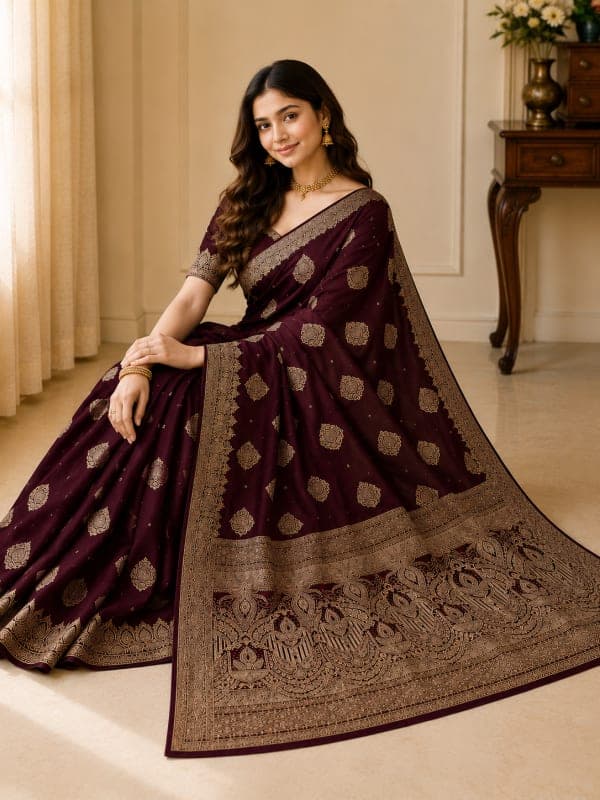
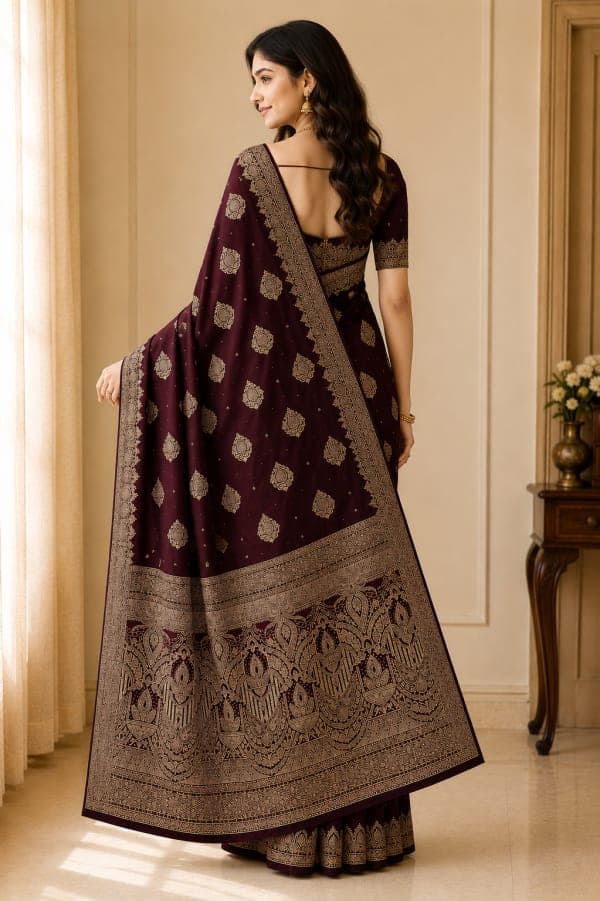
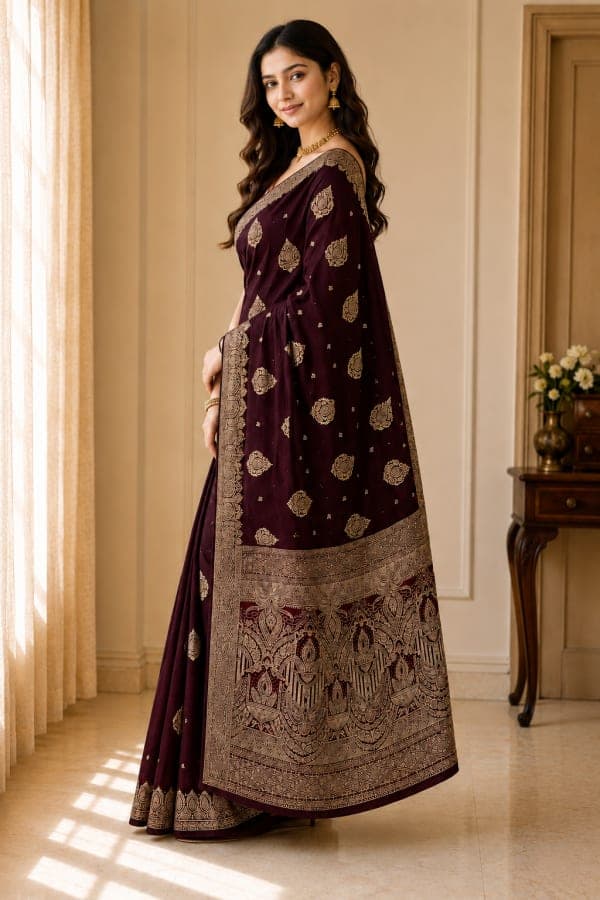
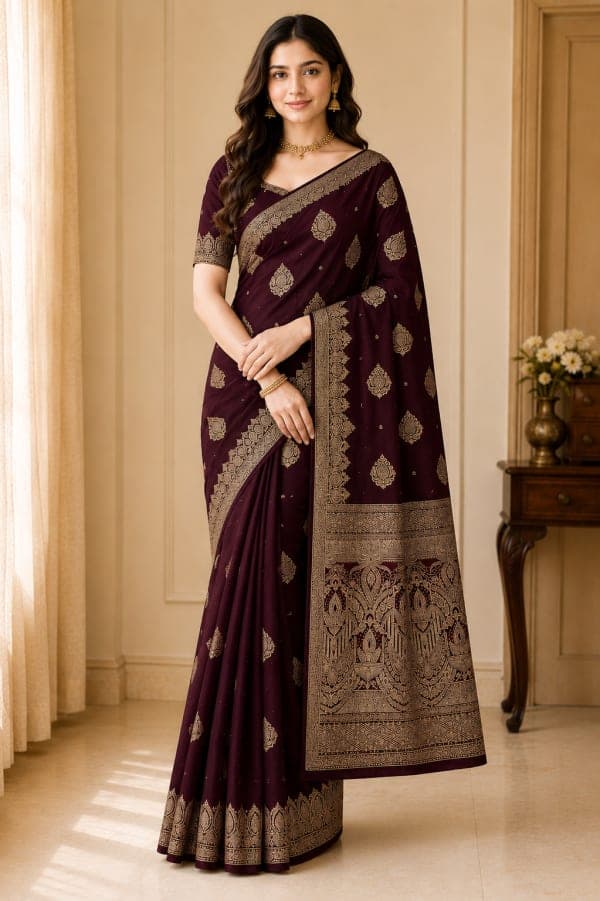
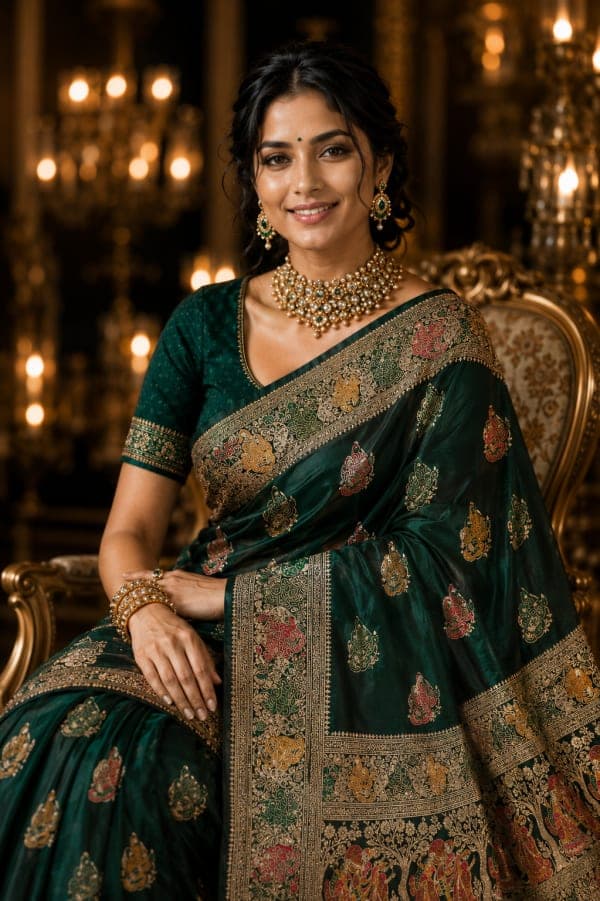
How Much Does a Good Saree Cost in India in 2026?
Understand saree pricing in India in 2026 by comparing fabric, weaving, craftsmanship, zari, embroidery, brand positioning and occasion.
Read Article

Luxury Saree Atelier
Best Sarees Under ₹5,000: Fabrics, Designs and Buying Tips
Finding a beautiful saree does not always require an exceptionally large budget. With thoughtful selection, you can explore several traditional and contemporary saree styles while keeping your spending within ₹5,000.
The important part is understanding what you are paying for. Fabric composition, weaving technique, embellishments, finishing and overall construction can make a considerable difference in a saree's appearance and long-term usability.
Whether you need an outfit for a family celebration, festive gathering, wedding function or occasional wear, this guide explains how to evaluate sarees within this budget.
A budget of ₹5,000 gives you access to a range of saree categories, depending on the seller, material and craftsmanship.
You may find:
However, the price alone does not establish quality. Two sarees with similar appearances may have very different fabric compositions and construction.
Before purchasing, check whether the product is made from pure silk, a silk blend, polyester, cotton or another material. Do not assume that a saree is pure silk simply because its product title contains the word silk.
Cotton sarees are practical choices for people who prefer breathable fabrics and understated styling.
They can work well for:
Cotton blends may offer different levels of softness, texture and drape. Check the actual composition rather than relying on a generic fabric description.
Georgette-style sarees are often selected for their fluid appearance and relatively easy styling.
Depending on the construction, they may feature:
If you prefer a saree that creates flowing pleats, examine the fabric's weight and fall.
Lightweight sarees can be suitable for occasions where ease of movement is important.
They may be useful for:
Check transparency and lining requirements before purchasing.
Organza is known for its structured, relatively crisp appearance.
In this price range, you may encounter different constructions and blends. Confirm whether the product is actual organza, a blended fabric or an organza-style material.
Look closely at the border, transparency and finishing.
Some sellers offer silk-blend sarees at accessible prices. These can provide a traditional appearance without necessarily having the composition or craftsmanship of an expensive pure-silk handwoven saree.
Always verify the fibre composition and product description.
Your intended use should influence the purchase.
For wedding functions, consider a saree with a well-finished border, attractive motifs and an appropriate level of embellishment.
You do not necessarily need a heavily embroidered saree. A balanced design with good colour coordination can look elegant.
Traditional motifs, contrasting borders and festive colours can create a timeless appearance.
Cotton blends, silk blends and lightweight decorative sarees may all be worth considering depending on the occasion.
Choose a design that feels comfortable and easy to wear.
A saree with moderate embellishment can be more versatile than one designed exclusively for a grand celebration.
Look for balanced colours, manageable fabric weight and minimal embellishments.
A clean, sophisticated design can be styled with a simple blouse and understated accessories.
A good-looking product photograph does not tell you everything about a saree.
Use the following checks.
Read the material details carefully. Check whether the fabric is pure, blended or synthetic.
If the description is unclear, ask the seller for clarification.
Determine whether the motifs are woven, printed, embroidered or created using another technique.
These methods have different construction characteristics and should not be treated as interchangeable.
Inspect whether the border is properly attached and whether its edges appear neat.
Look for loose threads, uneven finishing and visible defects.
The pallu is an important visual feature. Check its design, fabric consistency and finishing.
If the saree contains embroidery, inspect the placement and finishing.
Look for loose threads, missing decorative elements and uneven stitching.
Ask for close-up photographs or videos when transparency is not clear in the listing.
This is particularly important for lightweight fabrics.
Suppose you are considering two sarees priced at approximately ₹4,000.
Instead of selecting the one with the more attractive photograph, compare:
| Evaluation factor | What to examine |
|---|---|
| Fabric | Actual fibre composition |
| Design | Woven, printed or embroidered |
| Border | Finishing and construction |
| Pallu | Detailing and consistency |
| Blouse piece | Included or not included |
| Transparency | Whether additional lining is needed |
| Maintenance | Care and cleaning instructions |
| Versatility | Number of occasions where it can be worn |
A saree with fewer embellishments may still be a better purchase if its material, finishing and usability are more suitable.
When working within a fixed budget, versatility can be more valuable than following every seasonal trend.
Consider:
These are styling suggestions, not rules. Choose colours that you enjoy wearing and that suit the occasion.
Before completing your purchase, confirm:
Clear answers reduce the possibility of receiving something different from what you expected.
The cheapest option is not automatically the best value.
Check the composition and supporting product information.
Some listings include an unstitched blouse piece, while others do not.
A saree that needs specialised care may not be suitable for someone looking for easy everyday maintenance.
Understand the seller's policy before purchasing.
Yes. There are several fabric and design options in this budget. Evaluate the material, finishing and construction rather than relying on price alone.
You may find silk blends and certain lower-priced silk products. Verify the fibre composition before describing or purchasing one as pure silk.
Consider a well-finished festive saree with an attractive border and suitable fabric. The best option depends on the wedding function and your comfort preferences.
Yes. Choose a versatile design, confirm the material details and consider presentation and exchange policies.
Prioritise fabric composition, dimensions, actual product photographs, finishing, blouse-piece details and return conditions.
A beautiful saree is not defined by its price tag alone. A thoughtful purchase considers fabric, construction, finishing, comfort and the occasions for which the saree will be worn.
When shopping under ₹5,000, take time to compare product details and ask questions before ordering. This approach can help you find a saree that offers a satisfying balance between appearance, practicality and value.
How Much Does a Good Saree Cost in India in 2026?
Understand saree pricing in India in 2026 by comparing fabric, weaving, craftsmanship, zari, embroidery, brand positioning and occasion.
Read ArticleSaree Shopping Guide 2026: 15 Things to Check Before Buying Online
Use this 2026 saree shopping checklist before buying online. Learn what to check for fabric, measurements, blouse piece, pallu, colour, return policy and product details.
Read ArticleHow to Buy a Saree Online in 2026: Complete Buyer Checklist
Use this complete online saree buying checklist to evaluate fabric, measurements, blouse piece, colour, price and return policies.
Read Article