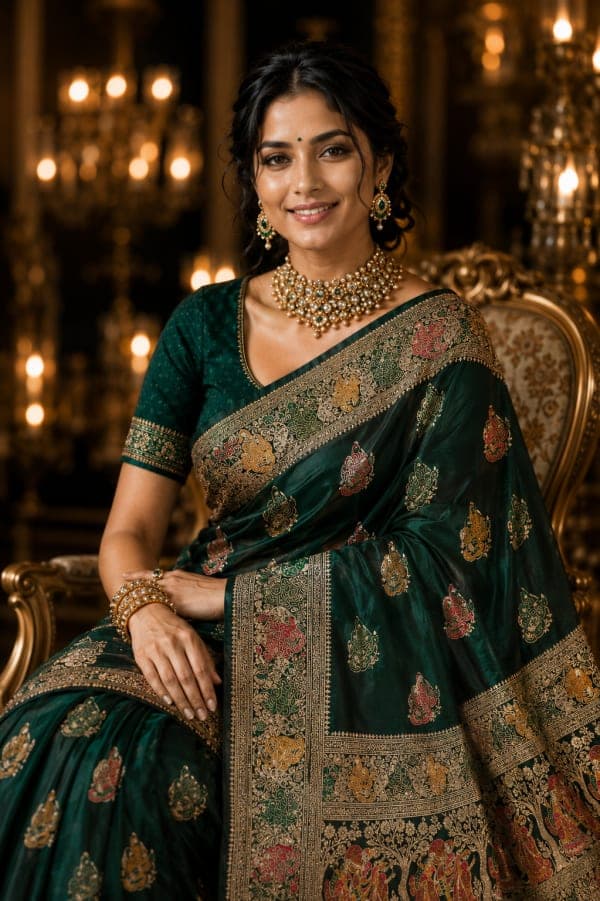
How Much Does a Good Saree Cost in India in 2026?
Understand saree pricing in India in 2026 by comparing fabric, weaving, craftsmanship, zari, embroidery, brand positioning and occasion.
Read Article

Luxury Saree Atelier
How to Evaluate Saree Packaging and Presentation Before Buying a Premium Saree
Buying a premium saree is about more than selecting a beautiful fabric. The way the saree is packaged, protected and presented can also influence the overall buying experience.
Good packaging should protect the textile during handling and transportation. It should help keep the product clean, reduce unnecessary friction and make the saree easier to inspect after delivery.
However, attractive packaging does not automatically indicate superior fabric quality or authenticity.
A beautiful box cannot replace accurate product information, careful construction and transparent seller practices.
This guide explains what to look for in saree packaging, how to inspect a premium saree after receiving it and why presentation should be considered separately from product quality.
The primary purpose of packaging is to protect the product.
During storage and transportation, a saree may be exposed to:
Suitable packaging helps reduce these risks.
For premium sarees, the packaging should be appropriate for the fabric and its decorative elements.
A delicate organza saree may need different handling from a heavy silk saree with intricate zari work.
Different textiles have different handling requirements.
Silk sarees should be protected from excessive moisture, friction and unsuitable storage materials.
Packaging should help prevent unnecessary pressure on the fabric.
Organza can be delicate and may be vulnerable to snagging or crushing.
Smooth protective layers can help reduce friction during handling.
Tissue sarees may contain reflective yarns or delicate decorative elements.
Avoid packaging that creates excessive pressure on the surface.
Cotton sarees may be easier to handle, but they should still be protected from dust, moisture and colour transfer.
Always follow fabric-specific storage guidance.
When examining packaging, look for:
Packaging should not create new risks for the textile.
For example, rough surfaces or exposed staples may catch delicate threads.
Luxury packaging can create a memorable unboxing experience.
A premium box, ribbon, printed tissue paper or branded insert may improve presentation.
However, these features do not necessarily provide meaningful textile protection.
Evaluate the two separately.
Presentation includes:
Protection includes:
A good product experience can combine both.
Premium saree packaging may include product information.
Look for details such as:
Not every seller includes all these details inside the package.
However, important product claims should be available through the product description, invoice or supporting documentation.
Do not assume that a decorative certificate automatically proves a product's authenticity.
When you receive a saree, inspect the package before opening it completely.
Check whether:
If there is visible damage, photograph it before proceeding.
This can help document the condition in which the product arrived.
Do not use sharp tools near the fabric.
Open the package carefully and remove the saree without pulling it forcefully.
Check for:
Avoid cutting protective material too close to the saree.
After opening the package, compare the saree with the product description.
Verify:
Remember that screen colours can differ from actual fabric colours.
However, a major difference in product description or material should be raised with the seller.
If you are purchasing a saree as a gift, presentation may become more important.
Consider:
Gift packaging should look attractive while protecting the textile.
Avoid excessive decoration that makes the package difficult to open or creates unnecessary waste.
A common buying mistake is assuming that expensive packaging indicates an expensive-quality product.
This is not necessarily true.
Packaging cannot independently establish:
These claims require appropriate product information and supporting evidence.
Evaluate the saree itself rather than relying on the box.
If you purchase a premium saree online, consider keeping its packaging until you have completed your inspection.
This may be useful if the seller's return or exchange policy requires the original packaging.
Check the applicable policy before discarding anything.
Keep the invoice and product documentation as well.
Once you have inspected the saree, do not automatically return it to the same packaging without considering its long-term storage requirements.
Some packaging is intended only for transportation.
For long-term storage, use a suitable clean and dry environment and follow fabric-specific guidance.
Avoid storing a saree while damp or placing it under heavy objects.
For valuable or delicate textiles, consider advice from a professional textile-care specialist.
Before placing an order, consider asking:
Clear answers help you understand what to expect.
No. Packaging and fabric quality are separate considerations. Evaluate the material, construction and product documentation independently.
Inspect the package, fabric, border, pallu, blouse piece, colour and product description. Photograph visible damage before handling the product further.
It can be useful to keep the packaging until you have completed your inspection and confirmed the return policy. For long-term storage, follow suitable fabric-care guidance.
No. Good protection and accurate product information matter more than decorative branding.
It should help reduce exposure to dust, moisture, friction, pressure and accidental handling damage.
Not automatically. Check what the document actually certifies and whether it relates to the specific product.
Saree packaging plays an important role in protecting a textile and creating a positive buying experience.
For a premium purchase, look beyond decorative boxes and branded ribbons. Check whether the packaging protects the saree, whether the product information is clear and whether the item arrives in good condition.
The best presentation combines thoughtful protection, useful documentation and an enjoyable unboxing experience.
How Much Does a Good Saree Cost in India in 2026?
Understand saree pricing in India in 2026 by comparing fabric, weaving, craftsmanship, zari, embroidery, brand positioning and occasion.
Read ArticleSaree Shopping Guide 2026: 15 Things to Check Before Buying Online
Use this 2026 saree shopping checklist before buying online. Learn what to check for fabric, measurements, blouse piece, pallu, colour, return policy and product details.
Read ArticleHow to Buy a Saree Online in 2026: Complete Buyer Checklist
Use this complete online saree buying checklist to evaluate fabric, measurements, blouse piece, colour, price and return policies.
Read Article