


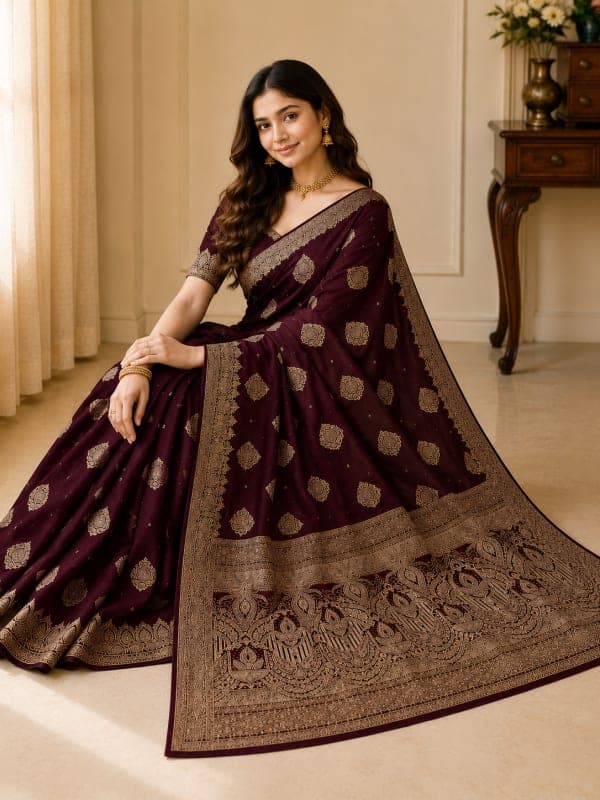
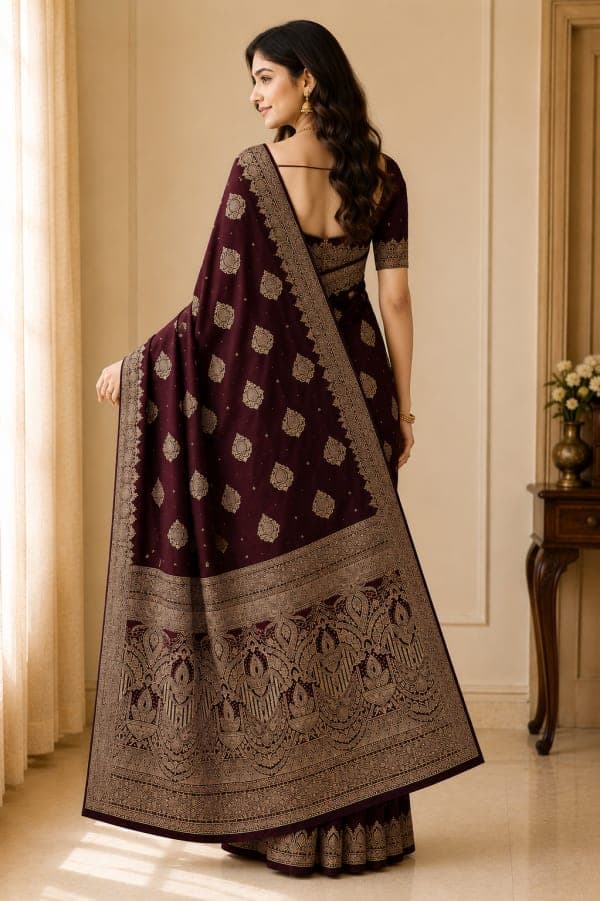
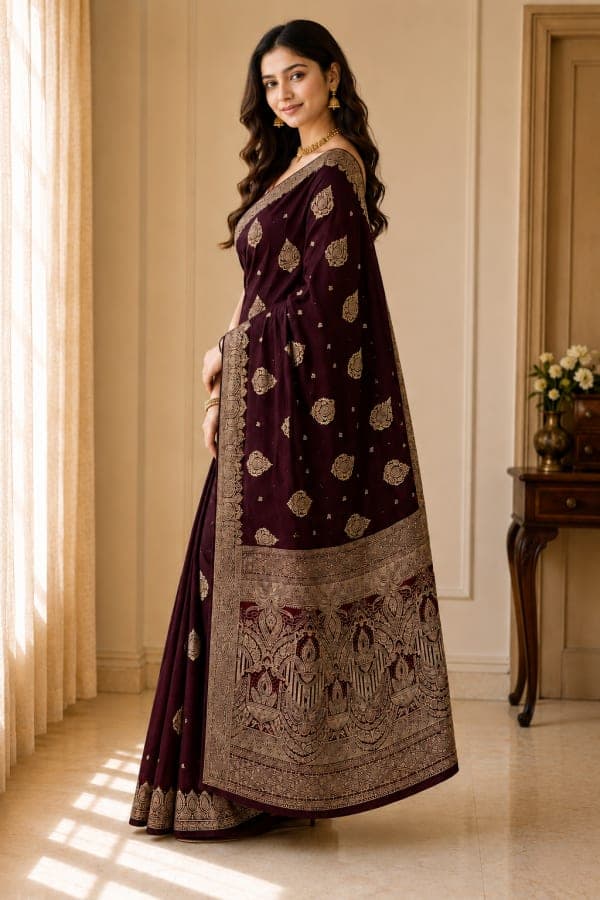
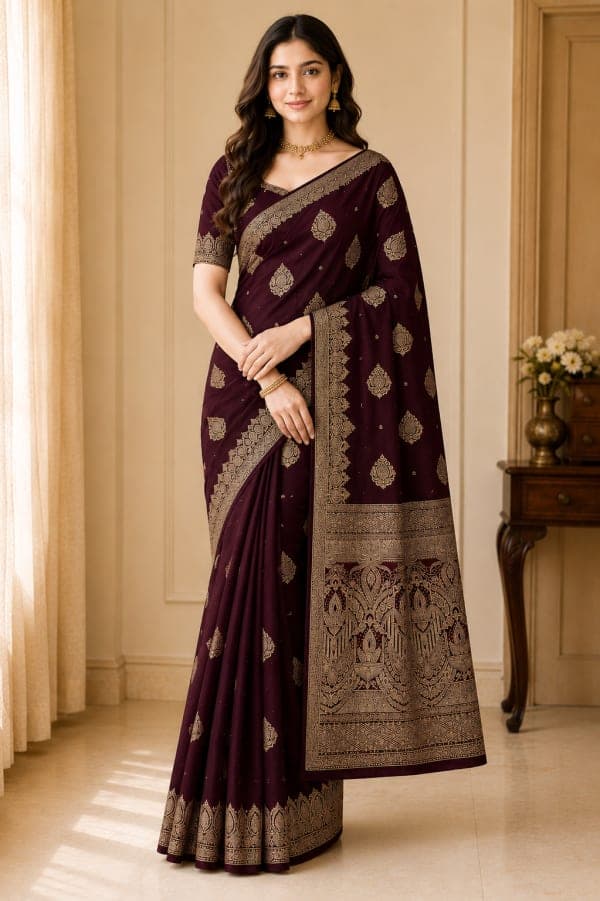
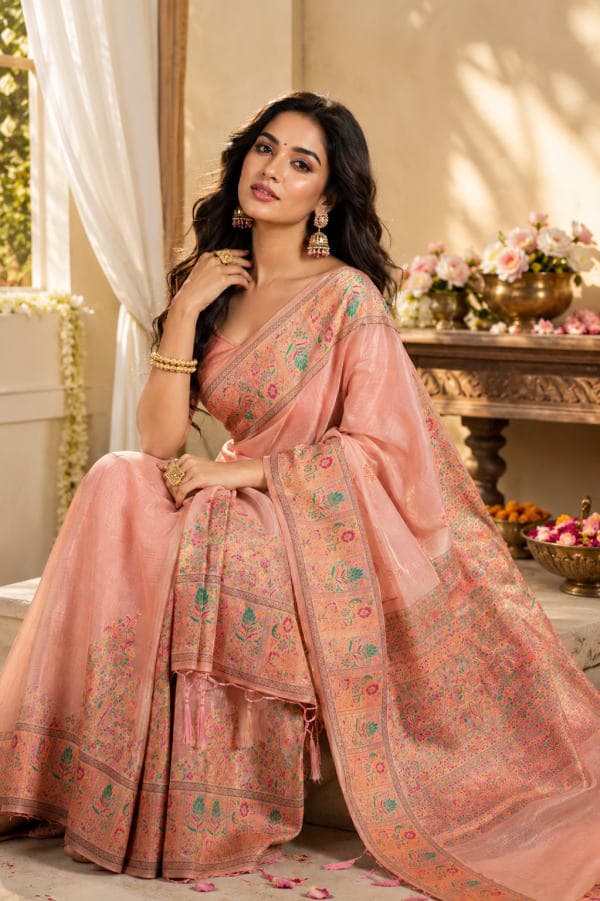
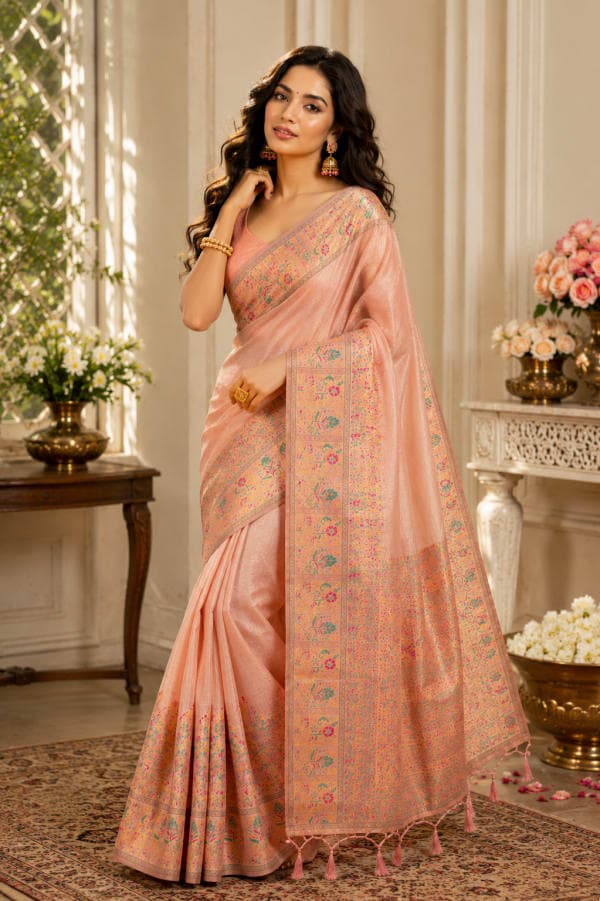
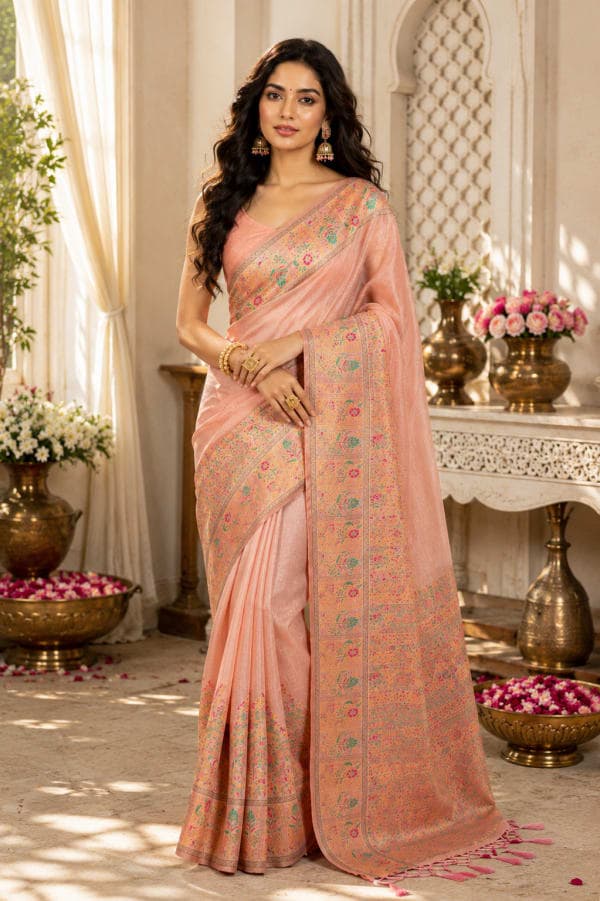
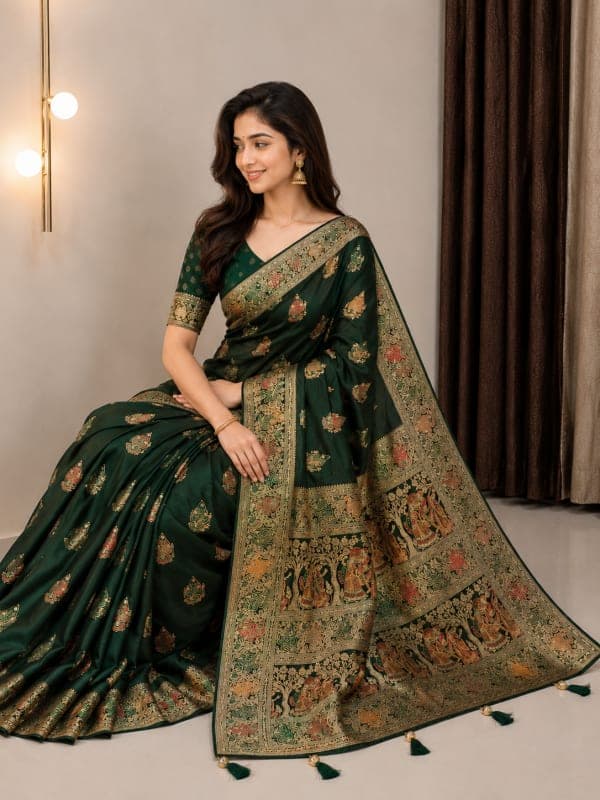
What Makes a Dhoti Saree Different
Instead of the standard flowing Nivi pleats, a dhoti saree drape splits the fabric between the legs, creating a structured, pant-like silhouette. It stays secure through movement in a way a traditional drape doesn't - which is exactly why it's become a go-to for sangeet nights and dance-heavy events in 2026.
Best Fabric Choices
Georgette, crepe, and lightweight silk blends work best - they hold the structured pleats of the dhoti fold without adding bulk between the legs. Stiff, heavy silks like Kanjeevaram are harder to shape into this drape comfortably.
Who It Suits
The dhoti drape is genuinely more forgiving across body types than people assume - because the fabric is distributed more evenly around the hips and legs rather than concentrated in a hanging pallu, it can feel more comfortable for extended wear and movement.
Styling It
Pair with a fitted crop-top style blouse or a structured corset blouse - the point of the dhoti silhouette is a clean, modern line, so an oversized or heavily embellished blouse works against the effect. Statement earrings and minimal other jewelry keep the look balanced.
Where to Wear It
Sangeet, cocktail parties, and destination wedding events where you'll be dancing or standing for long periods - less suited to very traditional or religious ceremonies where a classic drape is expected.
Quick Answer: Can I do a dhoti drape myself, or do I need help?
It's more technical than a Nivi drape and genuinely easier with a second pair of hands the first few times, though pre-stitched dhoti-style sarees (see our ready-to-wear guide) remove the draping step entirely.
Lightweight georgette and crepe sarees work best for this drape - check our collection for options that hold structure without stiffness.