














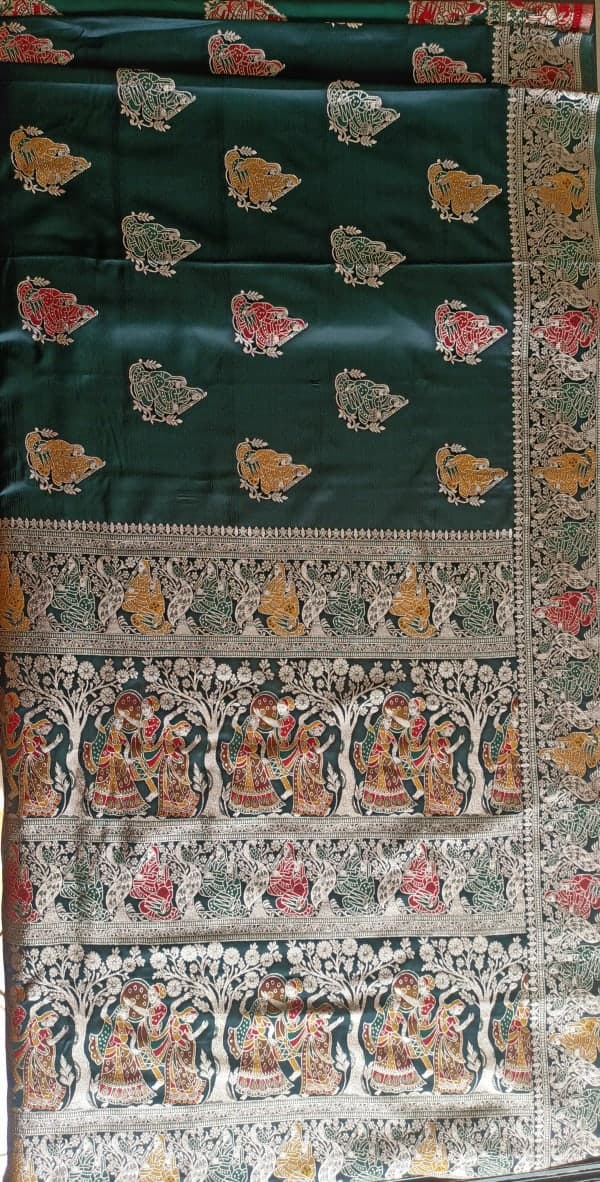




The Golden Rule: When in Doubt, Dry Clean
Pure silk sarees, especially those with real zari, should almost always be dry-cleaned rather than home-washed - water and regular detergent can damage both the silk fibers and the metallic thread.
Washing
- Dry clean silk sarees, ideally with a cleaner experienced in handling zari work specifically.
- If a saree is labeled hand-wash safe (usually simpler cotton-silk blends), use cold water and a mild, silk-specific detergent - never regular laundry detergent.
- Never wring a wet silk saree; press gently between towels instead.
Storing
- Fold along different lines each time you store it - repeated folding along the same crease weakens the fabric there over years.
- Wrap in a soft cotton or muslin cloth, not plastic - plastic traps moisture and can yellow the fabric over time.
- Store zari-heavy sarees flat or with minimal folding where possible, since sharp folds can crack metallic thread.
- Keep away from direct sunlight and humidity - both fade color and encourage fabric damage.
Ironing
- Iron on the reverse side, on a silk or low-heat setting, with a thin cloth between the iron and the fabric.
- Never iron directly over zari work - the heat can discolor or melt synthetic-coated metallic thread.
Refresh Between Wears
For sarees worn once and not visibly soiled, airing out in shade (not direct sun) is often enough - you don't need to dry clean after every single wear.
Quick Answer: How often should a silk saree be dry-cleaned?
Only when visibly soiled or before long-term storage - over-cleaning (especially frequent dry cleaning) can gradually wear down silk fibers faster than infrequent, careful cleaning.
Shop our Silk Sarees collection - each product page notes recommended care for that specific weave.