


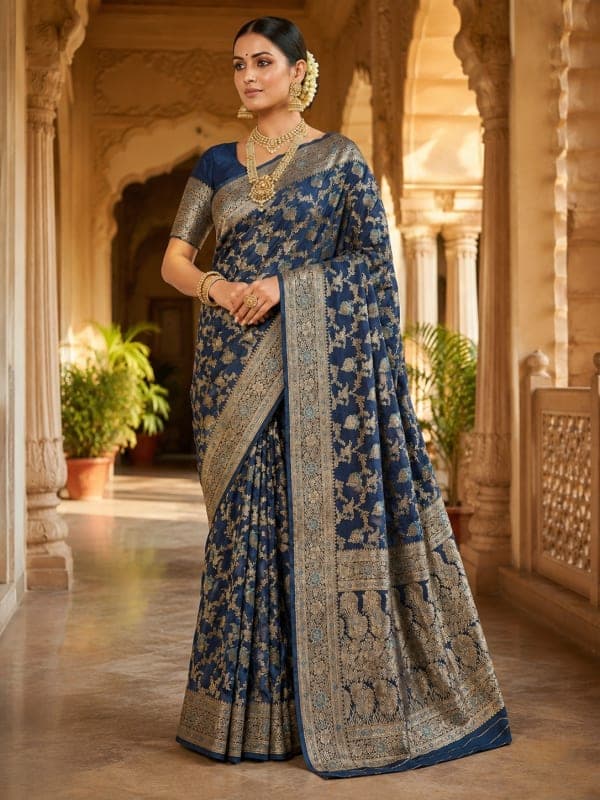
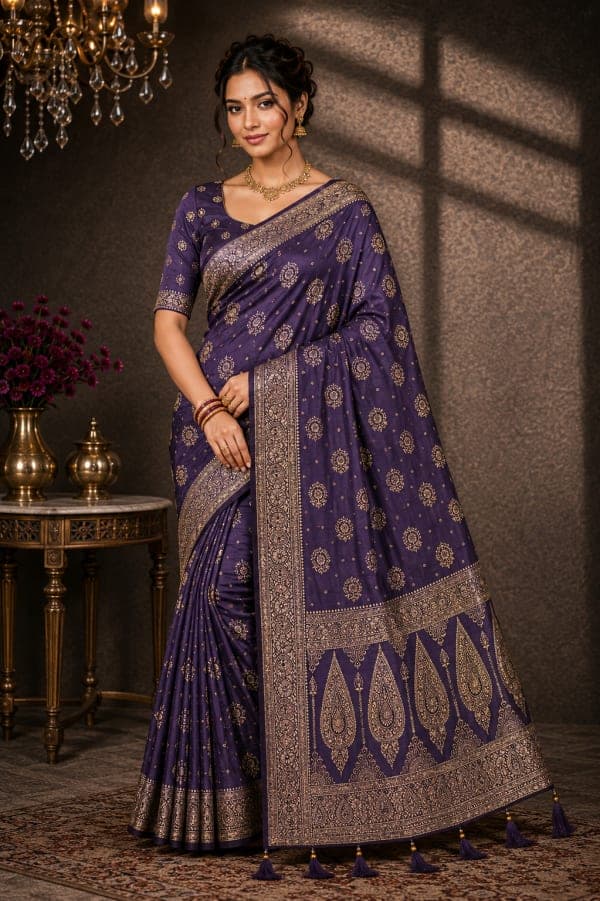
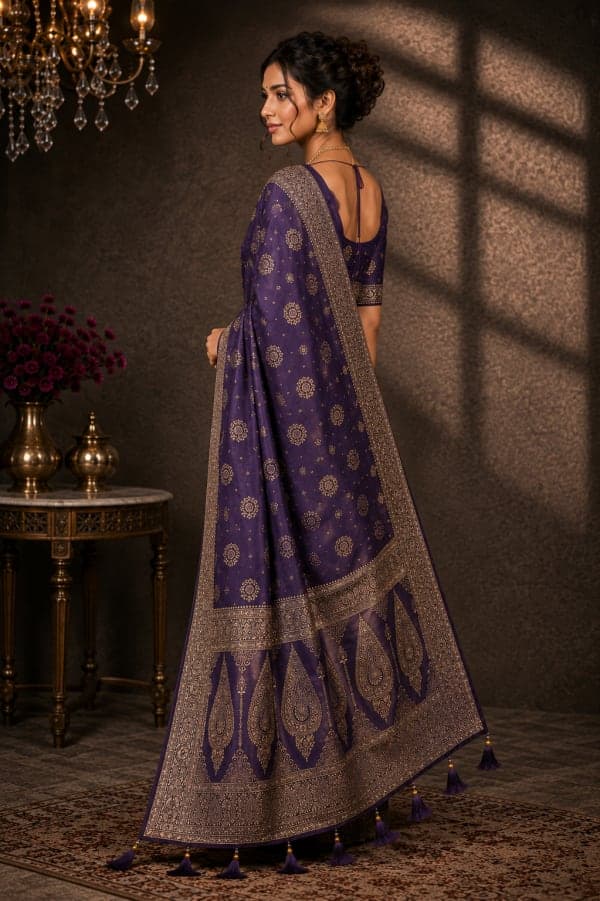
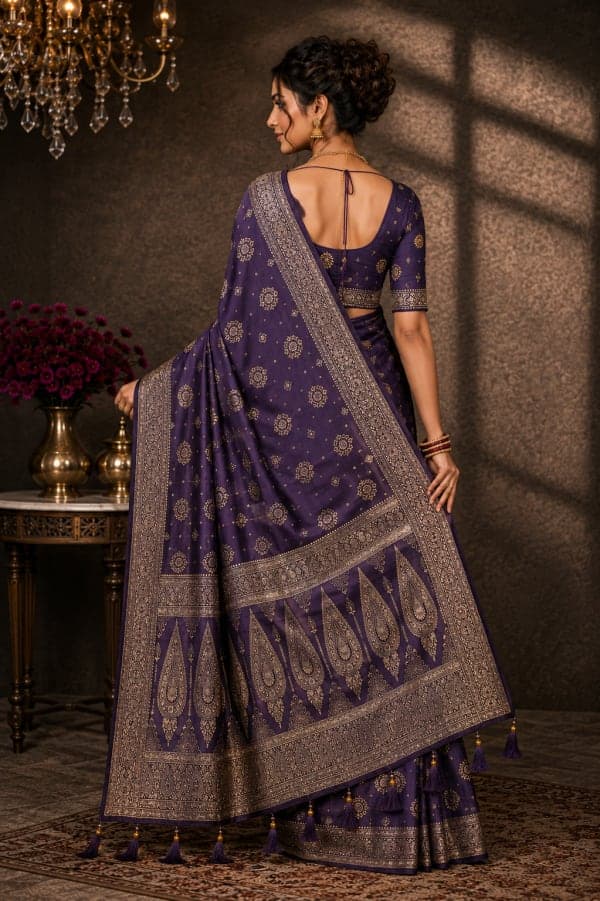
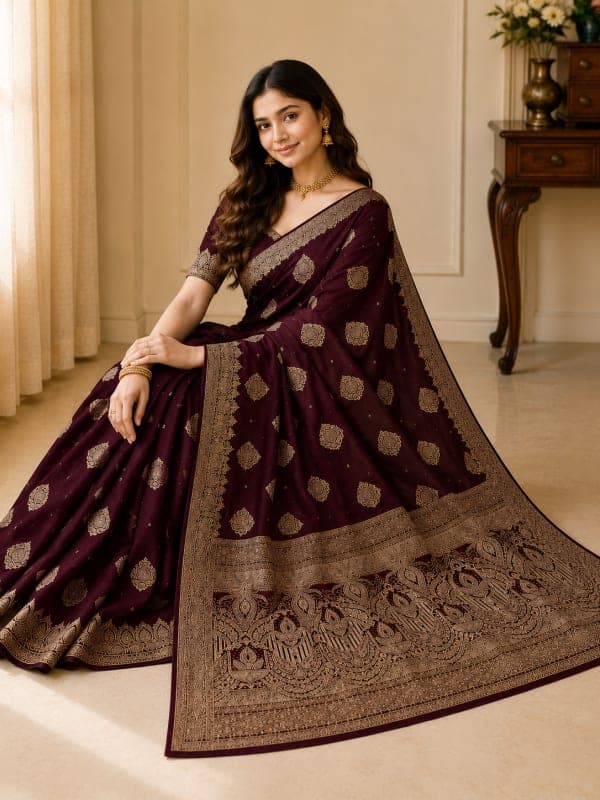
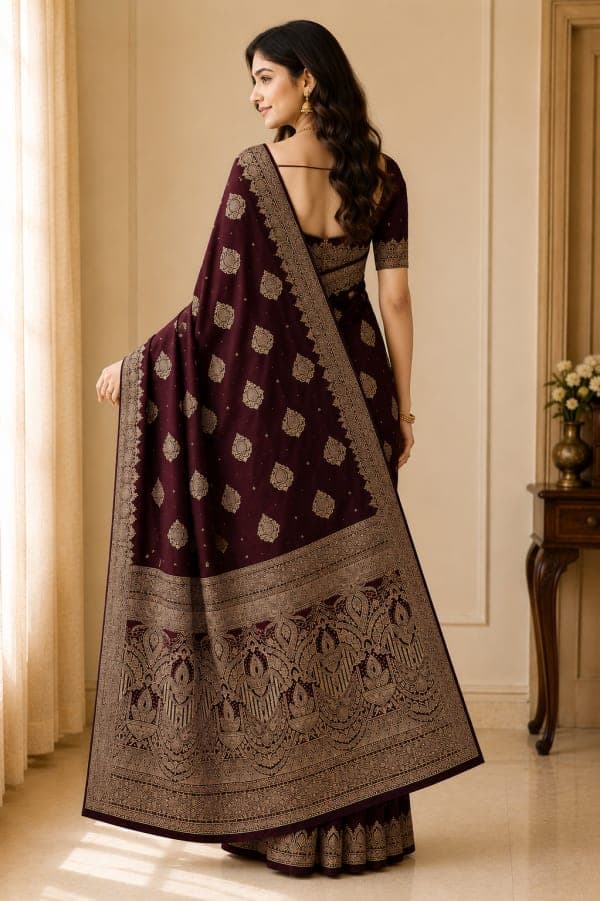
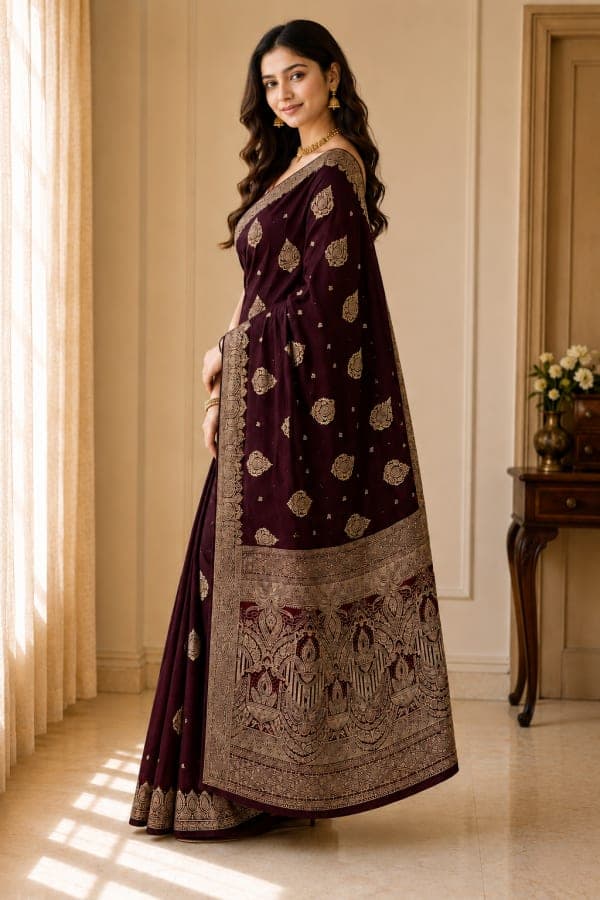
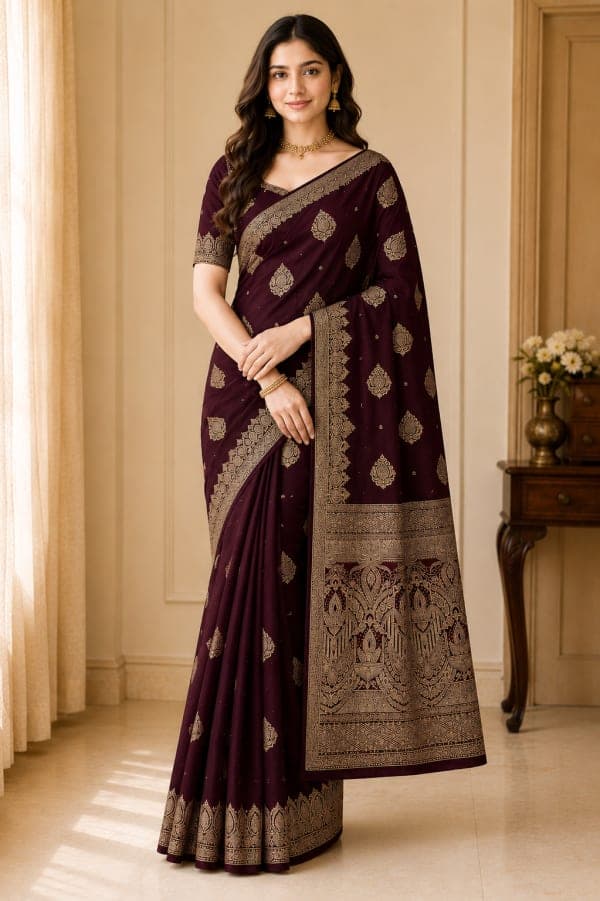
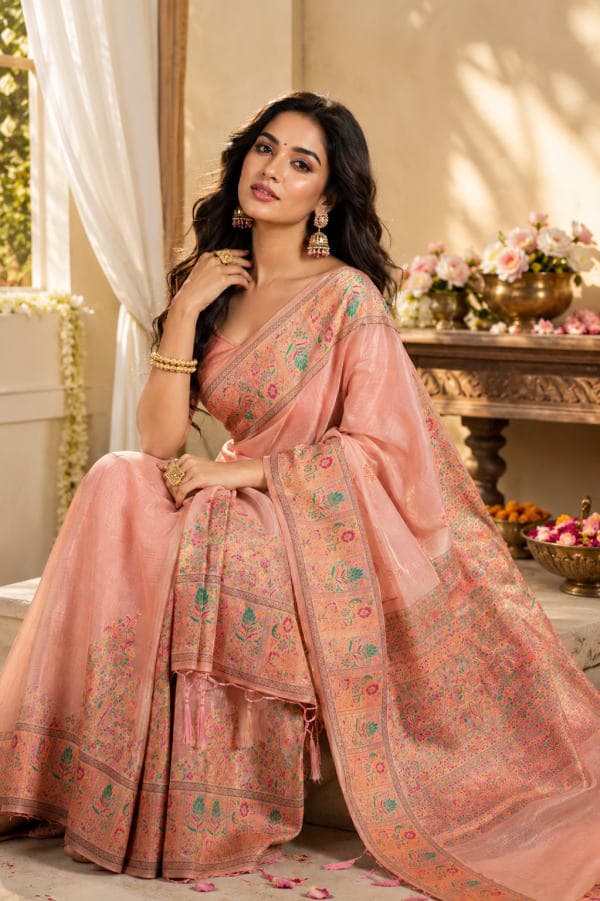
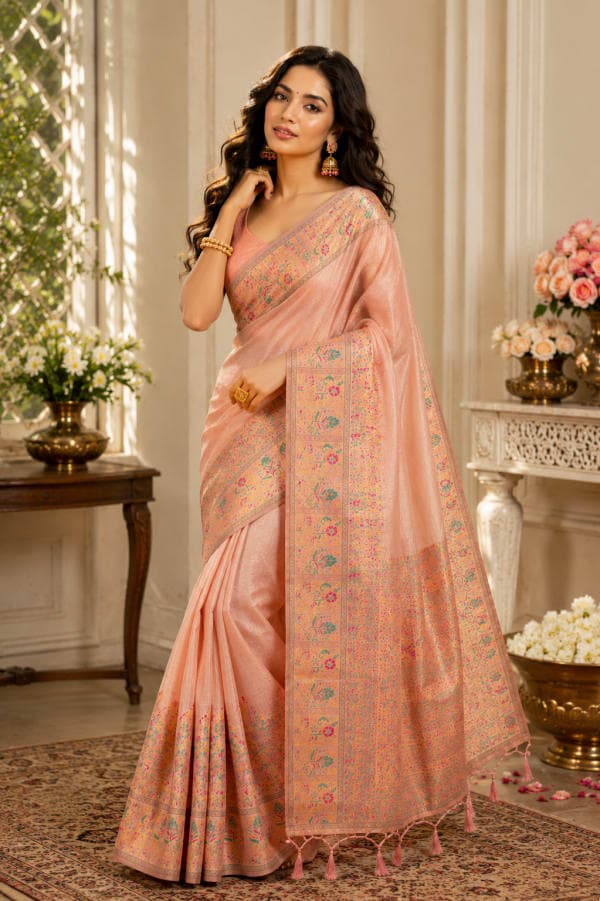
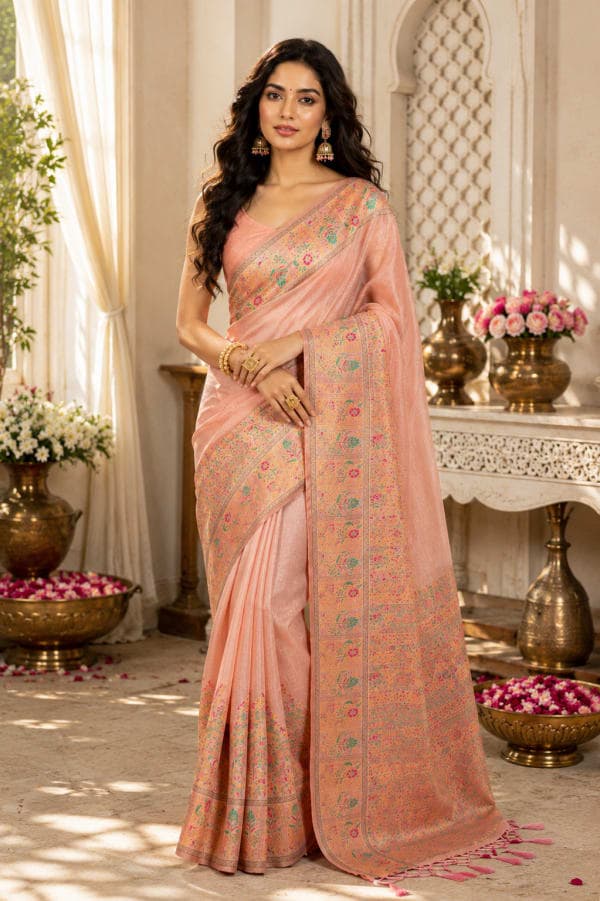
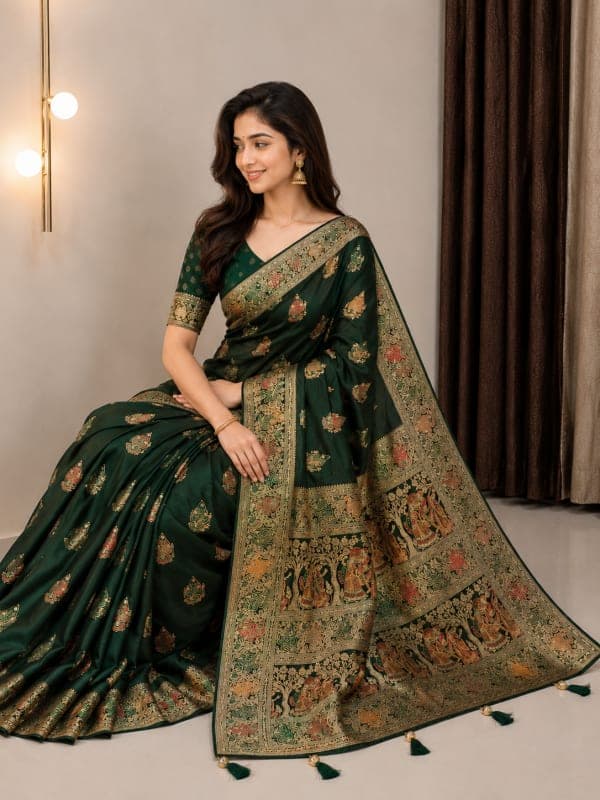
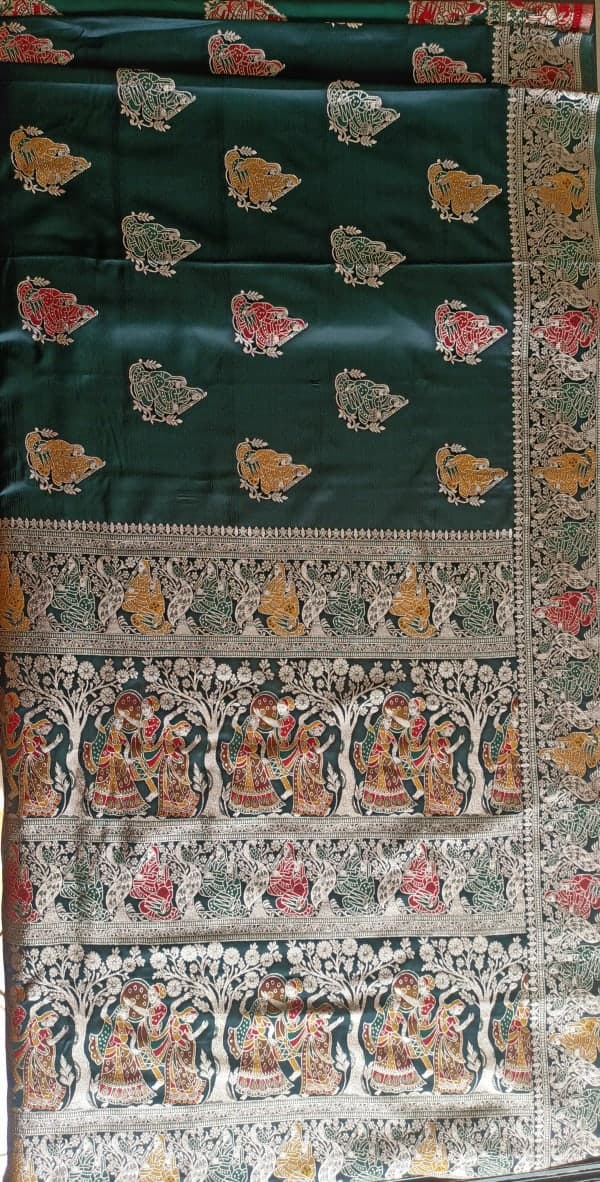
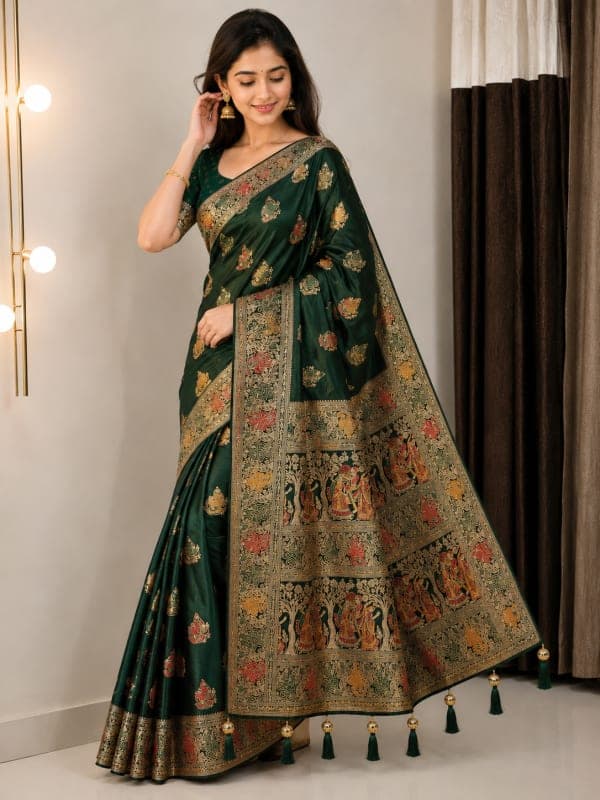
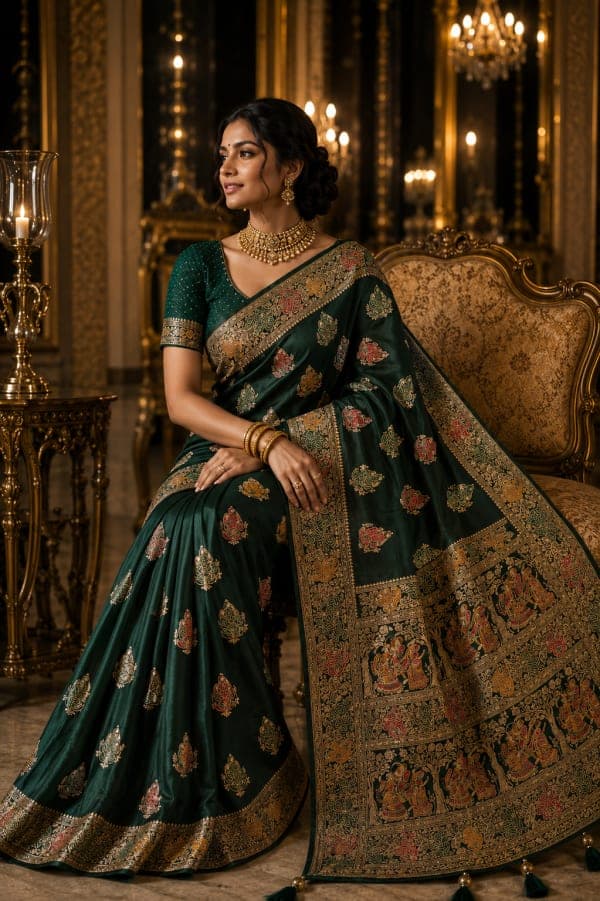
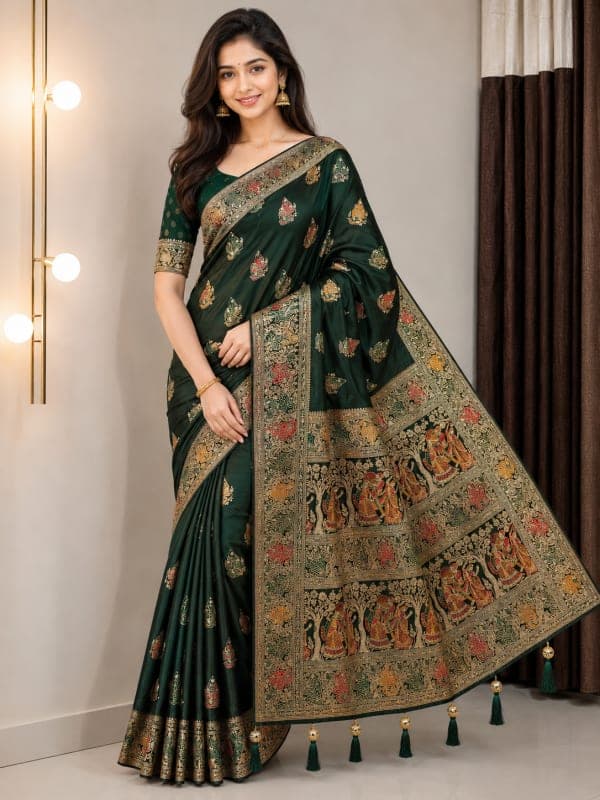
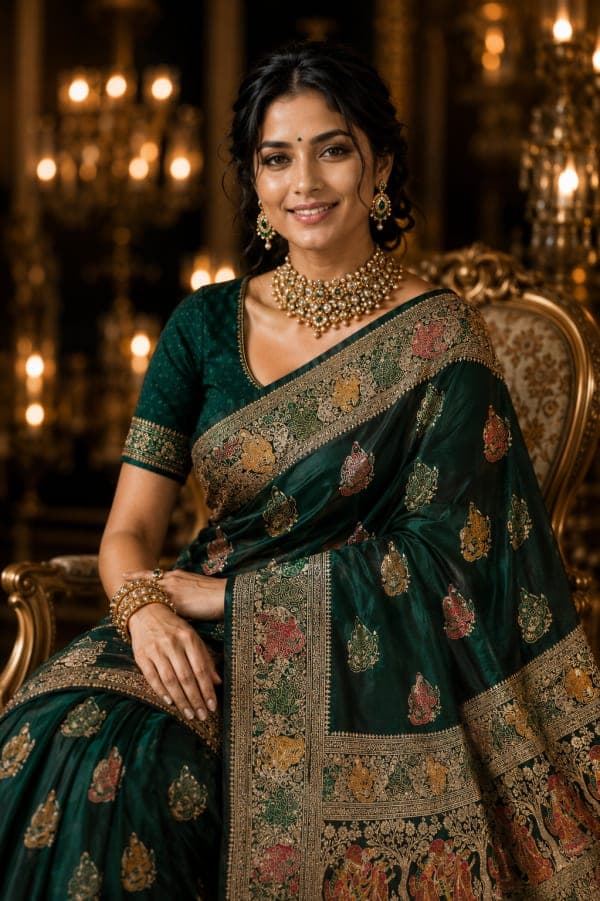
The Four Things That Actually Drive Price
Silk saree prices vary enormously - and it isn't random. Four factors do most of the work: silk purity, zari content, weaving technique, and handwork hours.
1. Silk Purity
100% pure mulberry silk costs more than silk-cotton or art-silk blends because the raw material itself is more expensive and the weaving is more demanding.
2. Zari Content and Type
Real gold/silver-toned zari (often silver thread coated in gold, historically pure gold/silver) costs meaningfully more than synthetic metallic thread - and the amount of zari coverage (border-only vs. full-body) makes a large difference.
3. Weaving Technique
A handloom saree, woven by a single artisan over days or weeks, costs more than a power-loom saree that can be produced far faster. Techniques like double-ikat (Patola) are especially labor-intensive and priced accordingly.
4. Handwork Hours
Hand-embroidery, hand-painted motifs, or intricate zari work done by hand rather than machine adds direct labor cost - this is often the single biggest price driver on premium pieces.
A Rough Mental Framework
- Budget range: machine-woven, silk-blend, minimal zari
- Mid-range: pure silk, moderate zari border, some machine-assisted embellishment
- Premium range: handloom or heritage weave (Banarasi, Kanjeevaram, Patola), substantial real zari, significant handwork hours
Quick Answer: Why do two "silk sarees" from different sellers have such different prices for what looks like the same design?
It usually comes down to silk purity and zari authenticity - two visually similar sarees can use completely different underlying materials, and the visual difference isn't always obvious in a photo.
Every saree in our Silk Sarees collection lists exact fabric and zari details so you can compare fairly.