


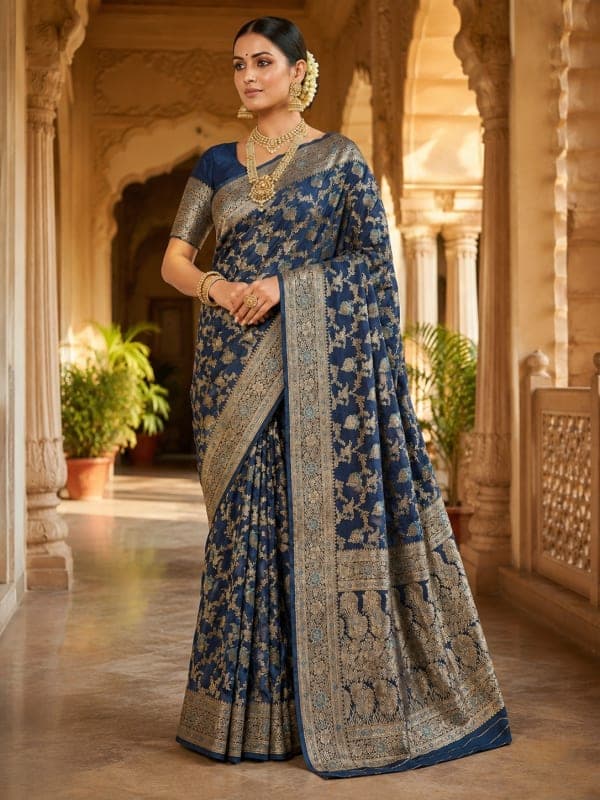
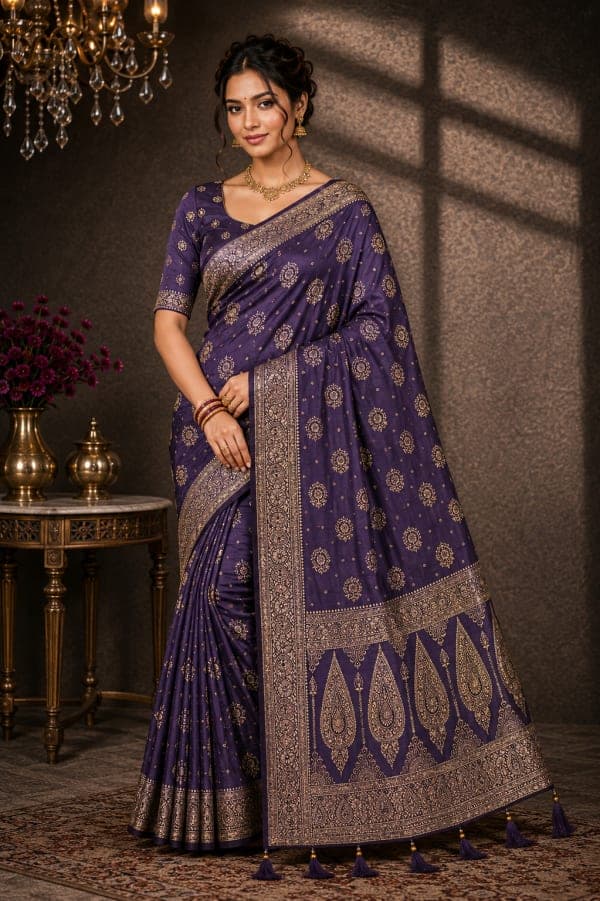
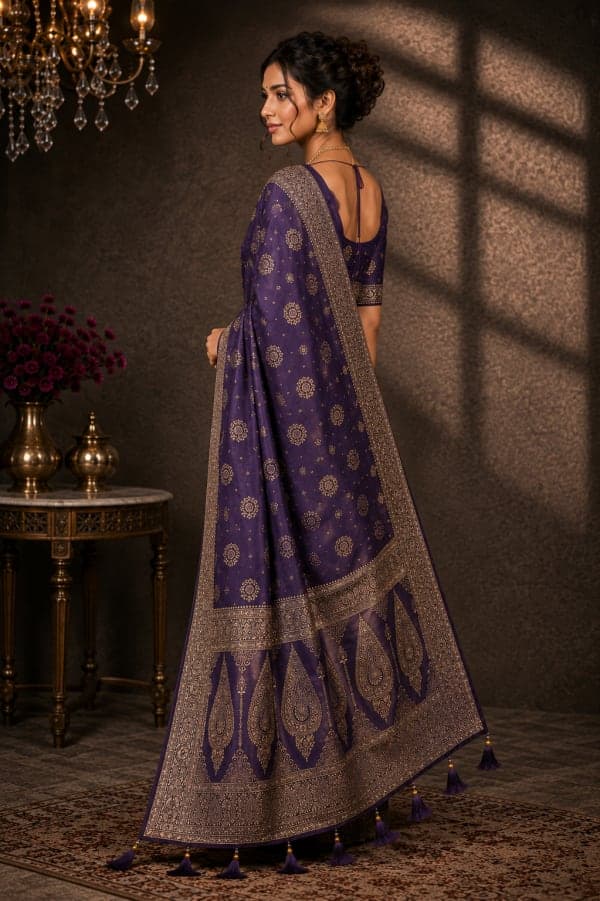
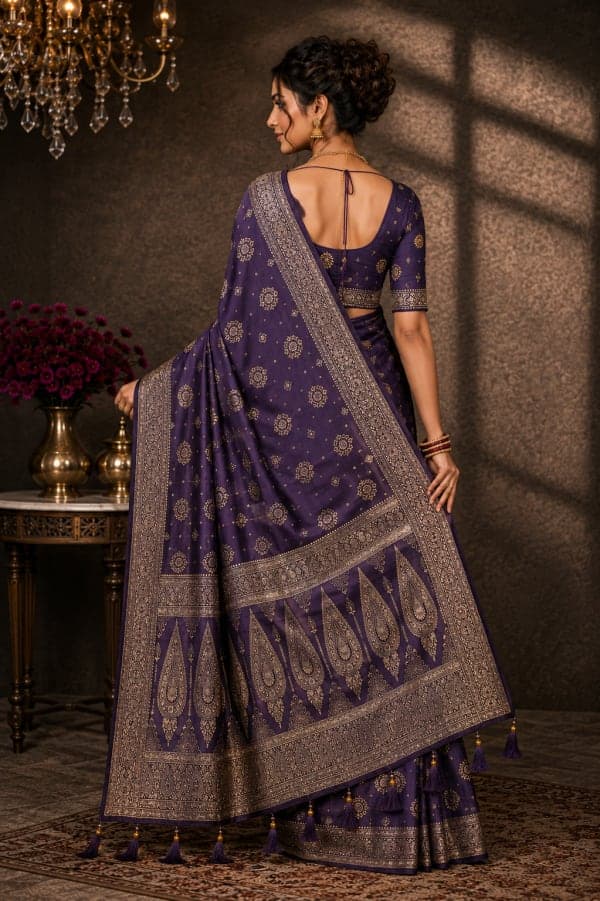
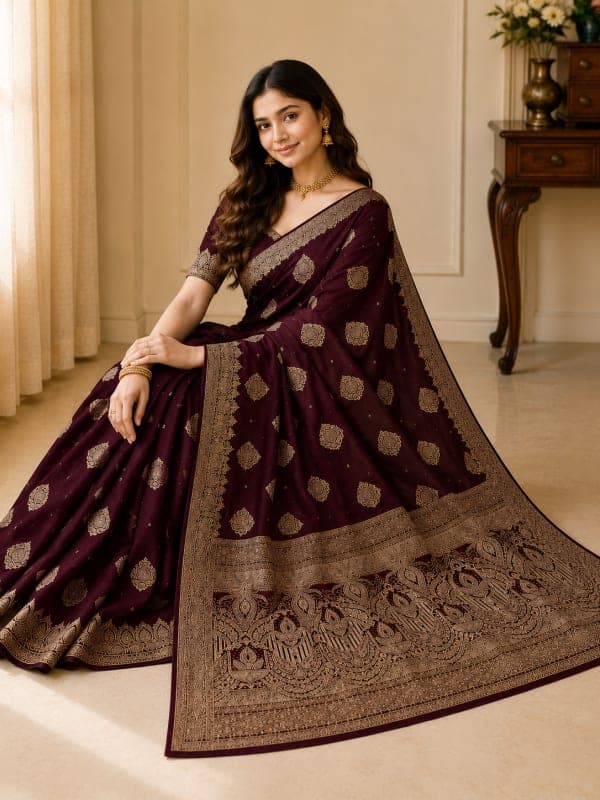
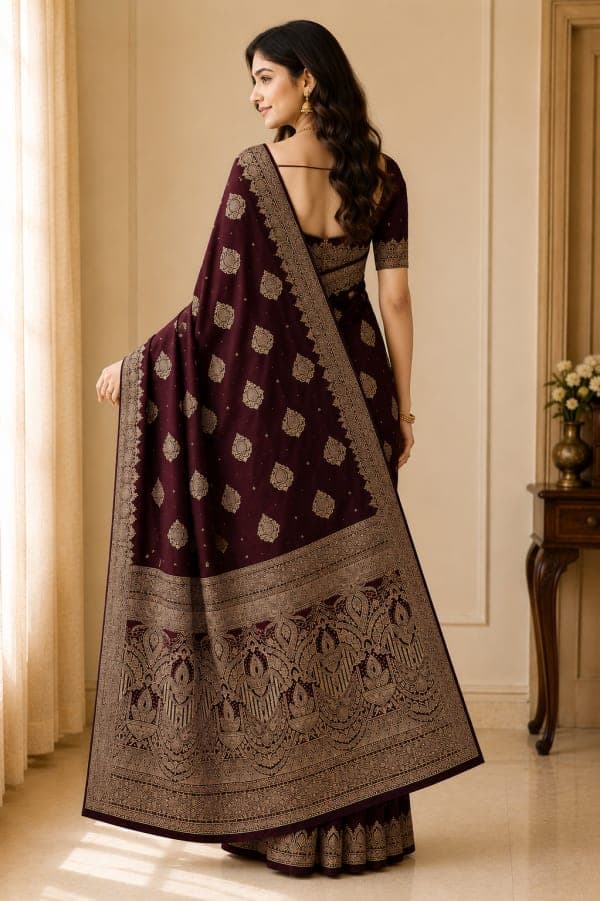
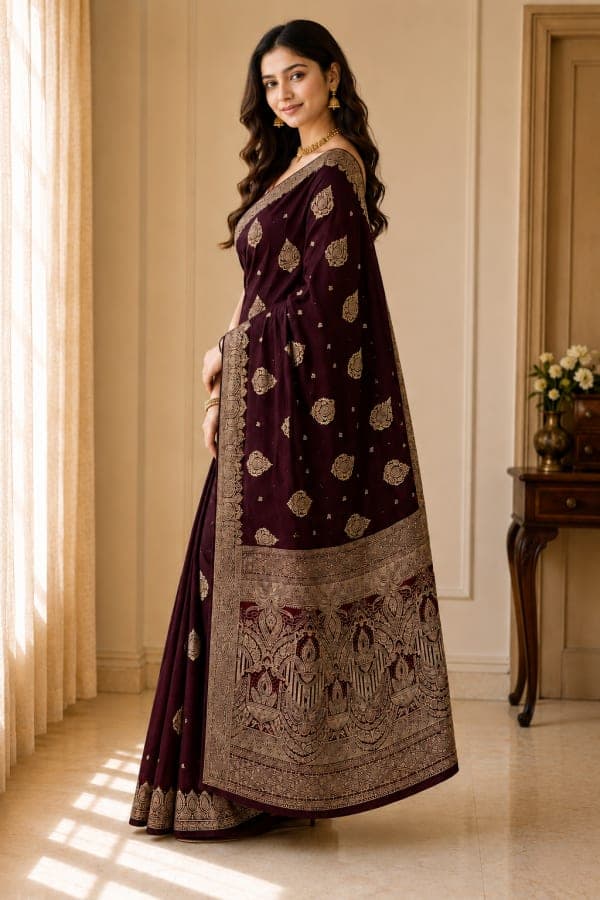
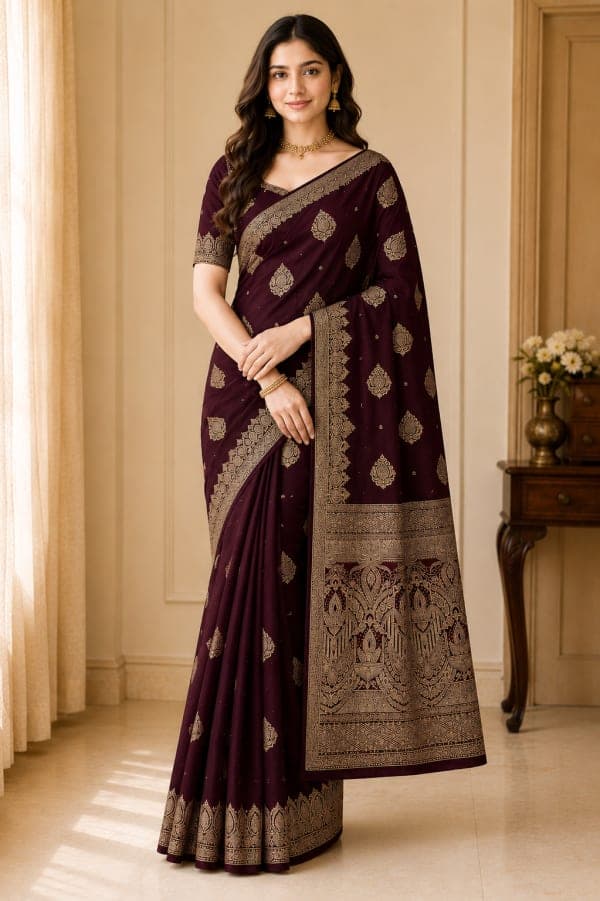
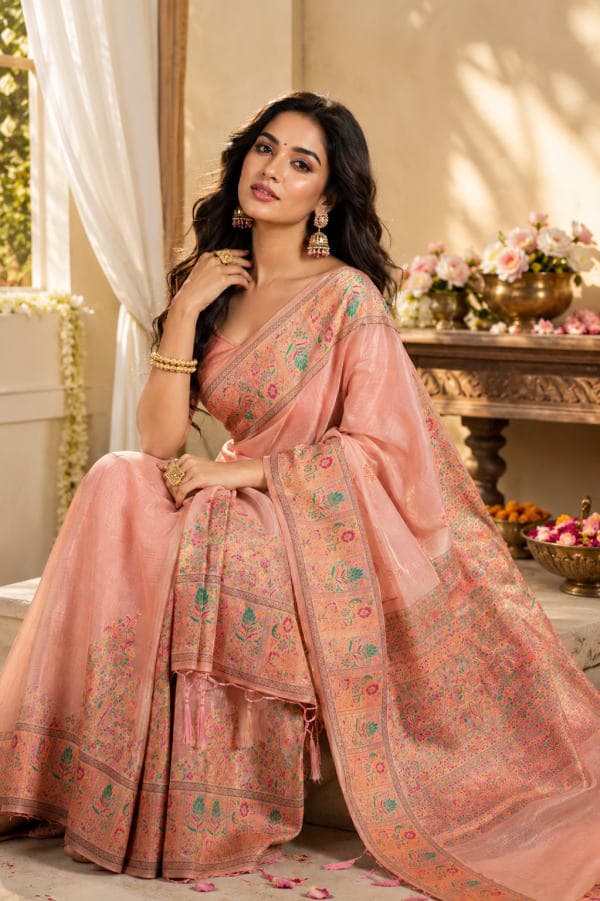
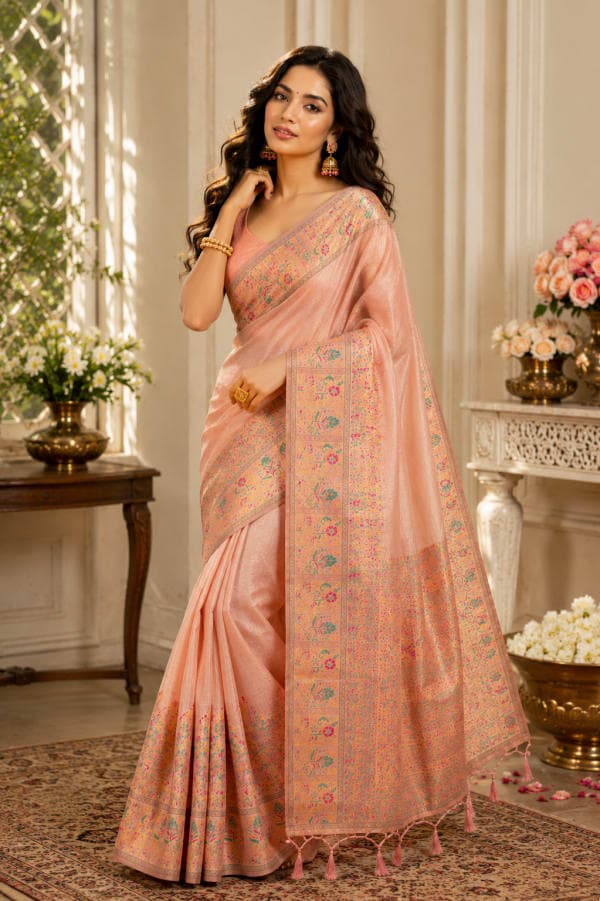
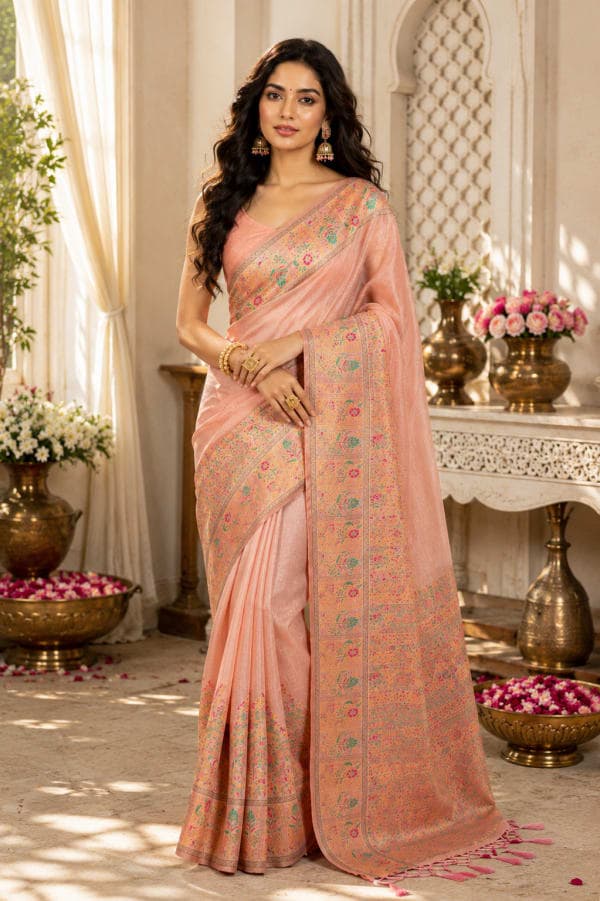
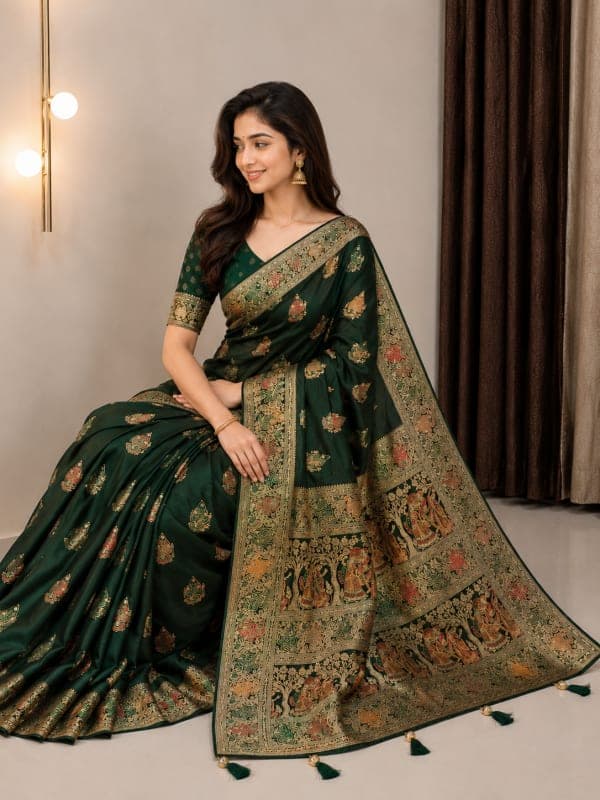
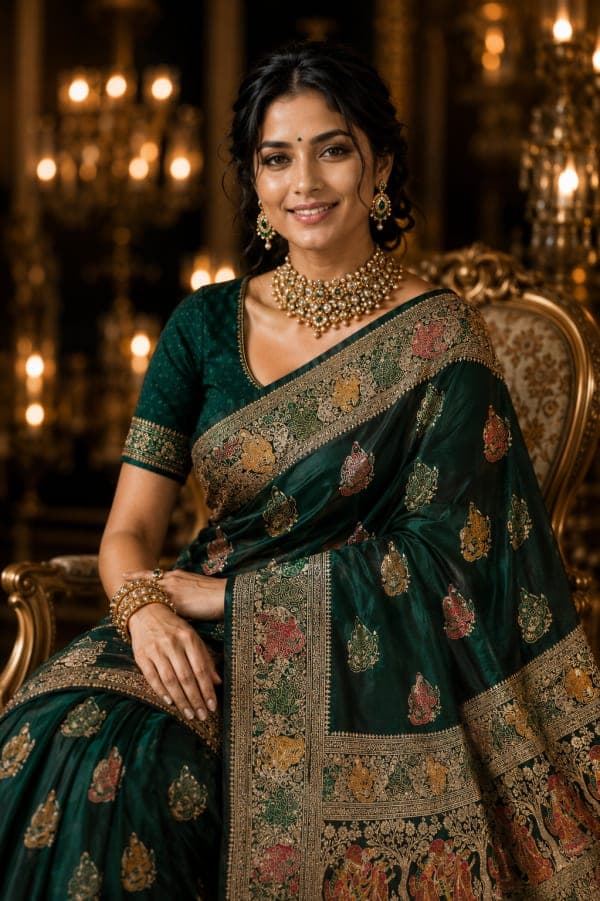
The Pallu Is Where You Can Experiment Most
Once the base drape is set, the pallu is the most flexible part of a saree look - small changes here noticeably shift the overall feel without needing a different saree or drape entirely.
8 Pallu Variations to Try
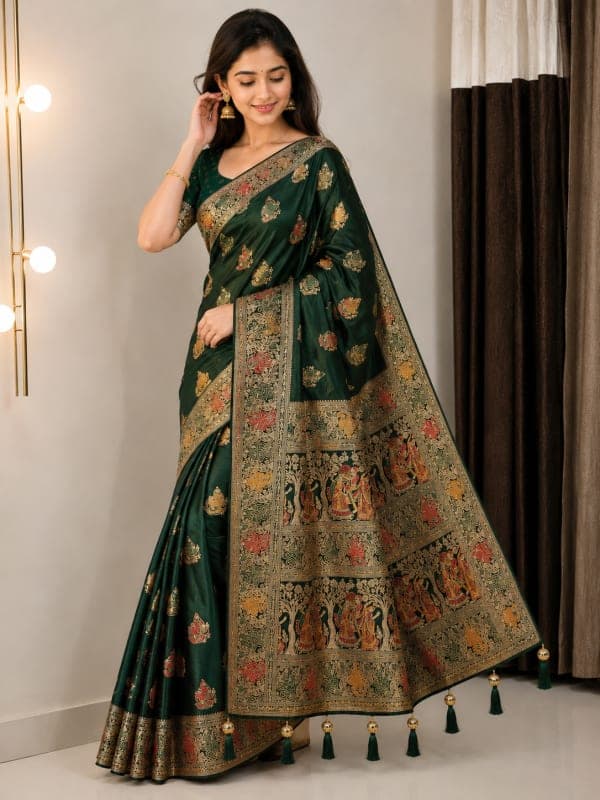
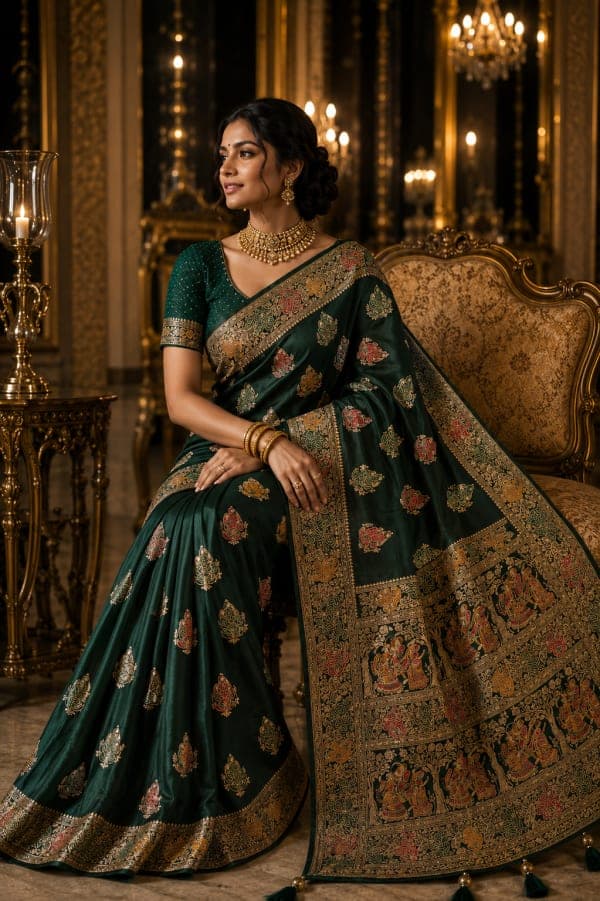
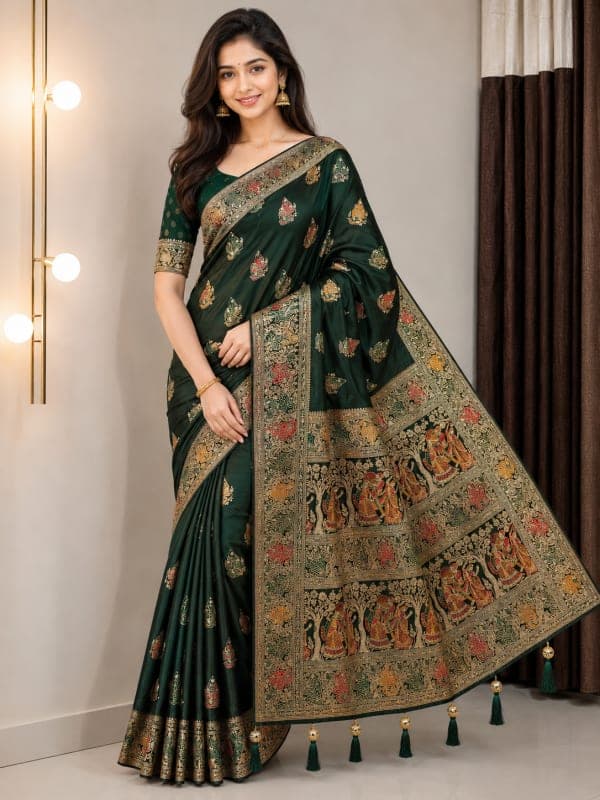
- Classic shoulder drape: the traditional Nivi style, pallu falling straight down the back from the left shoulder.
- Front pallu (seedha pallu): pallu brought over the right shoulder to hang in front - common in Gujarati draping.
- Belted pallu: a fabric or metallic belt cinched at the waist over the pallu, popular in 2026's fusion styling.
- Pleated fan pallu: extra-wide, fanned pleats pinned at the shoulder for a more dramatic silhouette - common for bridal looks.
- Double-shoulder drape: pallu split and pinned across both shoulders, used for a more structured, modern look.
- Cape pallu: pallu styled to fall like an attached cape, often paired with a corset blouse.
- Draped-arm pallu: pallu wrapped loosely around one arm rather than pinned at the shoulder - a softer, more casual variation.
- Trail pallu: an extra-long pallu left to trail slightly on the ground, used mainly for bridal or reception looks with room to move slowly.
Choosing Based on Fabric
Structured pallu styles (fan, cape, belted) work best with fabrics that hold shape - silk, silk-georgette blends. Softer variations (draped-arm, classic shoulder) suit fluid fabrics like chiffon and pure georgette better.
Quick Answer: Do I need pins for every pallu style?
Most variations beyond the classic drape do need at least one or two pins to hold their shape through movement - safety pins or small decorative brooches both work.
Once you've picked a style, revisit our saree draping guide for the full base-drape steps.