


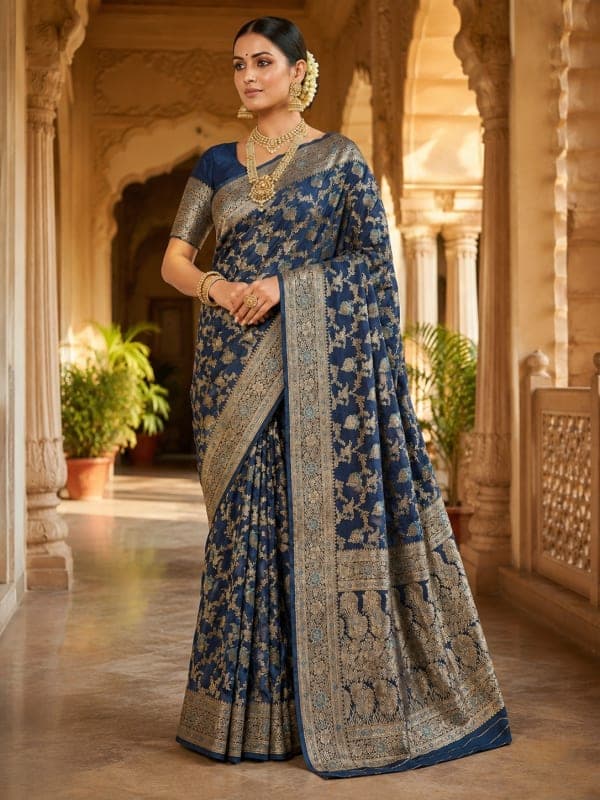
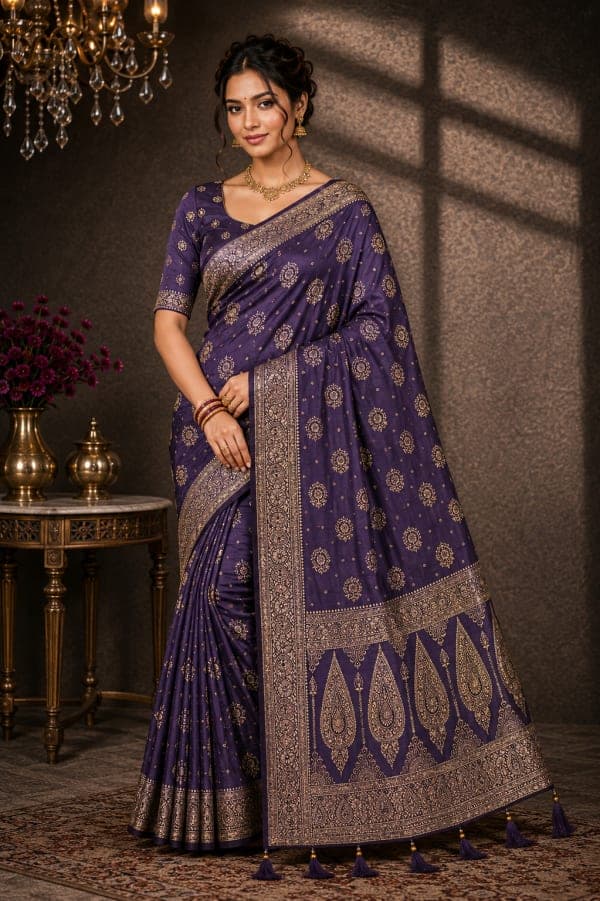
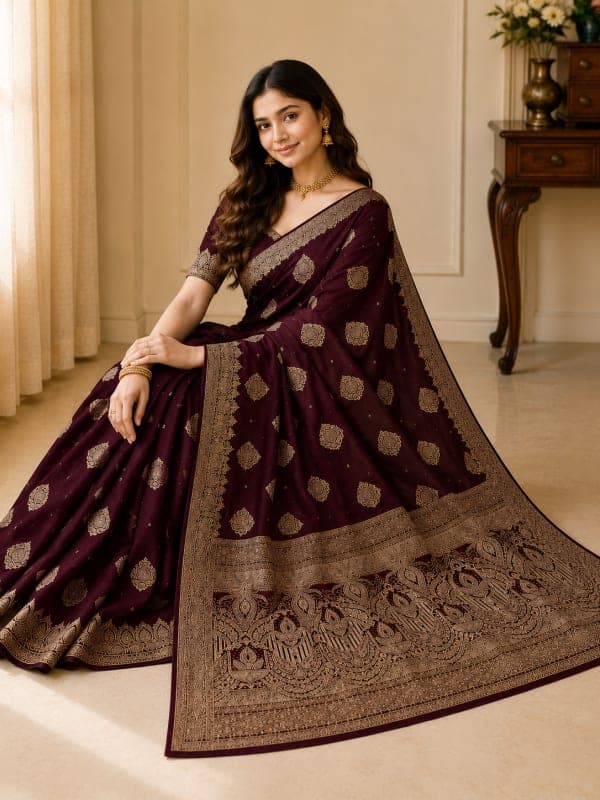
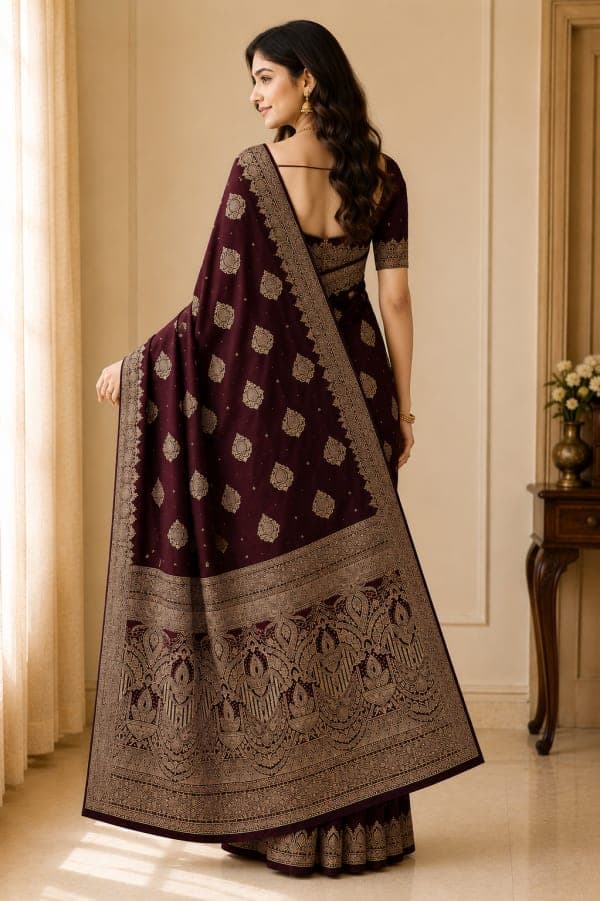
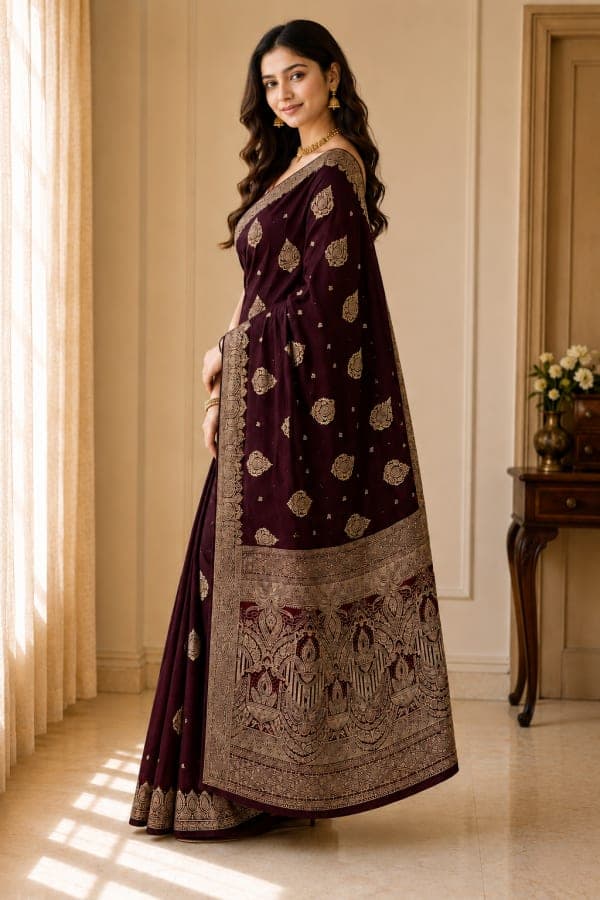
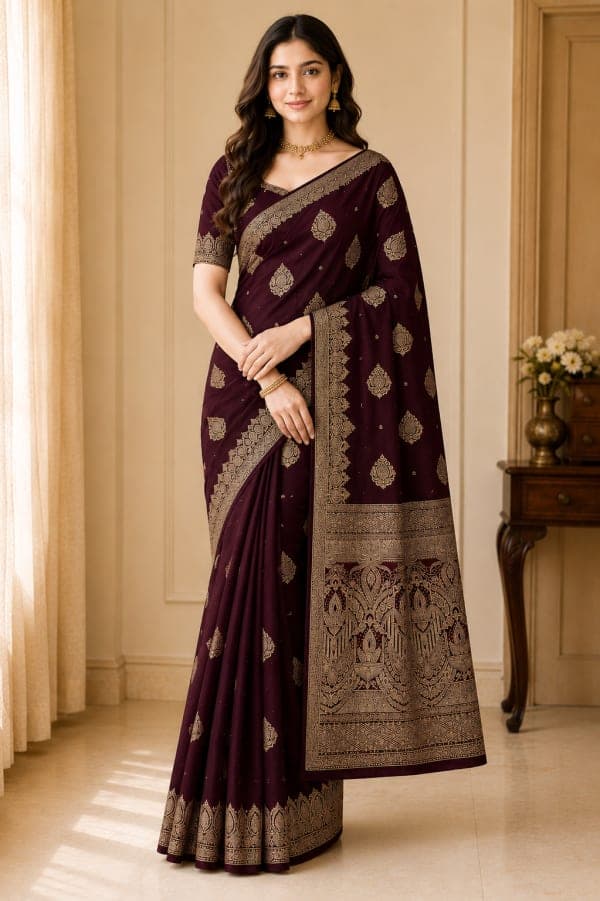
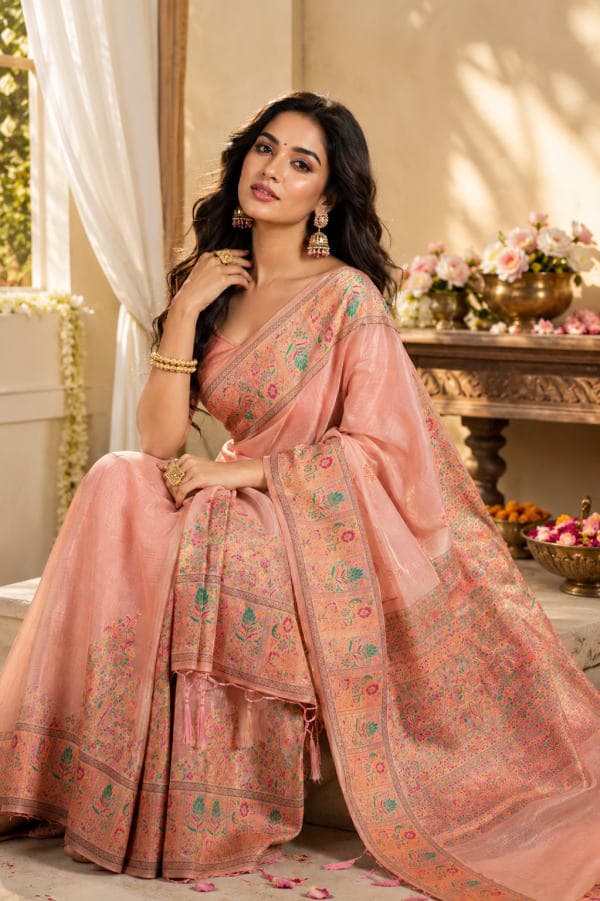
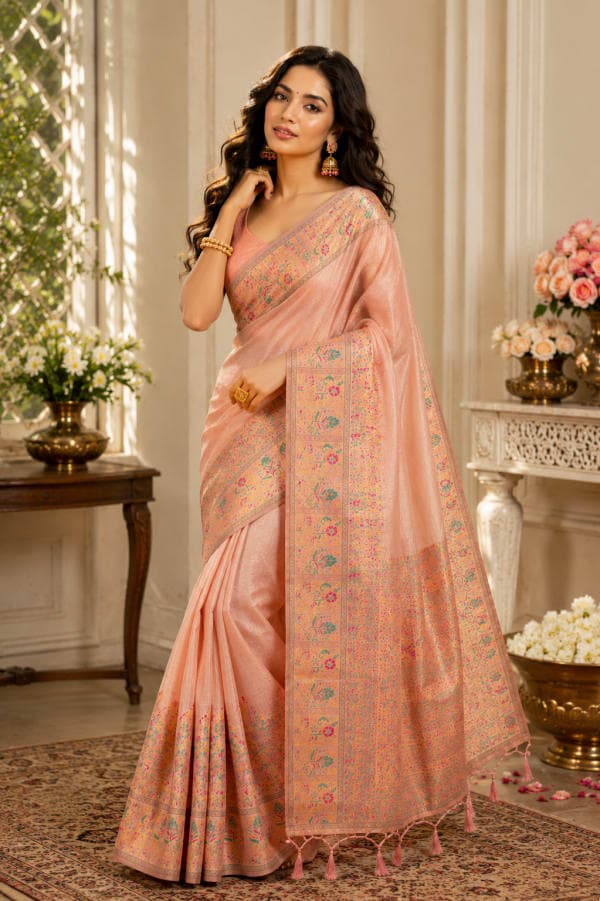
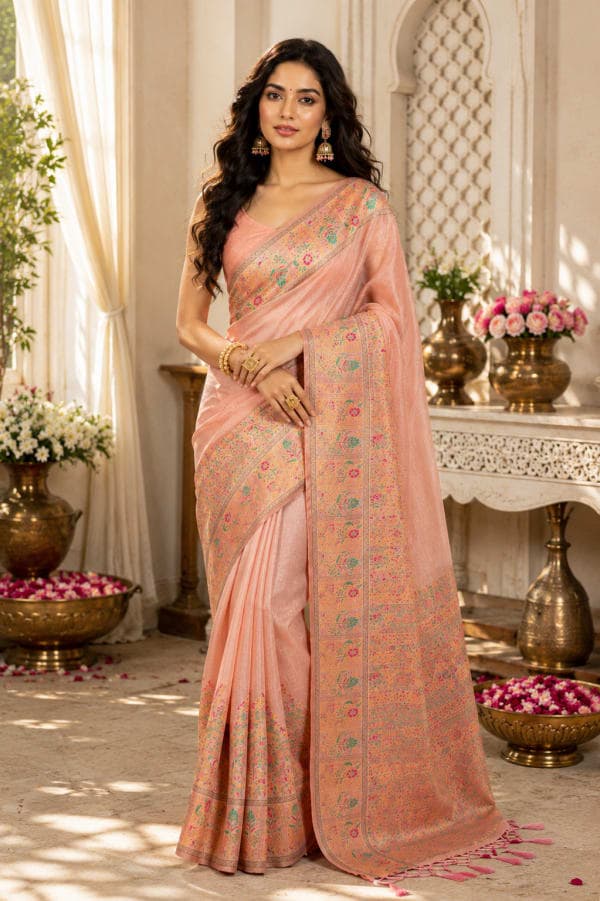
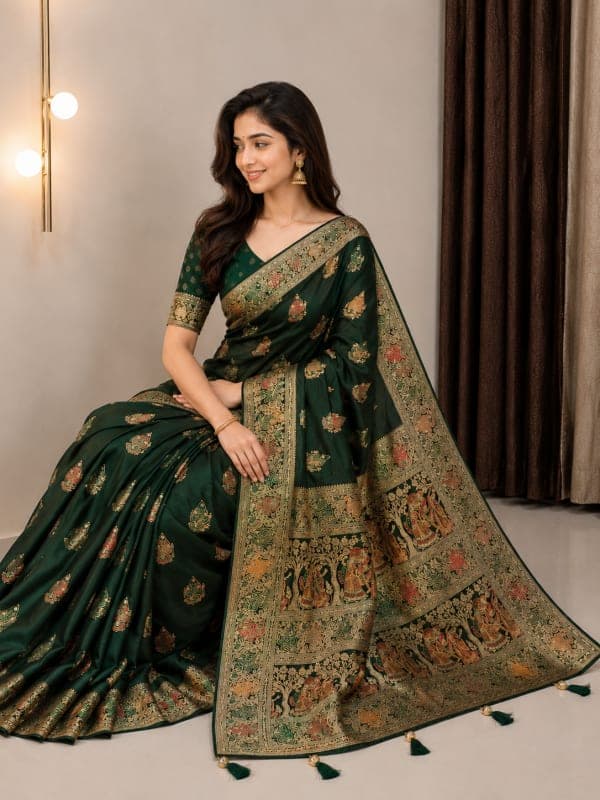
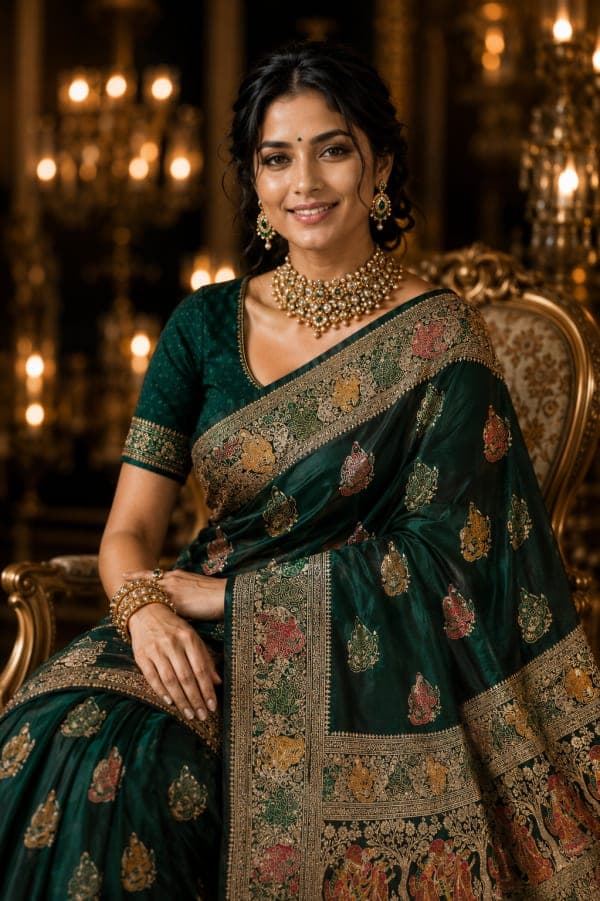
What "Budget Silk" Actually Means
Under ₹3,000 typically gets you a machine-woven silk or silk-blend saree rather than a fully handwoven heritage piece - and that's not a compromise so much as a different category. Handloom, hours-of-handwork sarees cost more because of labor time, not just material.
What to Expect at This Price Point
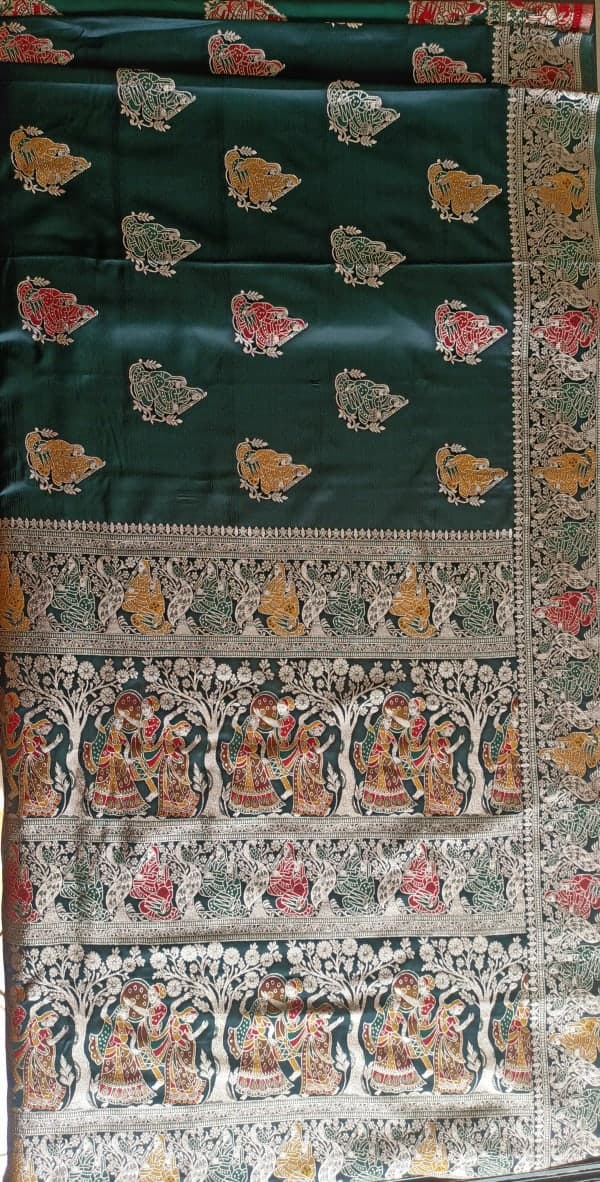
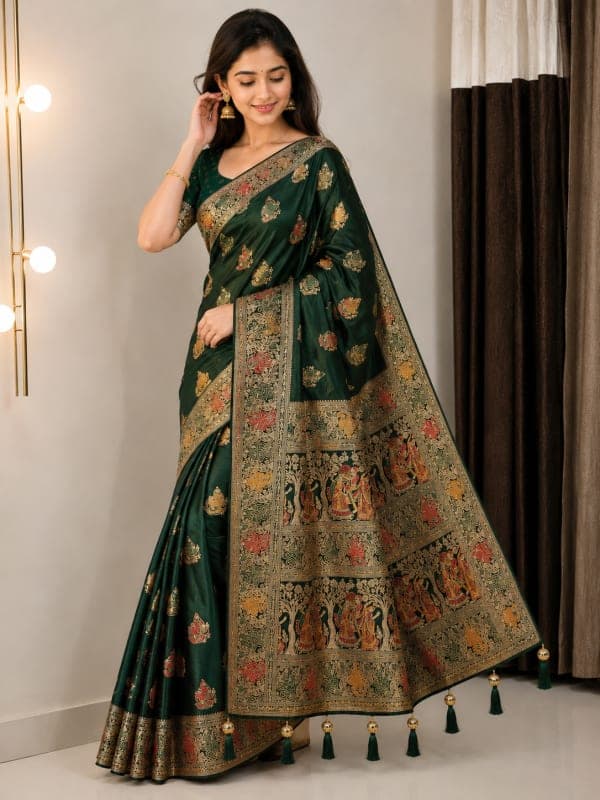
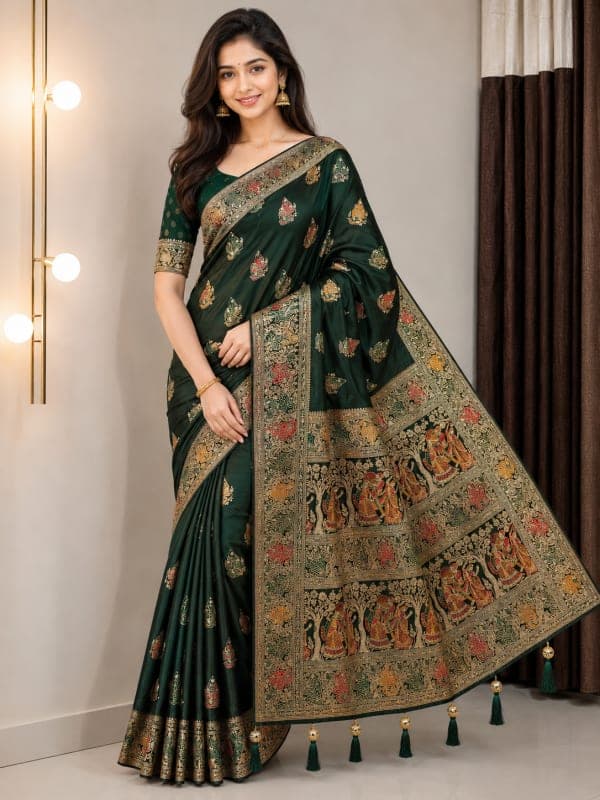
- Machine-assisted zari border work rather than hand-embroidered zari
- Silk-cotton or art-silk blends more often than 100% pure mulberry silk
- Simpler, repeating motifs rather than one-of-a-kind hand-painted or hand-woven designs
How to Get the Best Value Under ₹3,000
- Prioritize solid colors and simple borders over heavy embellishment - the embellishment is usually where budget pieces show their limits fastest.
- Check the fabric composition listed on the product page rather than relying on the word "silk" alone; "art silk" and "silk-blend" are both technically silk-adjacent but behave differently.
- Read return policies carefully - at this price point, a straightforward exchange option matters more than at a premium price where you're likely trying the item on carefully before buying.
Where the Savings Actually Come From
Surat's manufacturing scale is genuinely one of the reasons quality machine-woven silk can be sold affordably - you're paying for efficient production, not lower fabric quality per se.
Quick Answer: Is a ₹2,000 saree "fake silk"?
Not necessarily - it's more likely a silk-blend or machine-woven silk rather than a counterfeit. True counterfeits (polyester marketed as silk) are a separate, dishonest practice; a silk-blend at a lower price point is an honest, different product.
Browse our full sarees collection with filters by price to find the best value in this range.