


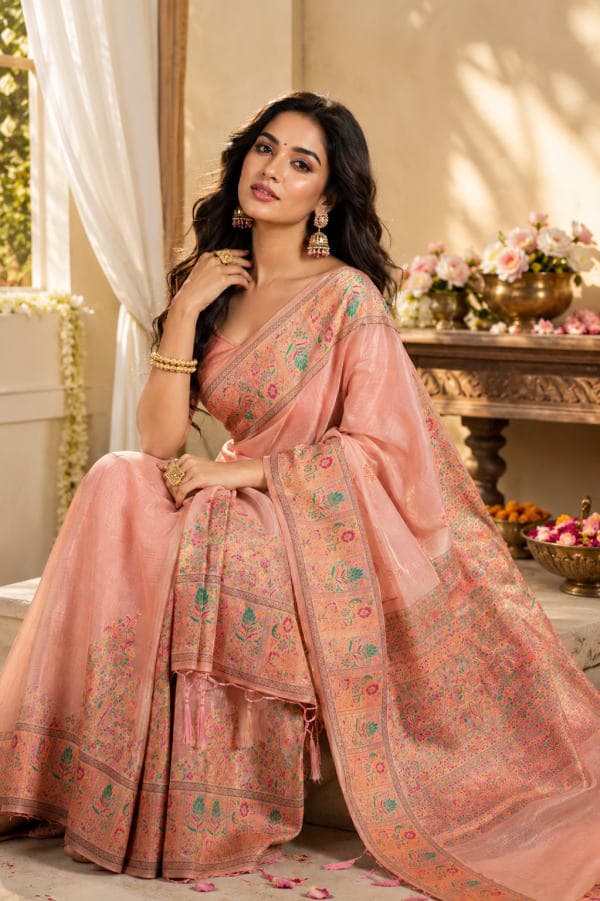
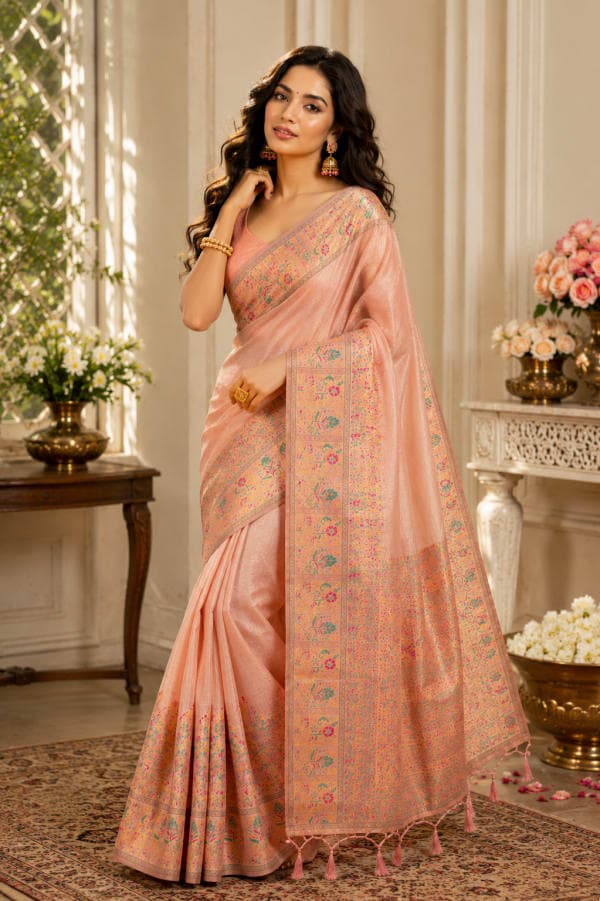
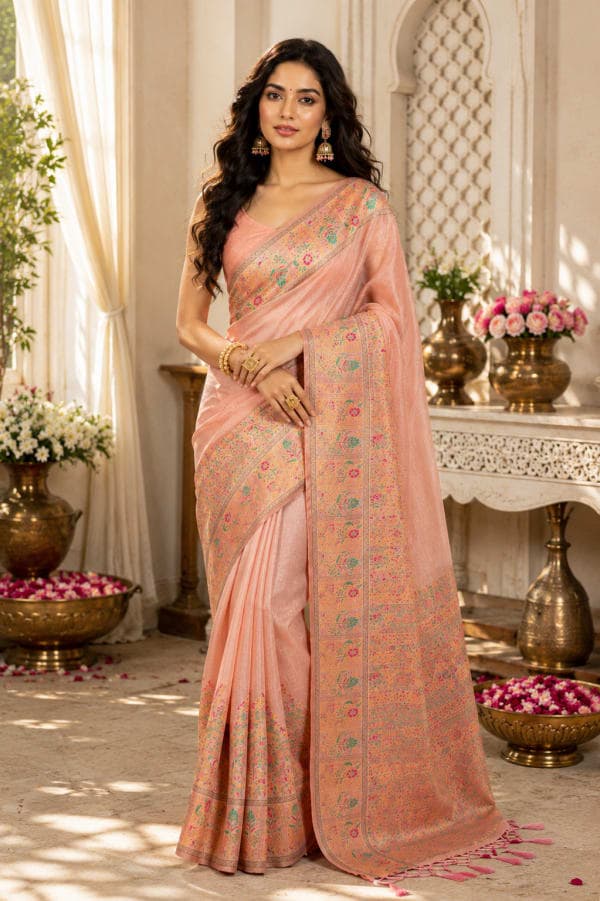
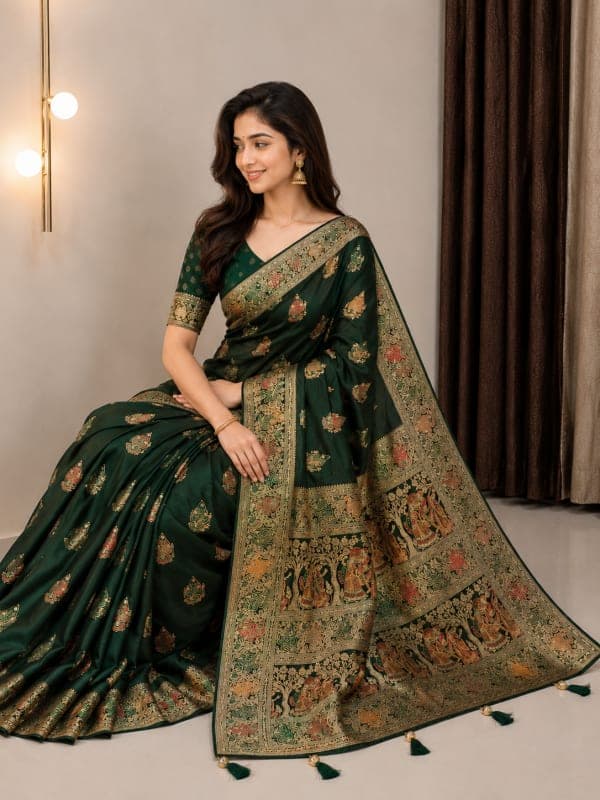
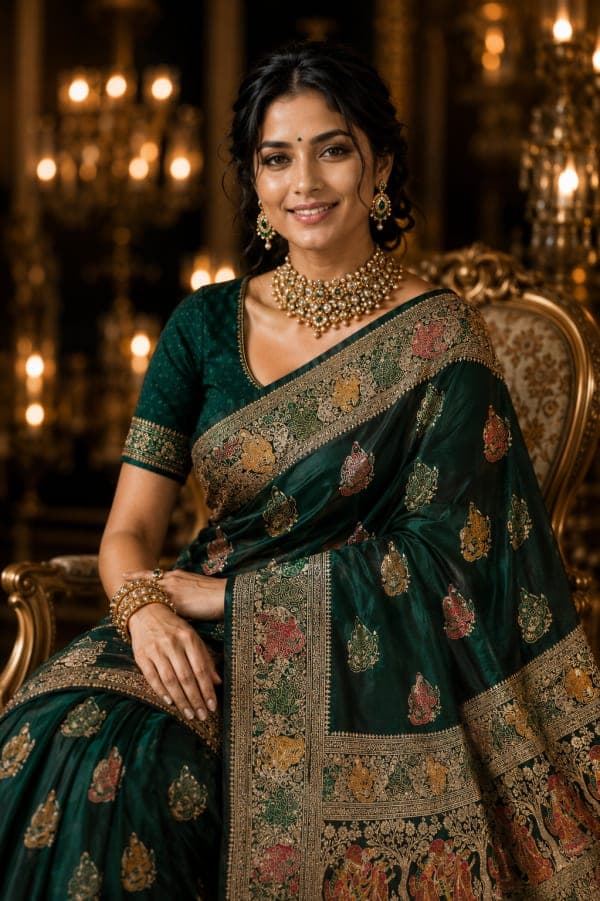
Two Icons, Two Very Different Personalities
Both are considered the gold standard of Indian bridal silk - but they come from opposite ends of the country and feel completely different on the body.
Origin and Weave
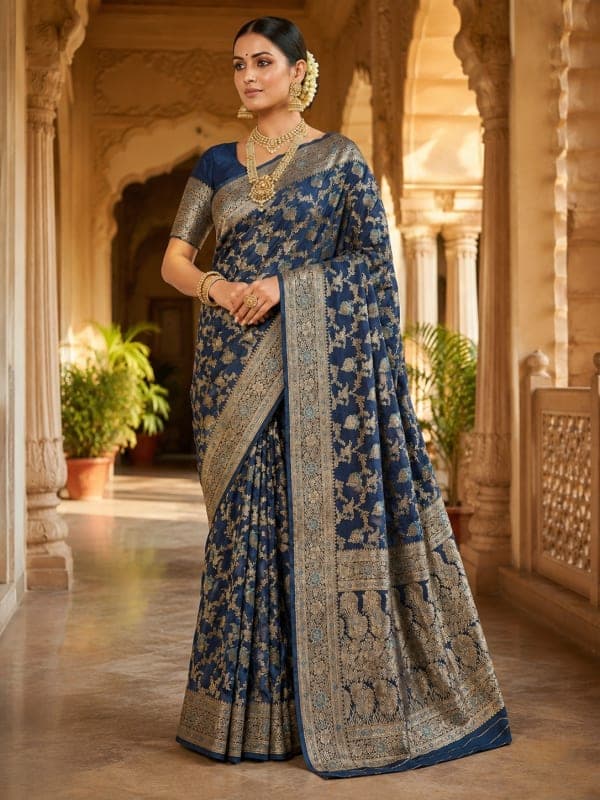
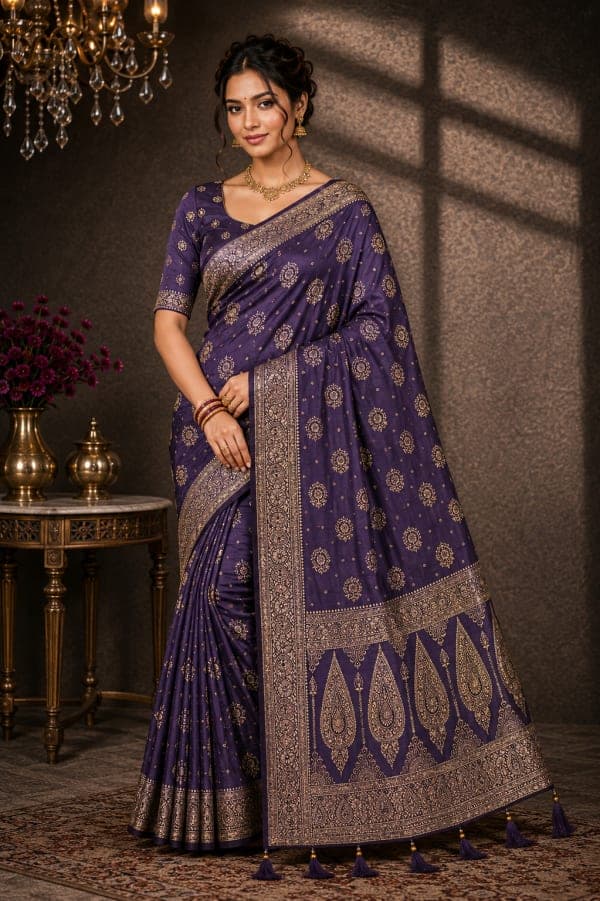
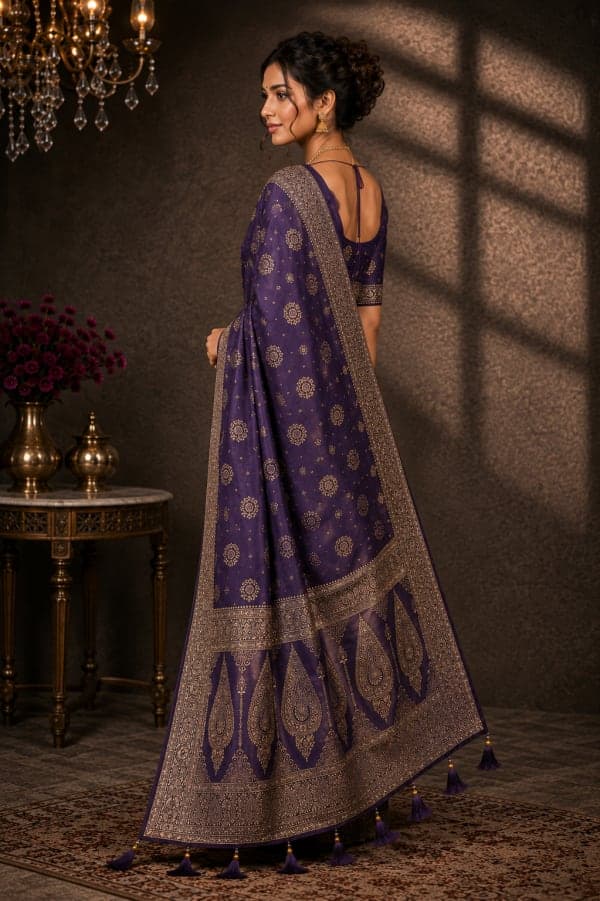
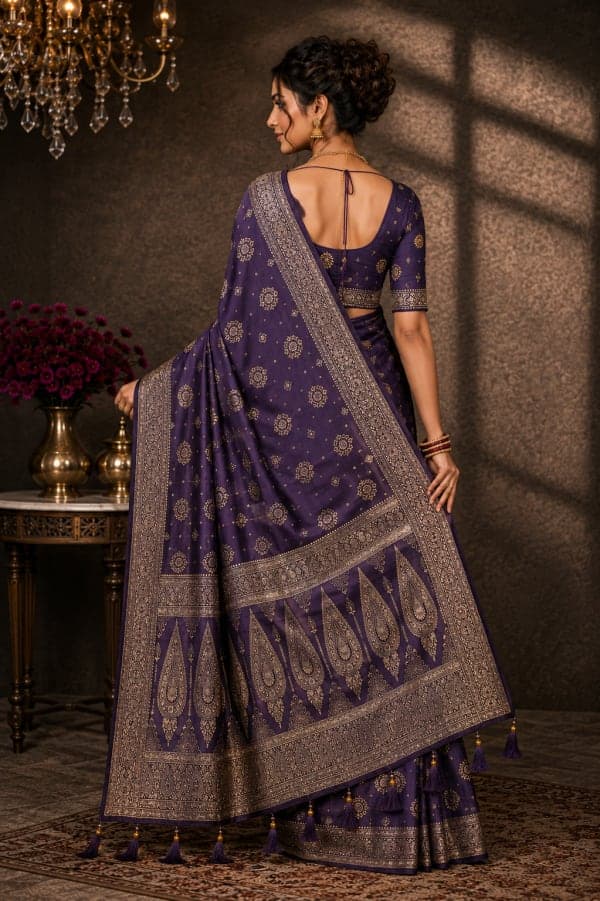
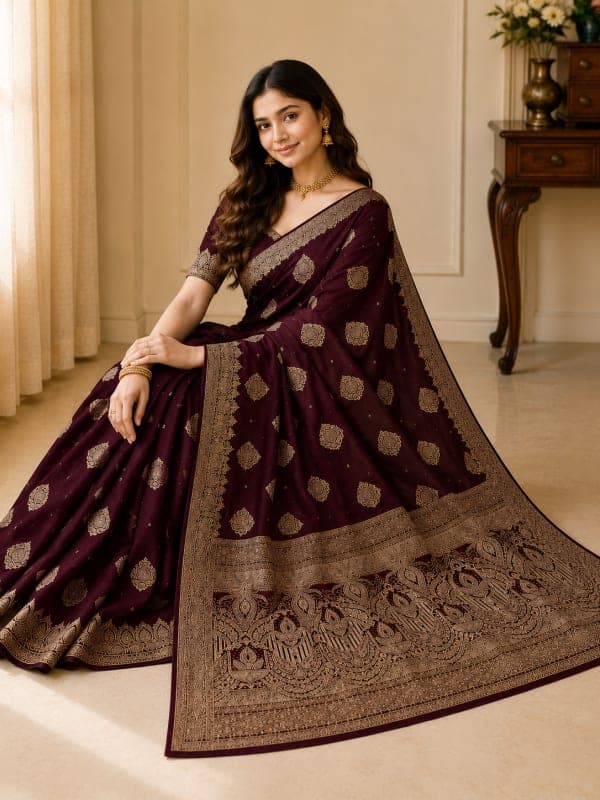
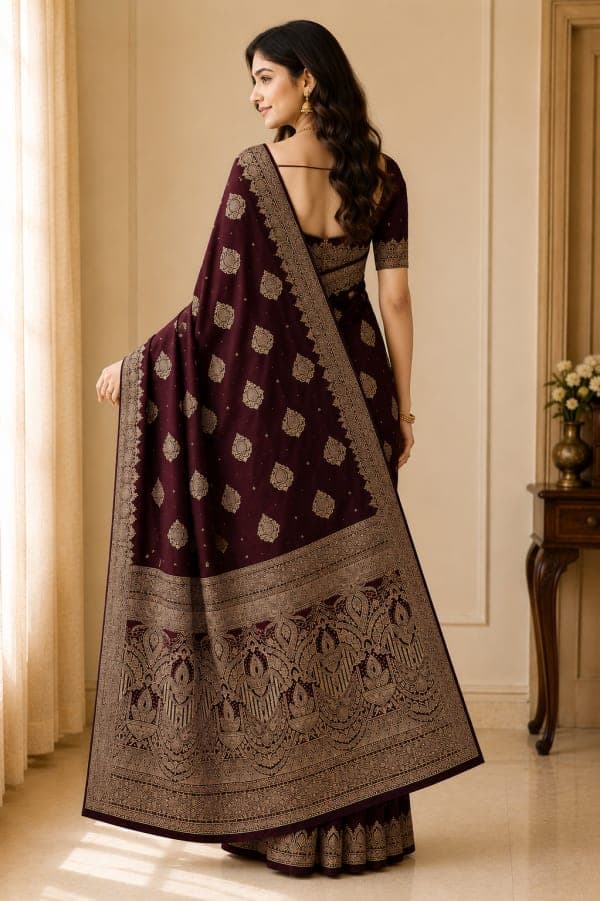
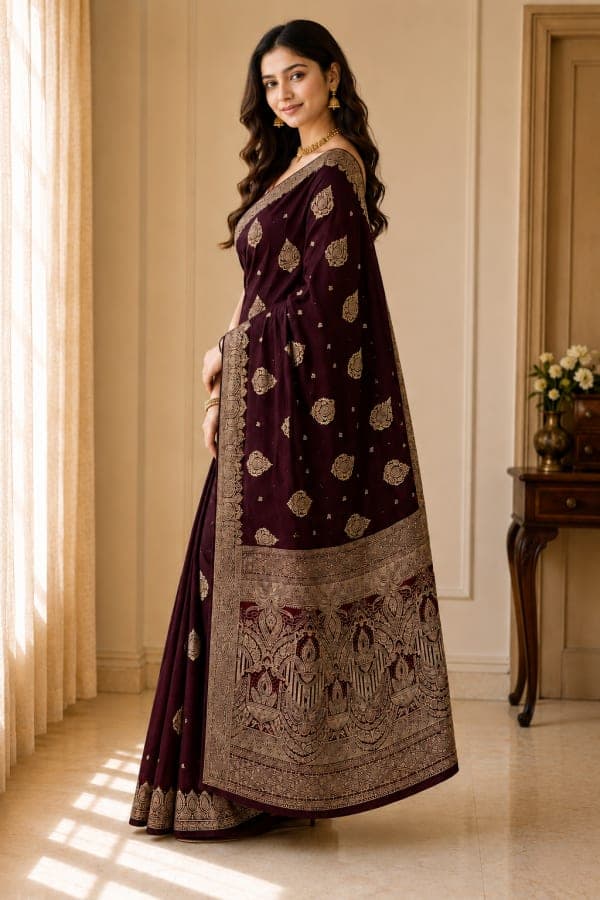
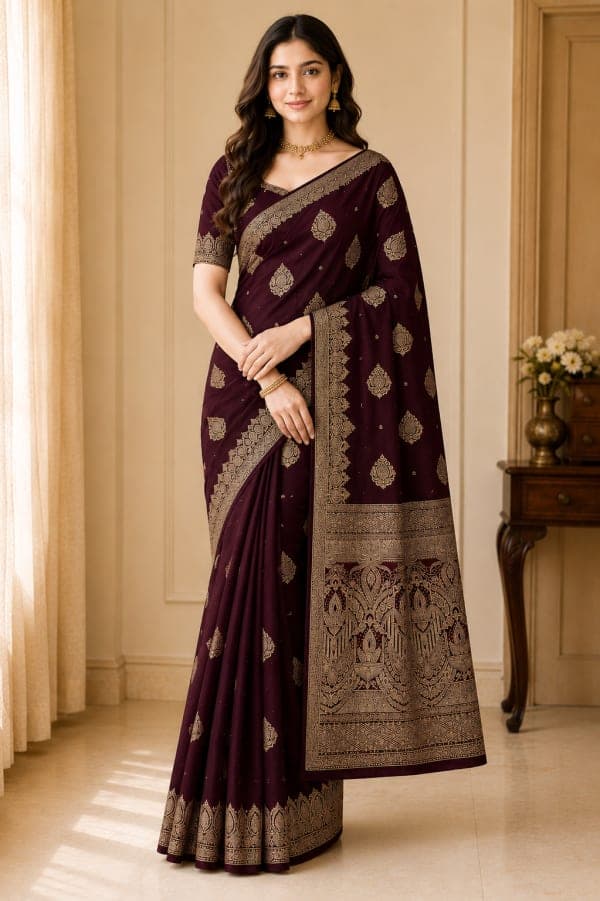
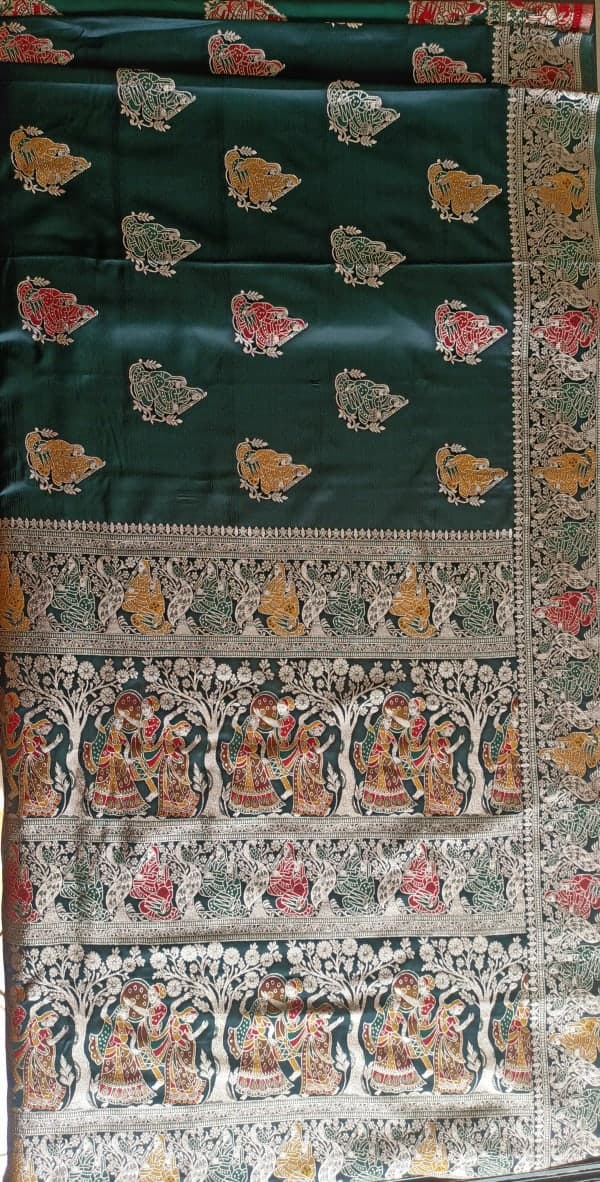
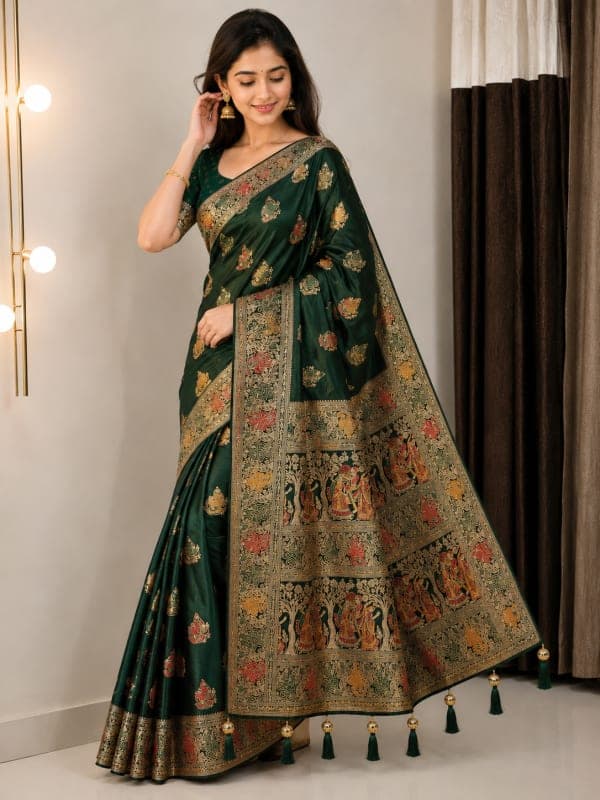
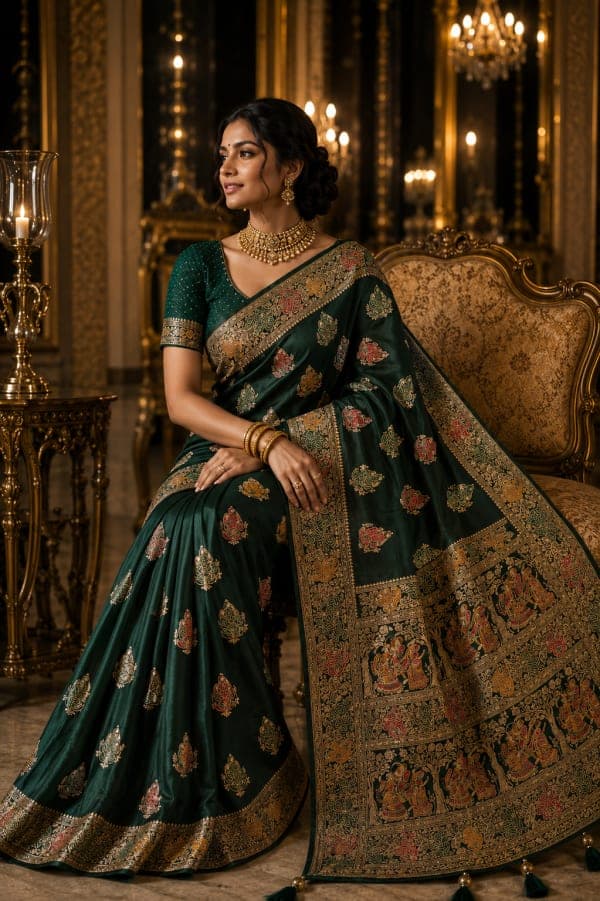
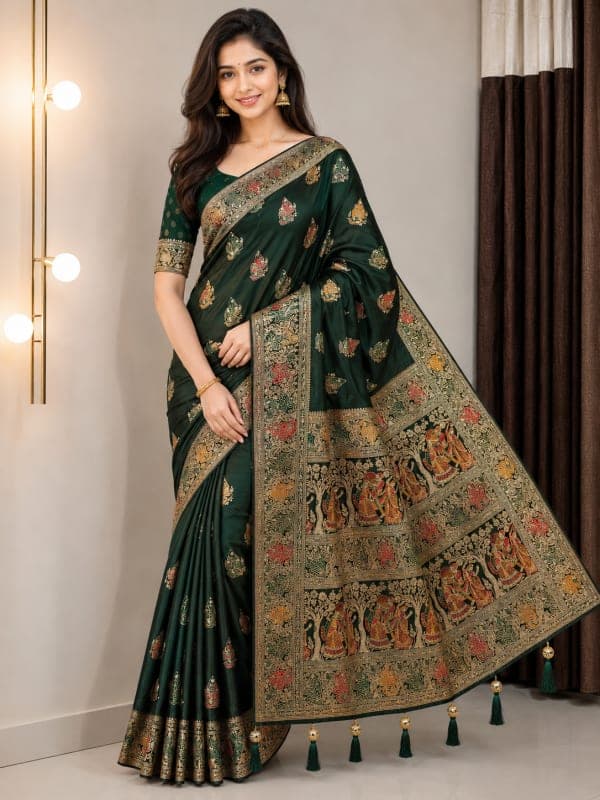
- Banarasi: woven in Varanasi, Uttar Pradesh, using Katan silk with intricate gold/silver zari brocade - often Mughal-inspired floral and paisley motifs woven directly into the fabric.
- Kanjeevaram: woven in Kanchipuram, Tamil Nadu, using thicker mulberry silk with a distinctive contrasting border woven separately and joined to the body - temple-inspired motifs, checks, and stripes.
Weight and Drape
Kanjeevaram is noticeably heavier and stiffer, which gives it a structured, regal drape that holds pleats well through a long ceremony. Banarasi is comparatively lighter and flows more, making it easier to move in for events like receptions or sangeet.
Color Character
Banarasi sarees tend toward richer jewel tones with metallic zari across the whole body. Kanjeevaram sarees are known for bold color-blocking - a saturated body color paired with a sharply contrasting border.
Which Occasion Suits Which
- Wedding ceremony / muhurtham: Kanjeevaram's weight and structure hold up through long rituals.
- Reception / sangeet: Banarasi's lighter drape and shimmer photograph beautifully under event lighting.
- South Indian weddings: Kanjeevaram is traditional.
- North Indian weddings: Banarasi is traditional.
Price Range
Both start in a similar bracket for machine-assisted weaves, but a genuine handwoven Kanjeevaram or Banarasi with real zari can run significantly higher - expect real zari and hours of handwork to be reflected in price.
Quick Answer: Which lasts longer?
Both, if cared for properly - pure mulberry silk in either weave can last decades with correct storage (see our silk saree care guide).
Explore both in our Silk Sarees collection to compare weight and drape side by side.