


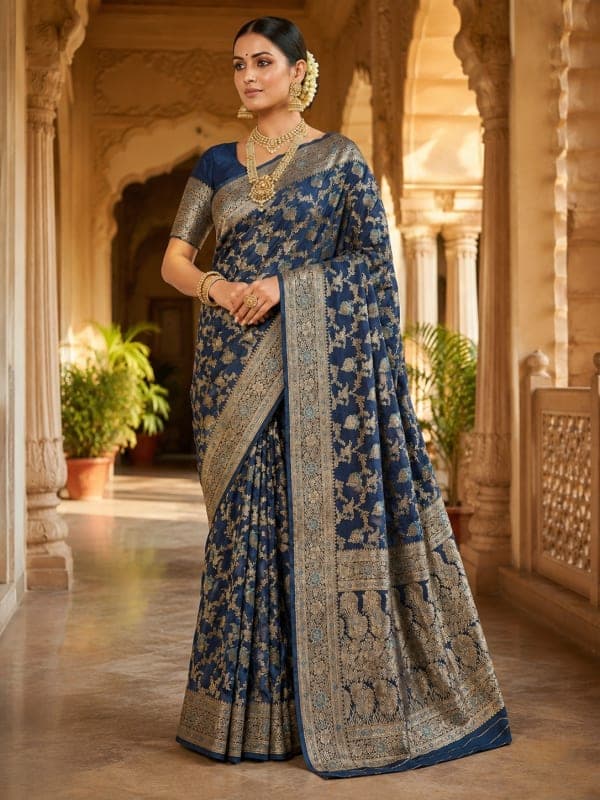
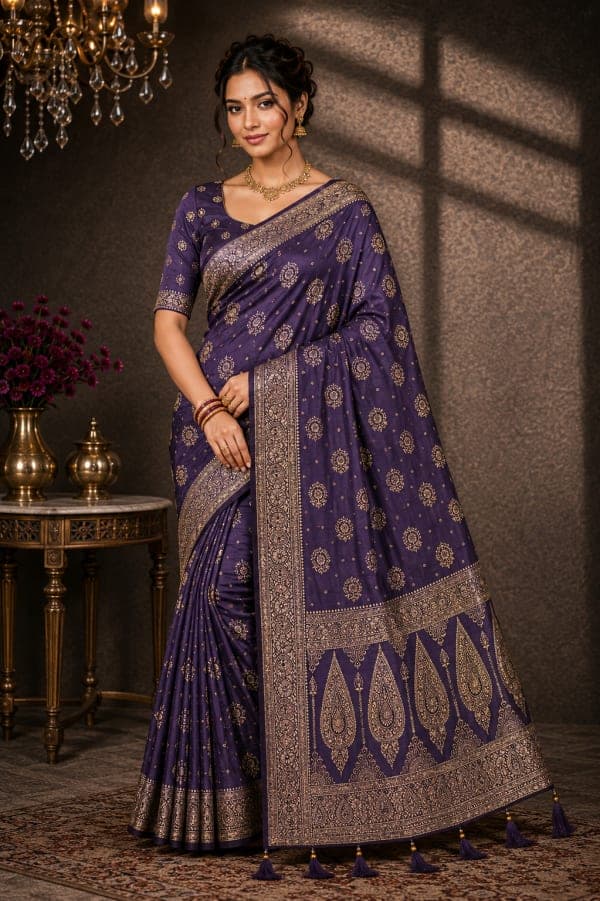
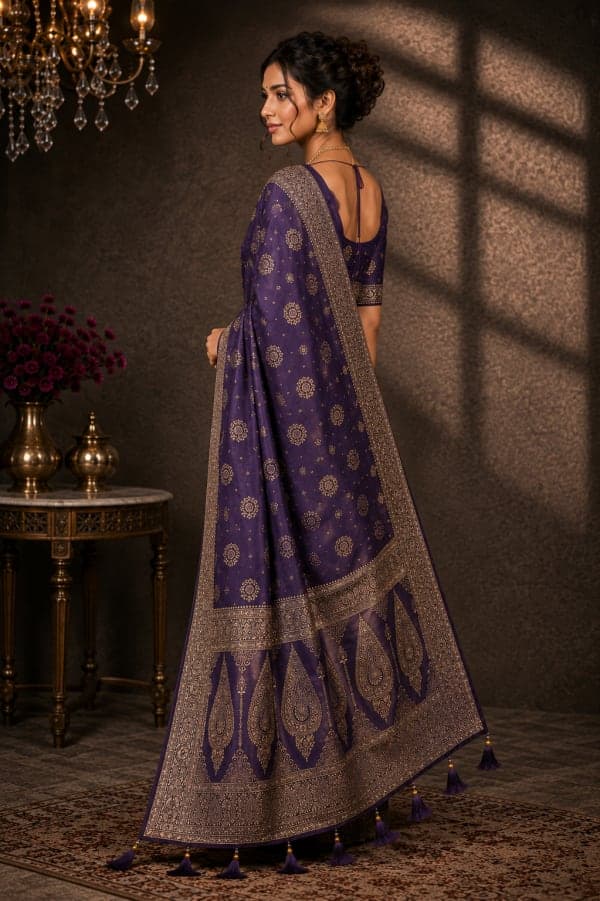
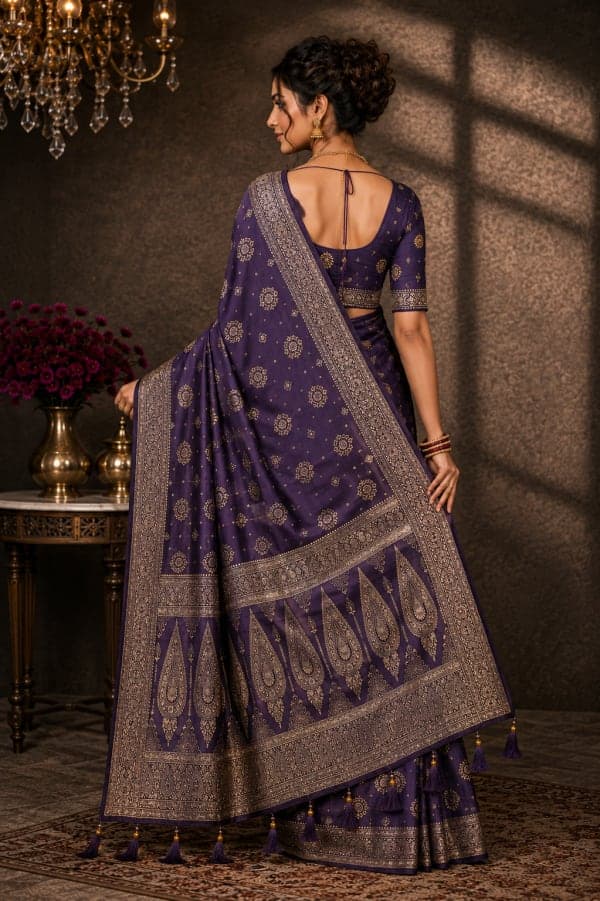
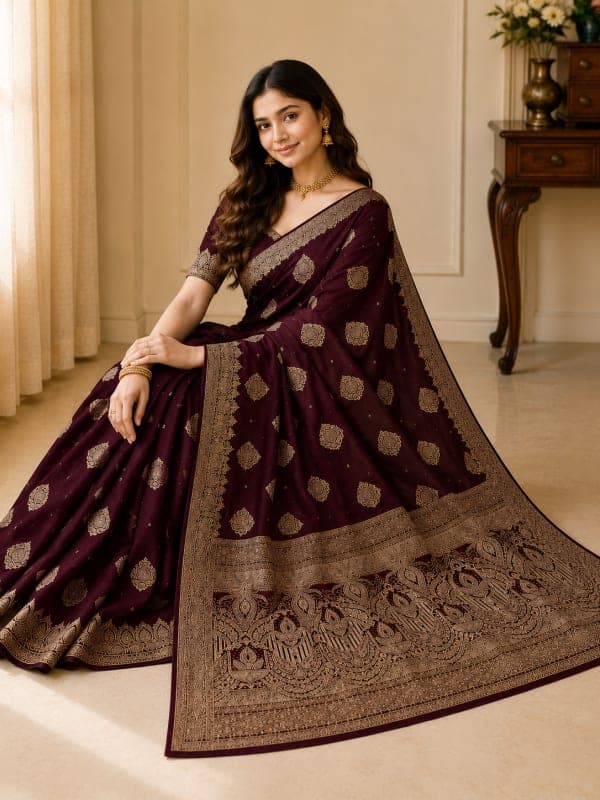
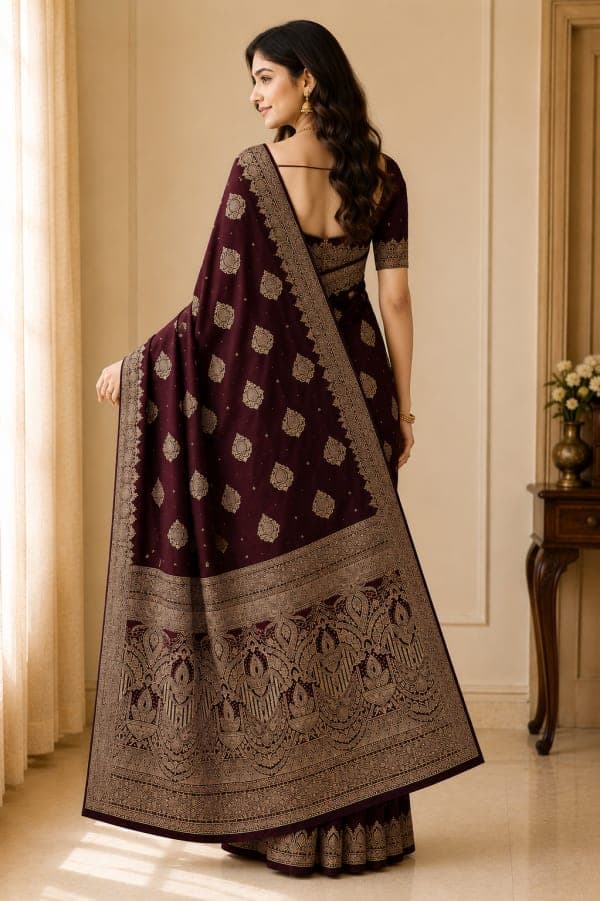
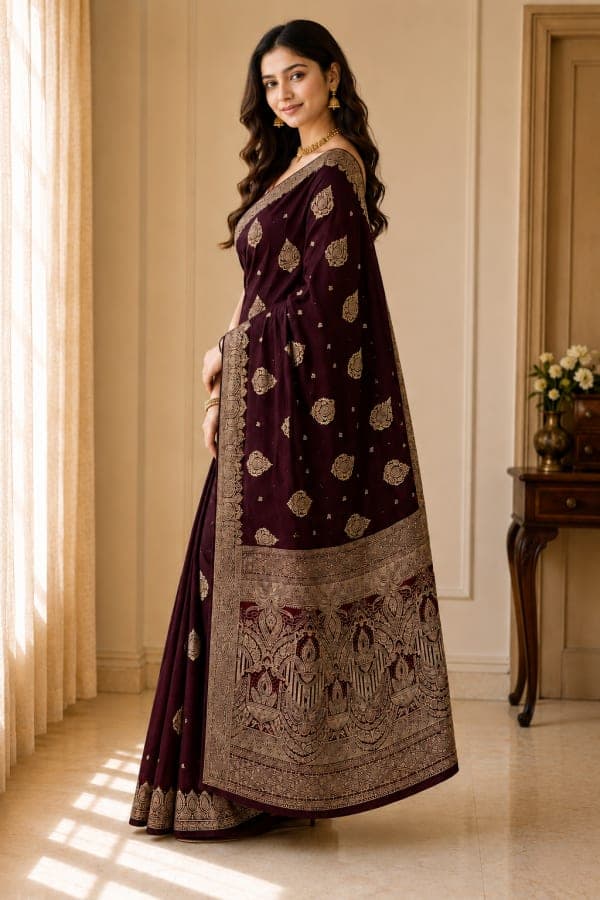
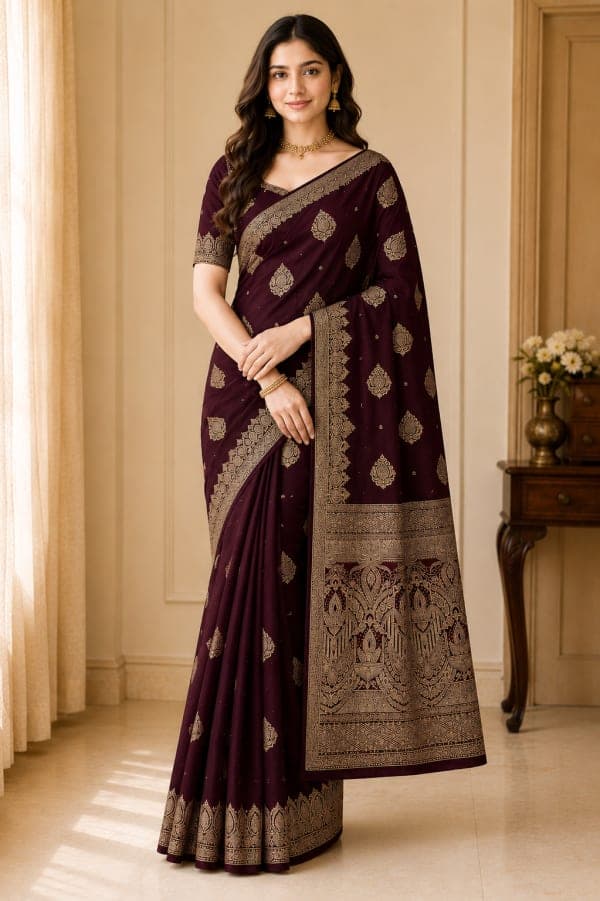
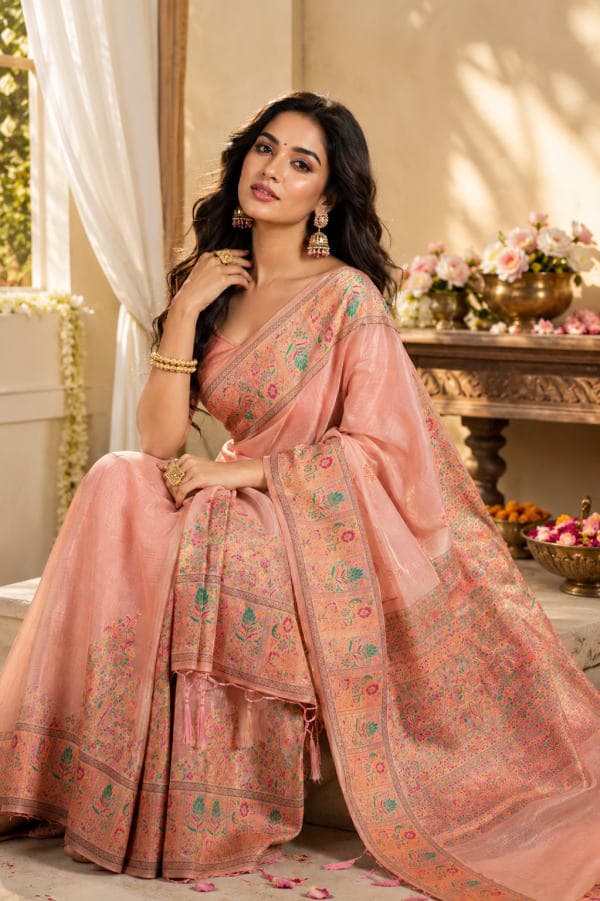
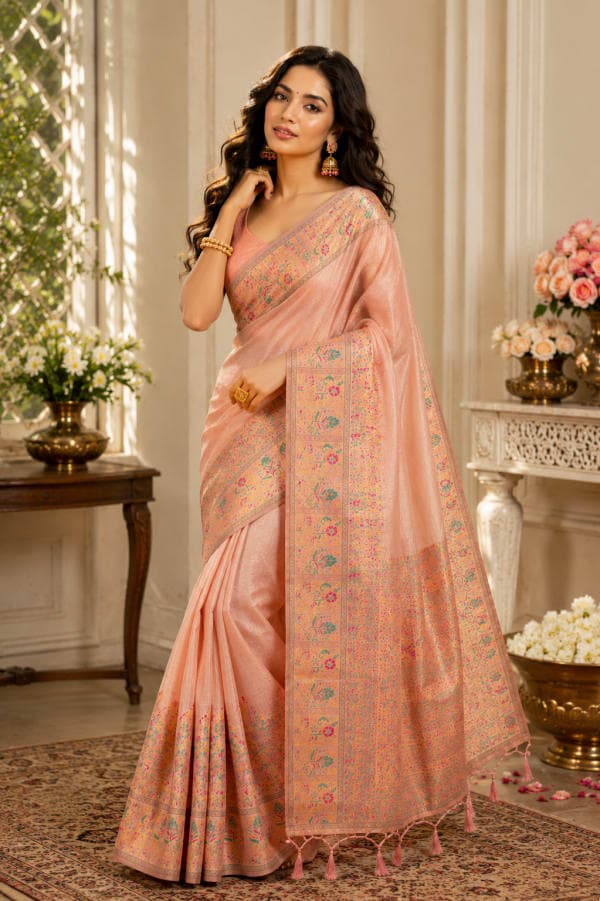
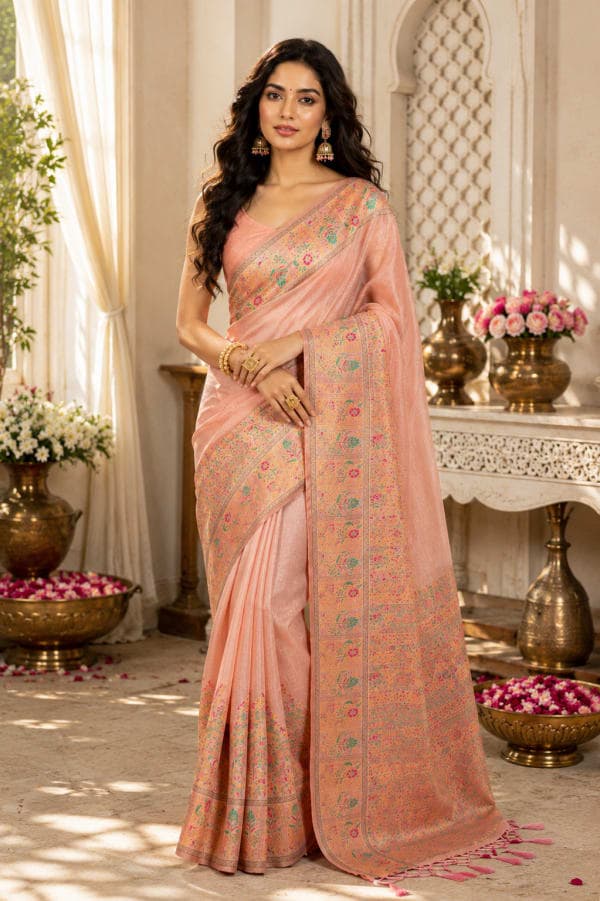
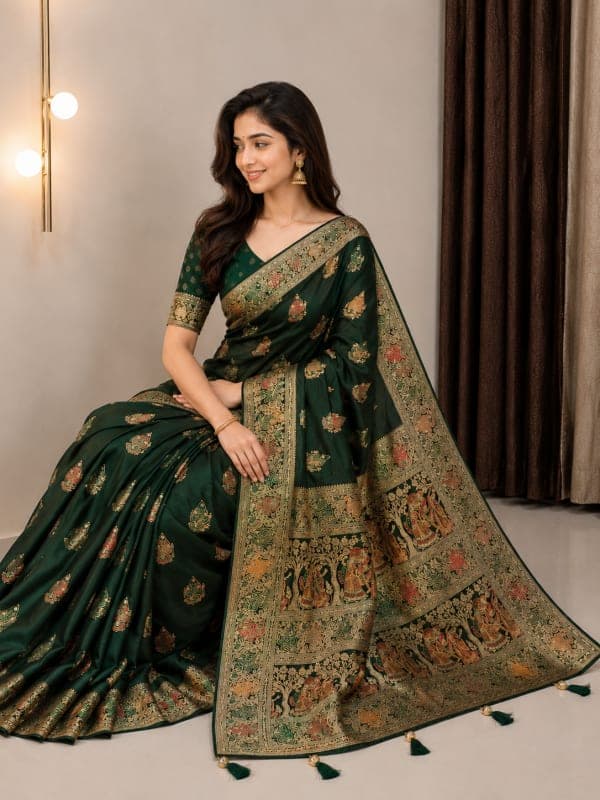
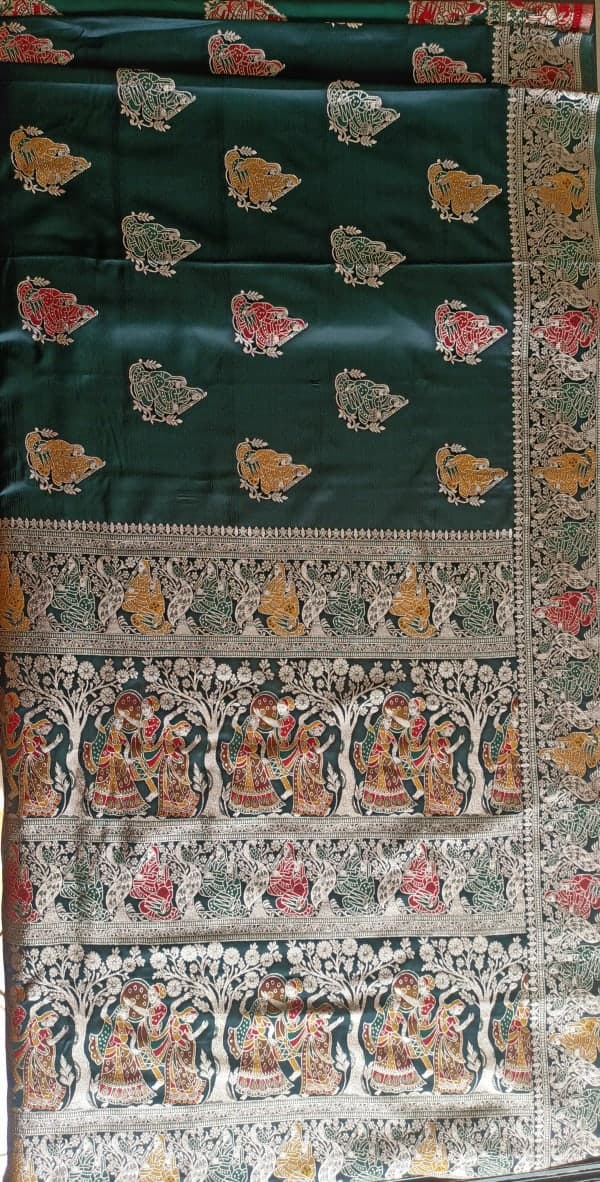
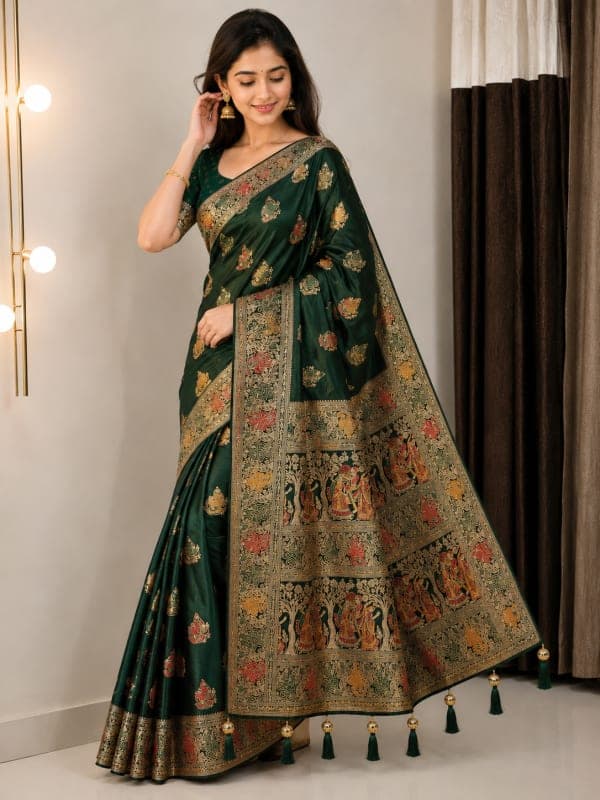
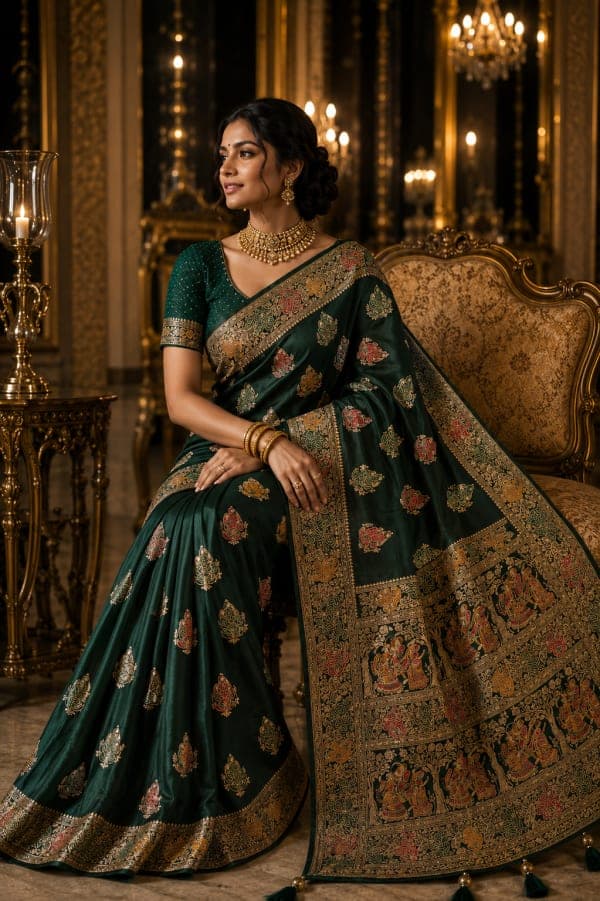
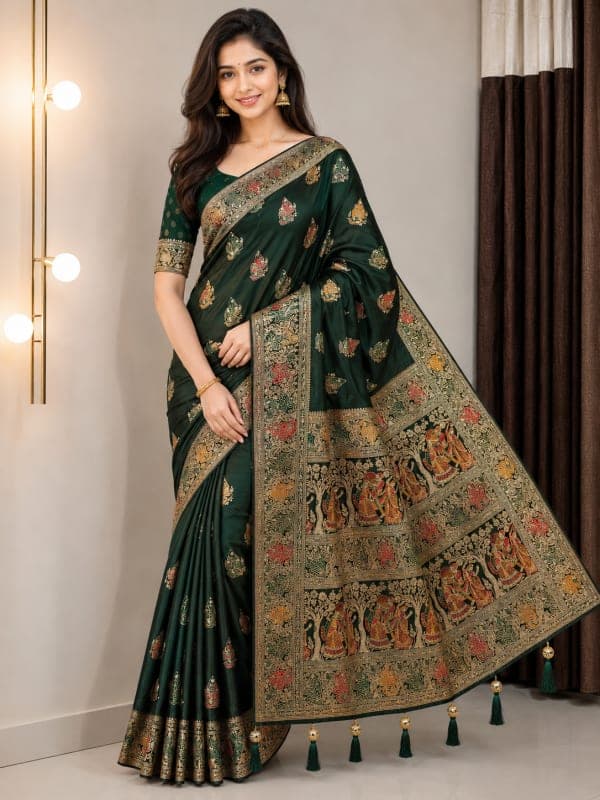
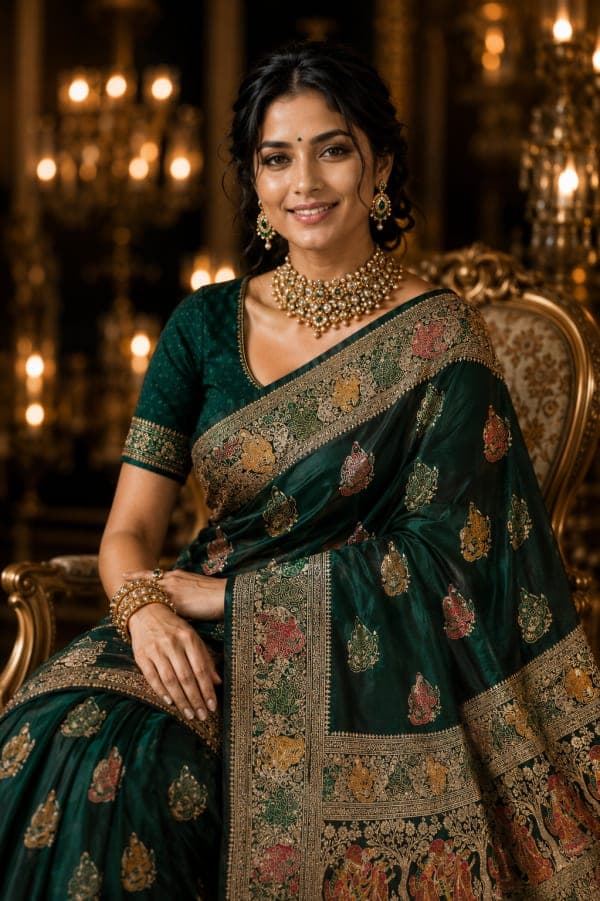
Two Diwali Looks, Two Different Sarees
Diwali usually means two separate outfits: a comfortable one for puja and daytime gatherings, and a statement one for the evening celebration.
Traditional Diwali Colors
- Red and maroon: prosperity and auspiciousness - a safe, traditional choice for puja.
- Gold and yellow: symbolize light and positivity, fitting for the festival of lights itself.
- Green: associated with new beginnings, popular for daytime family functions.
- Jewel tones (emerald, royal blue, wine): increasingly popular for evening parties, especially paired with gold zari.
Puja Morning: Comfort First
Choose a lighter silk or cotton-silk blend that you can sit in comfortably for extended puja rituals - heavy zari-work sarees can feel restrictive for seated ceremonies lasting an hour or more.
Evening Celebration: Shimmer and Statement
This is where a heavier zari-work silk or a sequinned georgette earns its place - Diwali evening lighting (diyas, string lights) flatters metallic zari and gold tones especially well.
Styling Tip: Layering Jewelry
Diwali is one of the few occasions where layered gold jewelry - jhumkas, a statement necklace, and bangles - doesn't feel like "too much." Keep the blouse relatively simple so the jewelry and saree pallu do the talking.
Quick Answer: Is it okay to wear a dark-colored saree for Diwali?
Yes - while red and gold are traditional, jewel tones like emerald or royal blue are widely worn for Diwali evening events and photograph beautifully under festival lighting.
Browse festive picks in our Sarees collection, filtered for gold zari work and jewel-tone silks.