

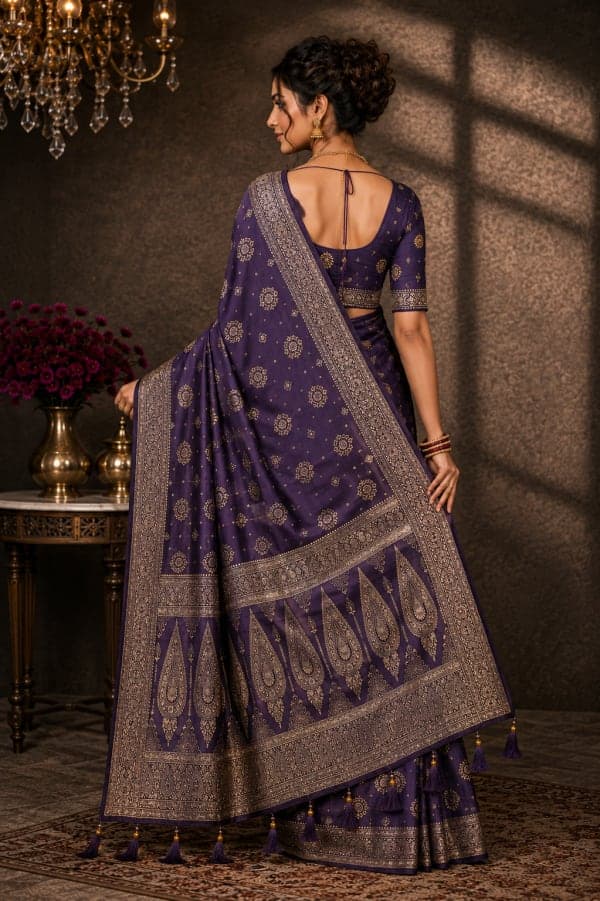
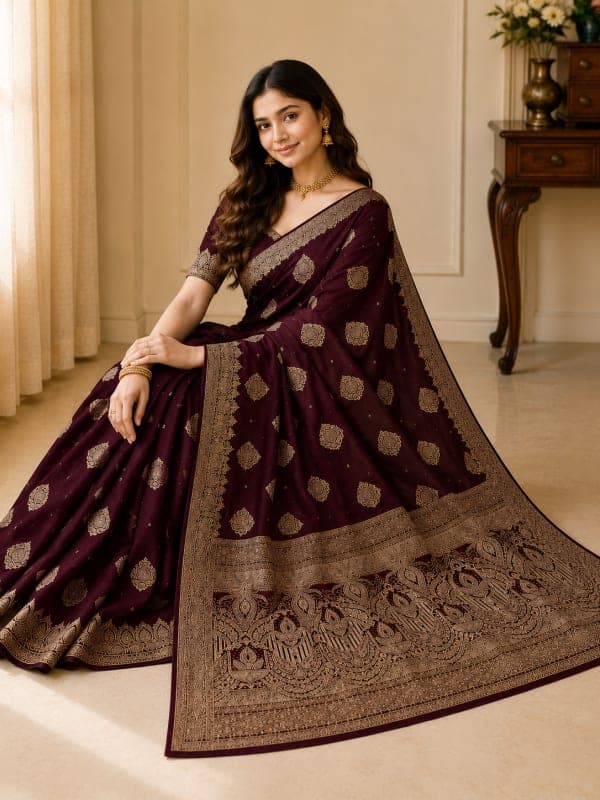
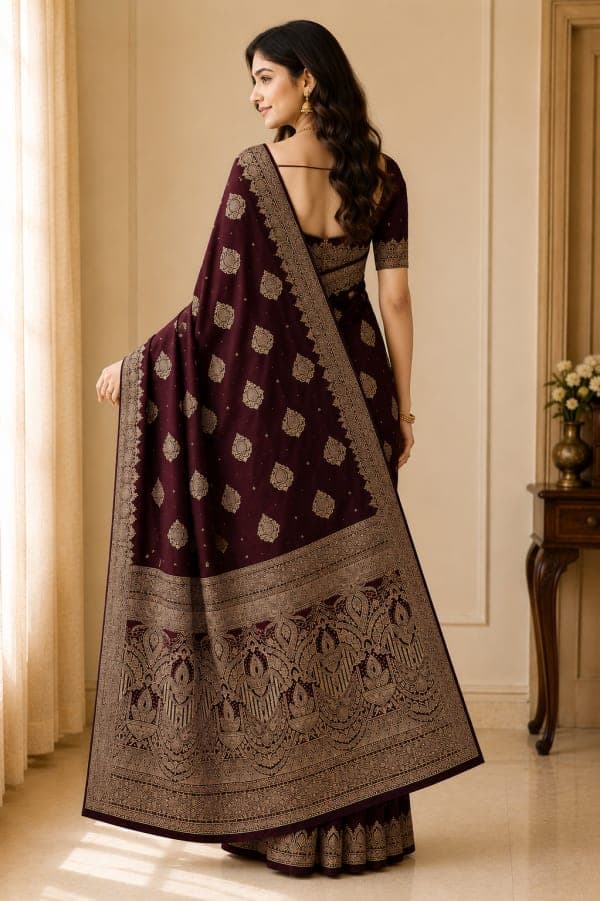
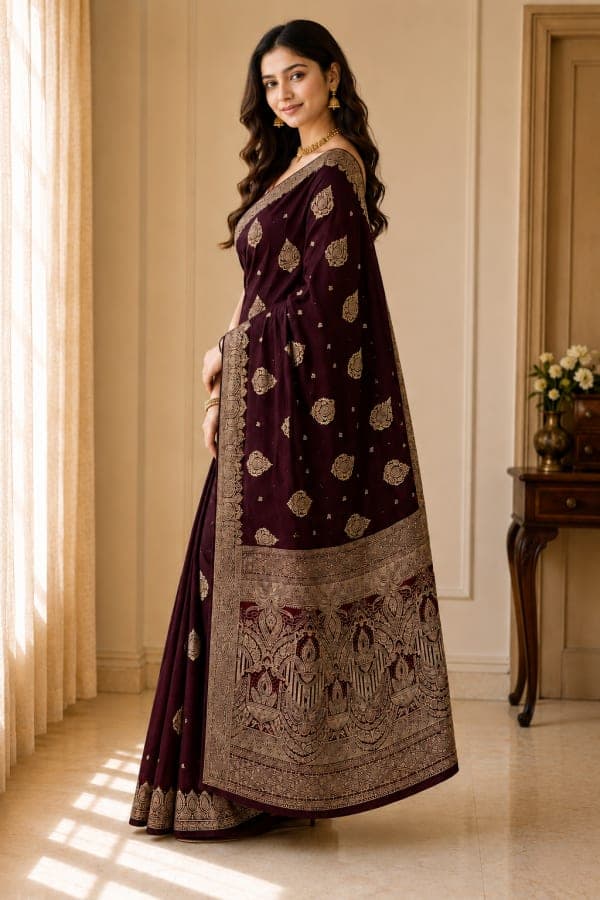
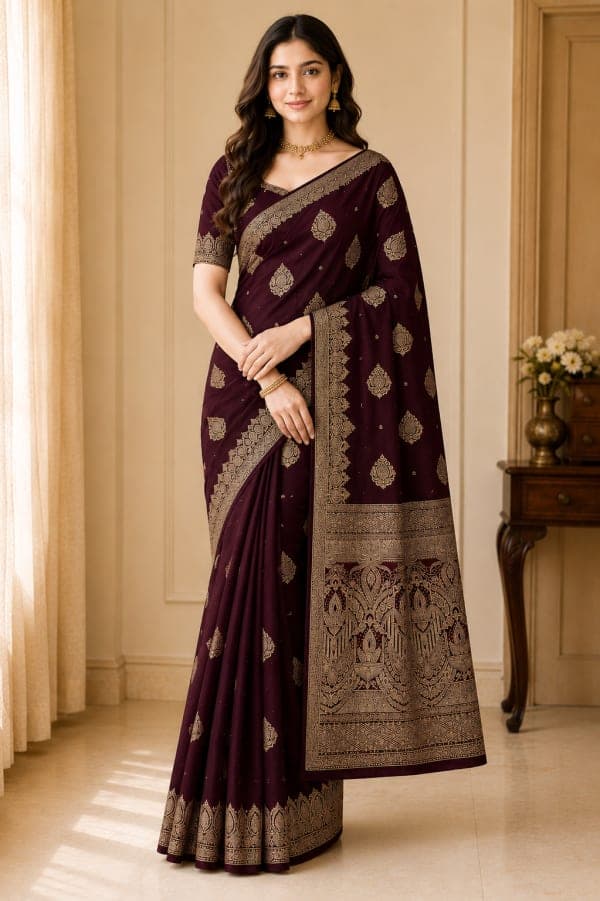
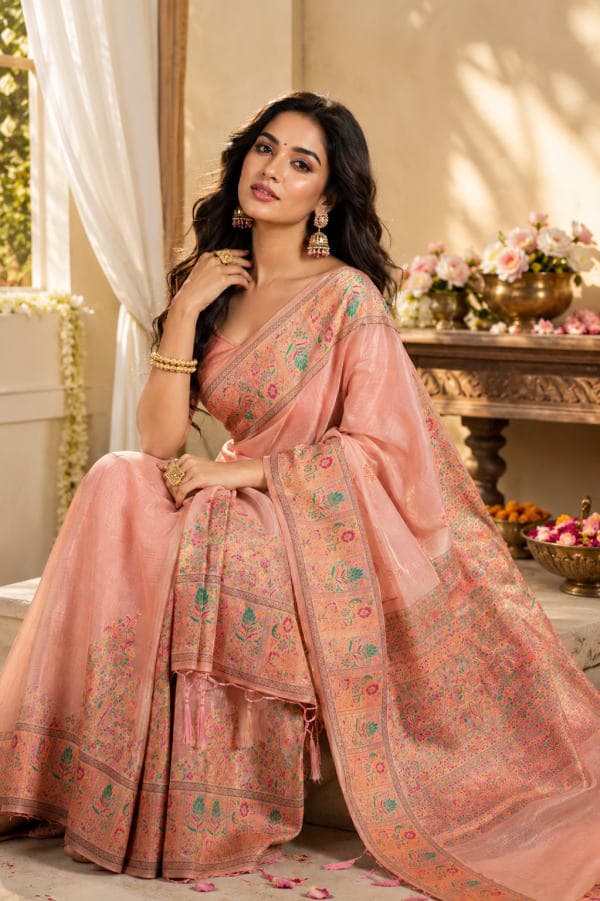
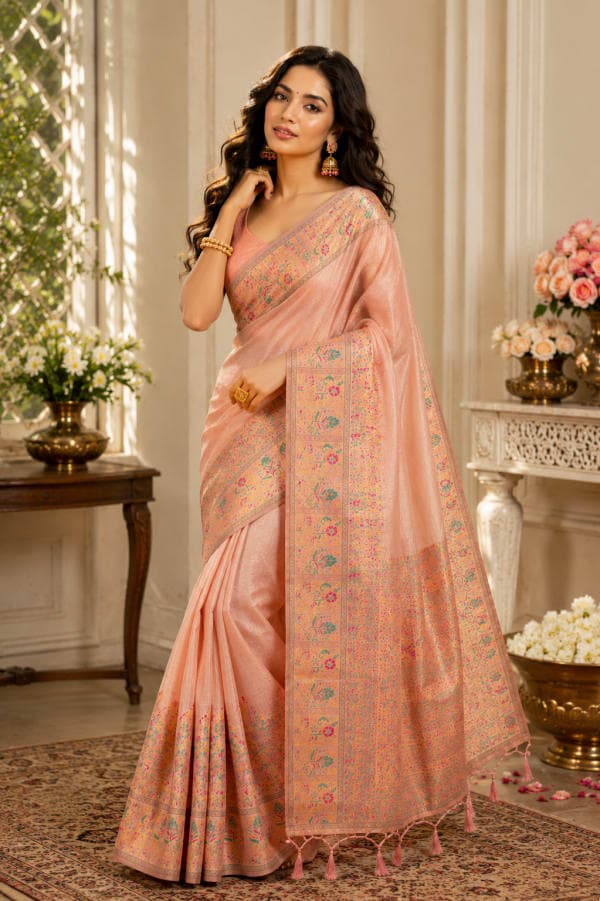
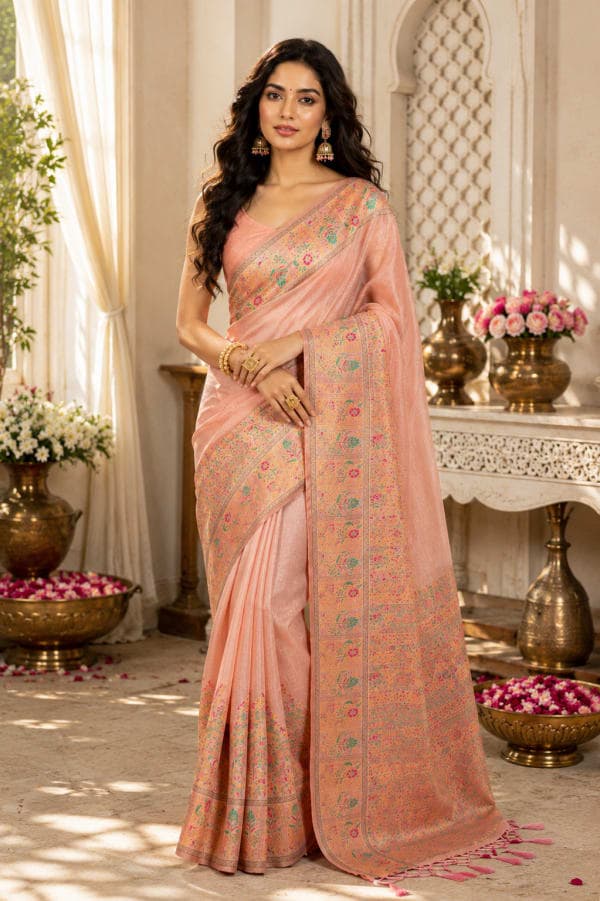
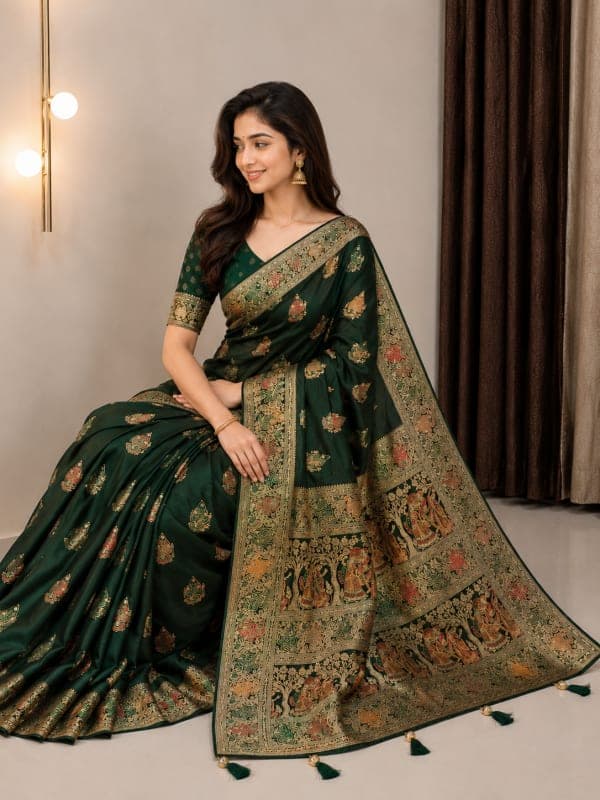
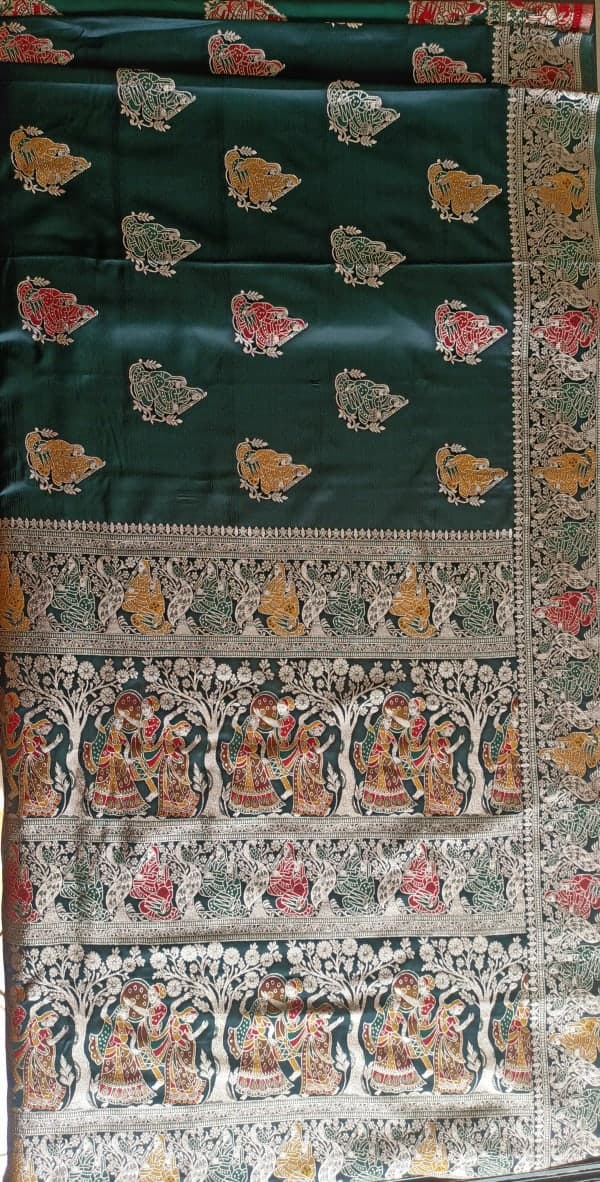
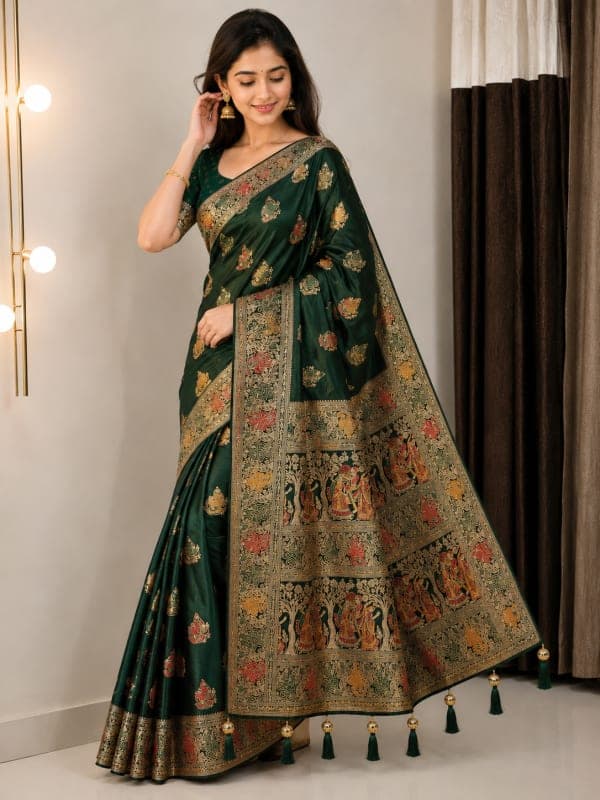
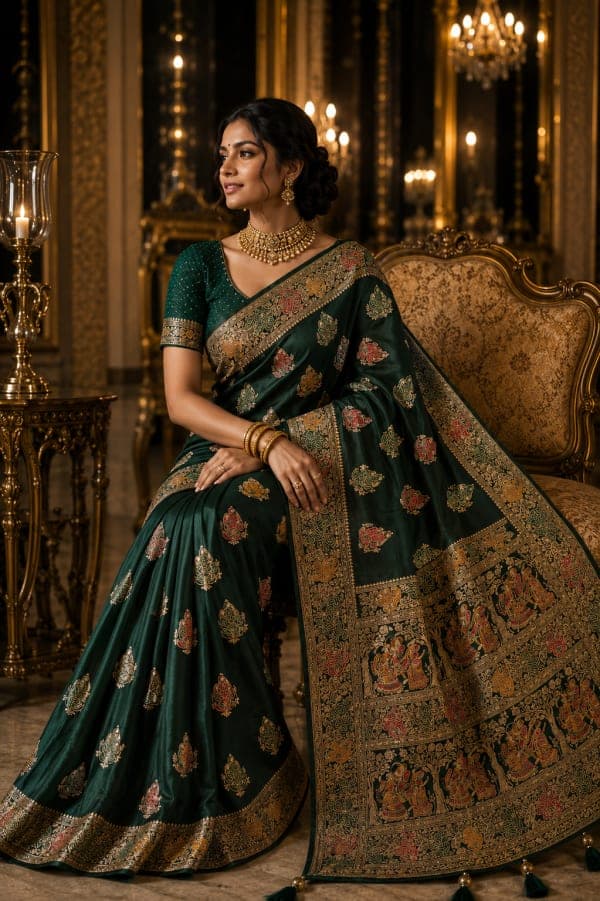
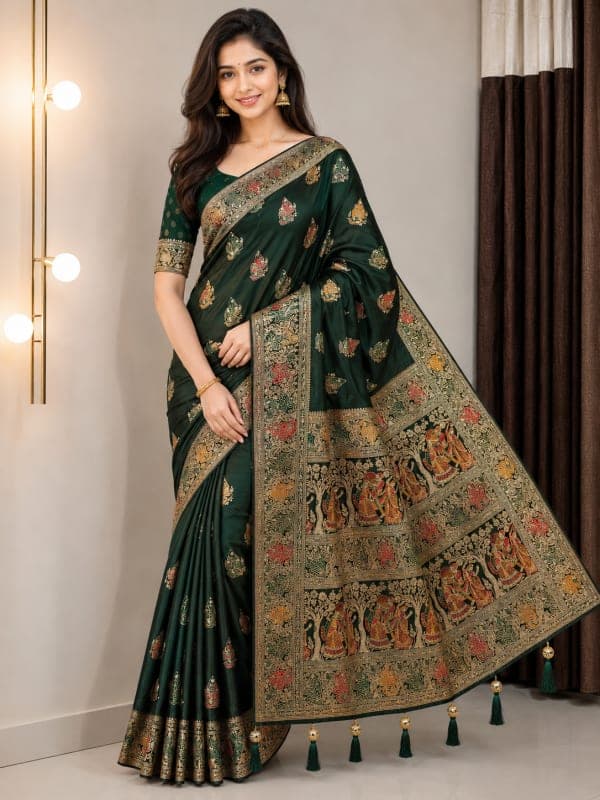
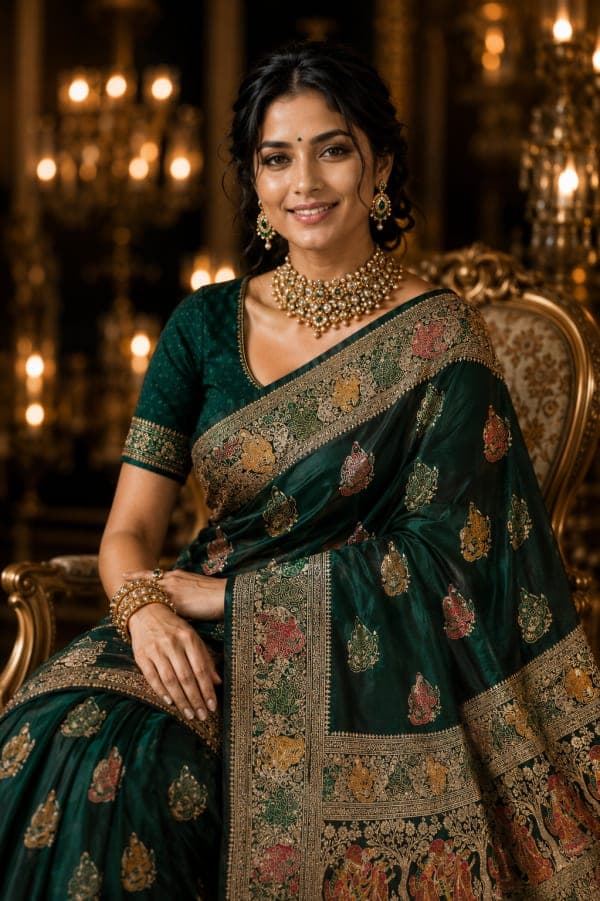
The Nine Navratri Colors
Each day of Navratri is associated with a specific color, worn to honor a different form of the goddess: white, red, royal blue, yellow, green, grey, orange, peacock green, and pink (the exact sequence varies slightly by region and year - check your local calendar).
When a Saree Works Better Than a Chaniya Choli
- Family pujas and darshan visits: a saree is more traditional and comfortable for temple visits and daytime family gatherings.
- Office Navratri celebrations: a lighter cotton or georgette saree is easier to wear through a workday than a full chaniya choli.
- Older or more formal garba events: many women choose a saree with a dandiya-friendly drape - georgette or chiffon that moves freely.
When Chaniya Choli Wins
For high-energy garba/dandiya nights specifically, a chaniya choli's flared silhouette is built for movement and twirls in a way a saree isn't. If your evening is mostly dancing, chaniya choli is the practical choice.
Draping a Saree for Garba (If You Choose One)
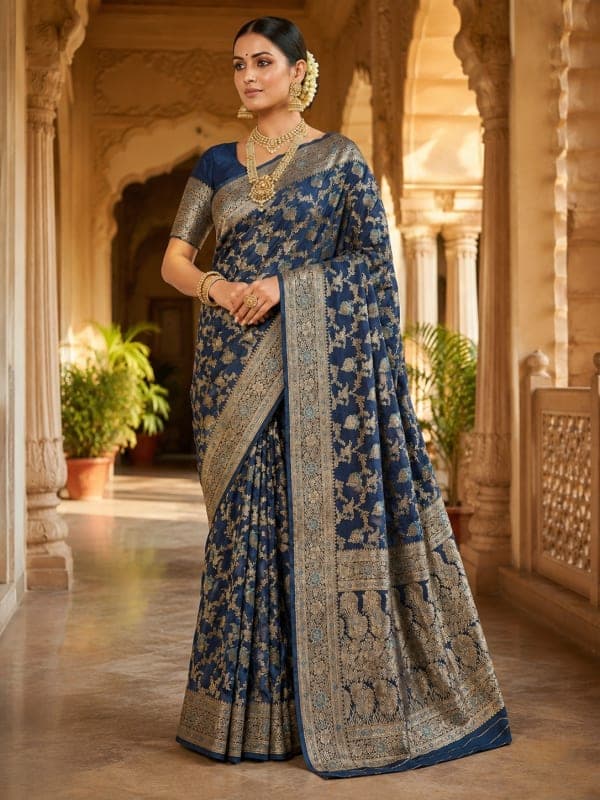
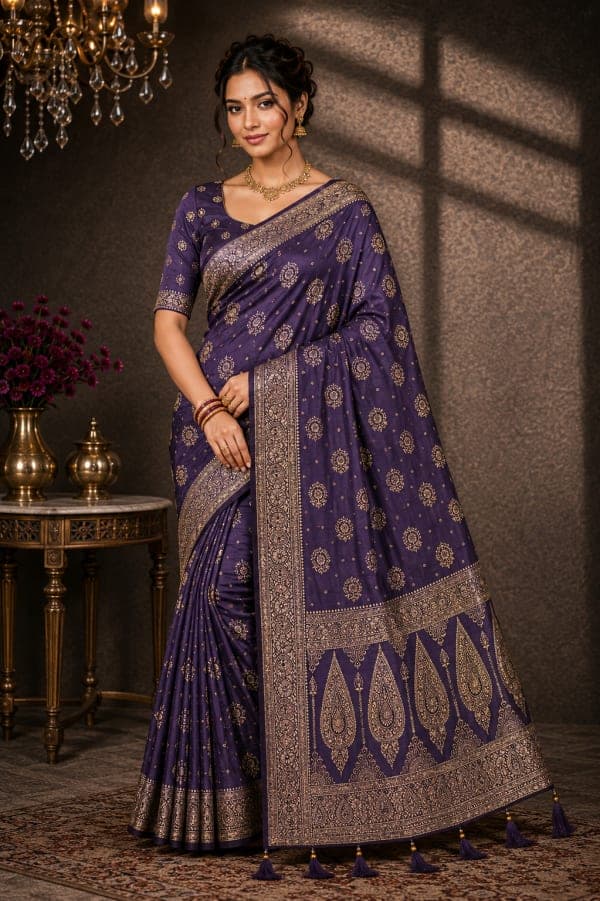
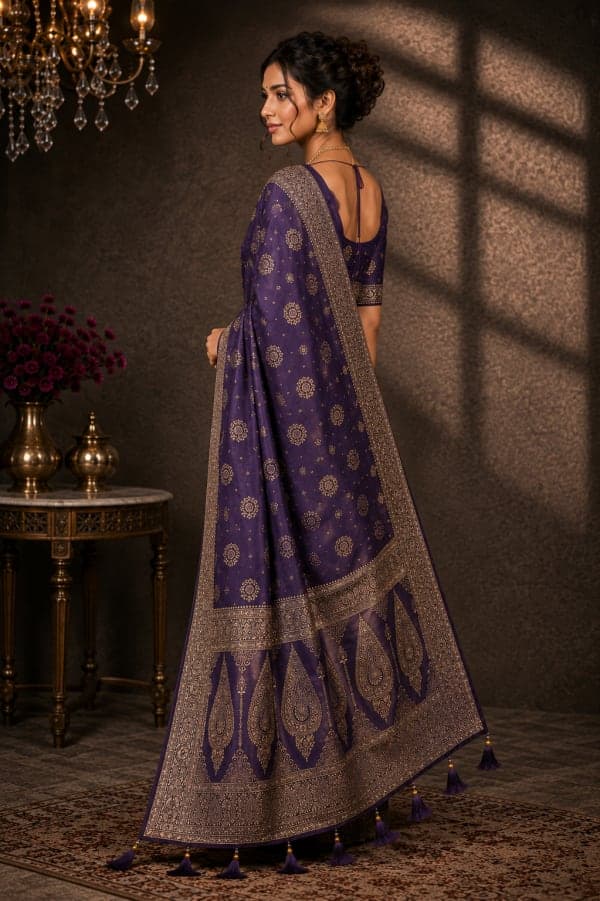
Skip heavy silk. A lightweight georgette or chiffon in the day's color, draped in the Gujarati "seedha pallu" style (pallu brought to the front over the right shoulder) gives more freedom of movement than the standard Nivi drape.
Quick Answer: Can I wear the same saree color scheme for multiple Navratri days?
Yes - many people simplify to 3-4 saree colors and rotate accessories (dupatta, jewelry, bindi) to match each day's theme instead of buying nine separate outfits.
Explore lightweight, movement-friendly picks in our Sarees collection.