


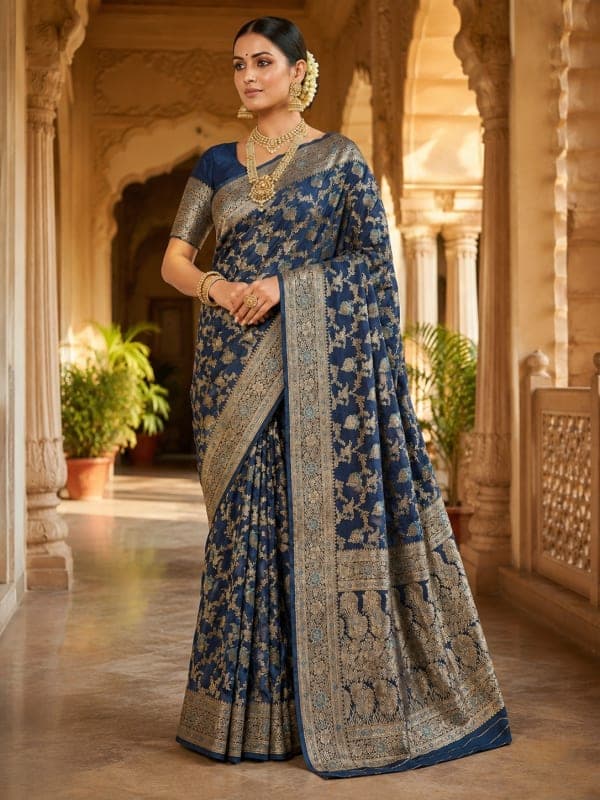
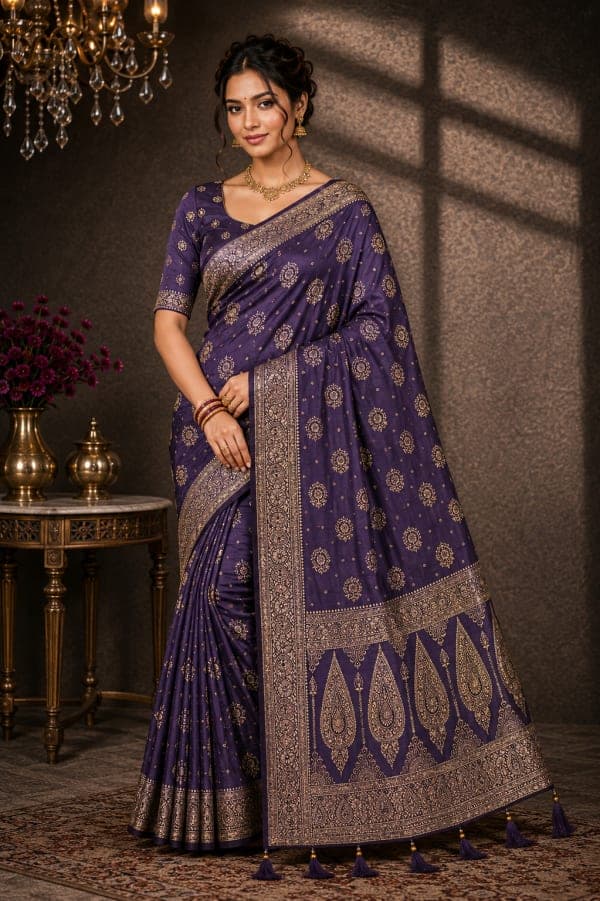
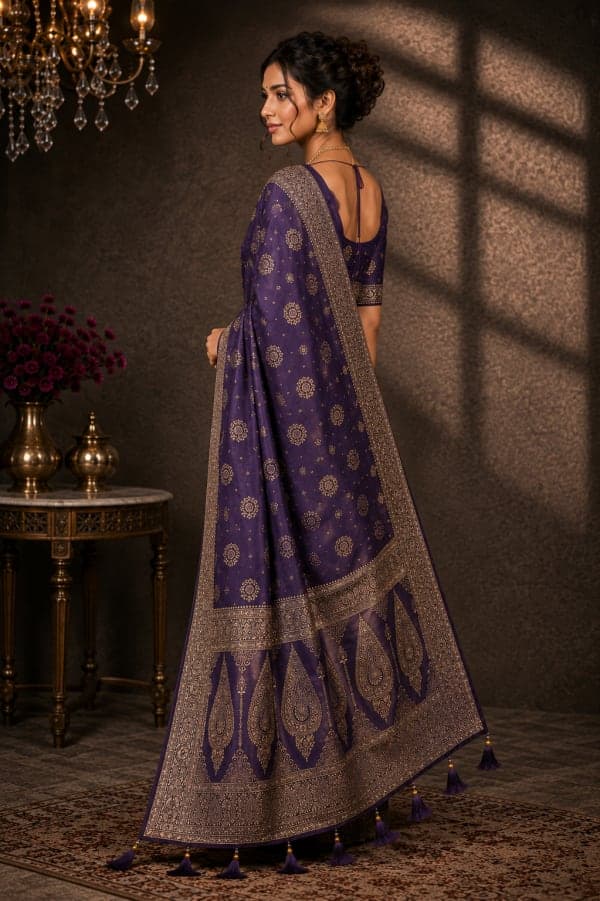
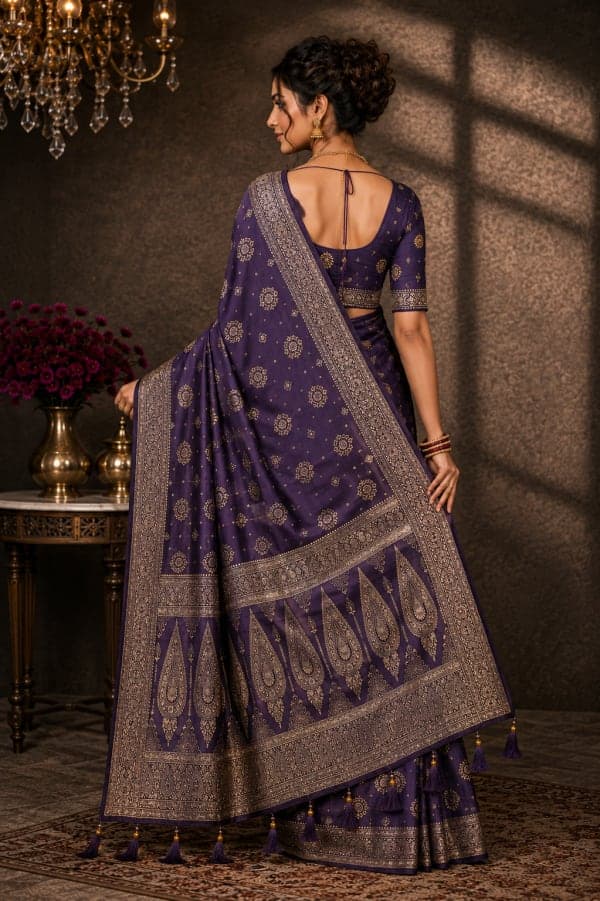
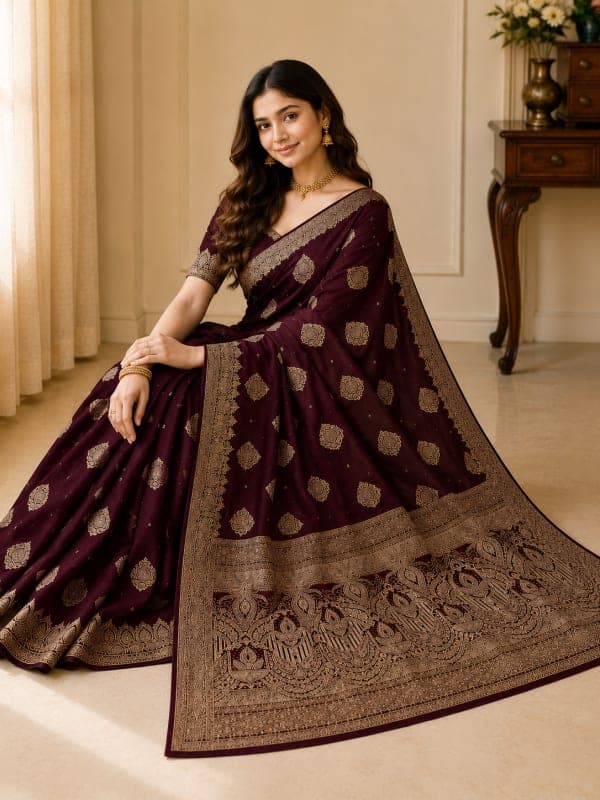
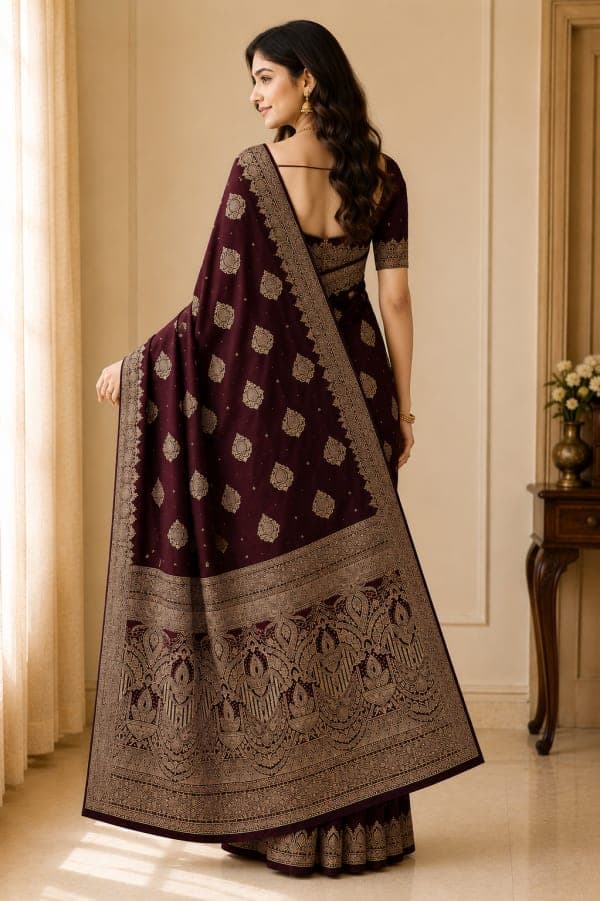
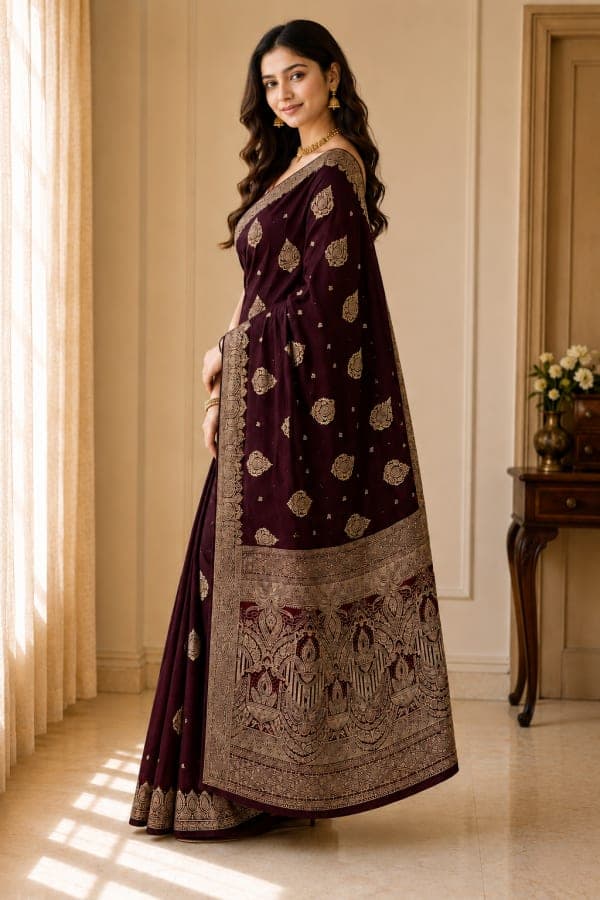
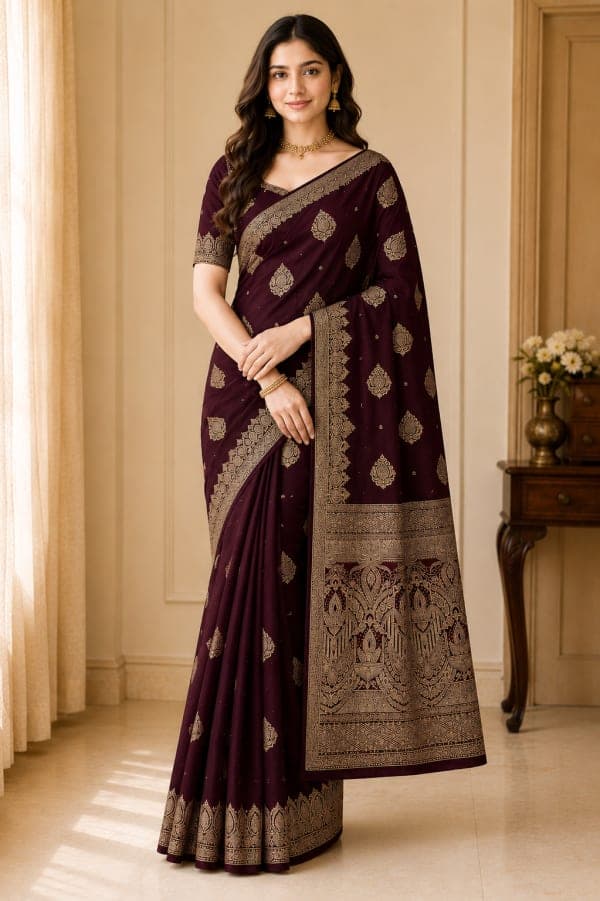
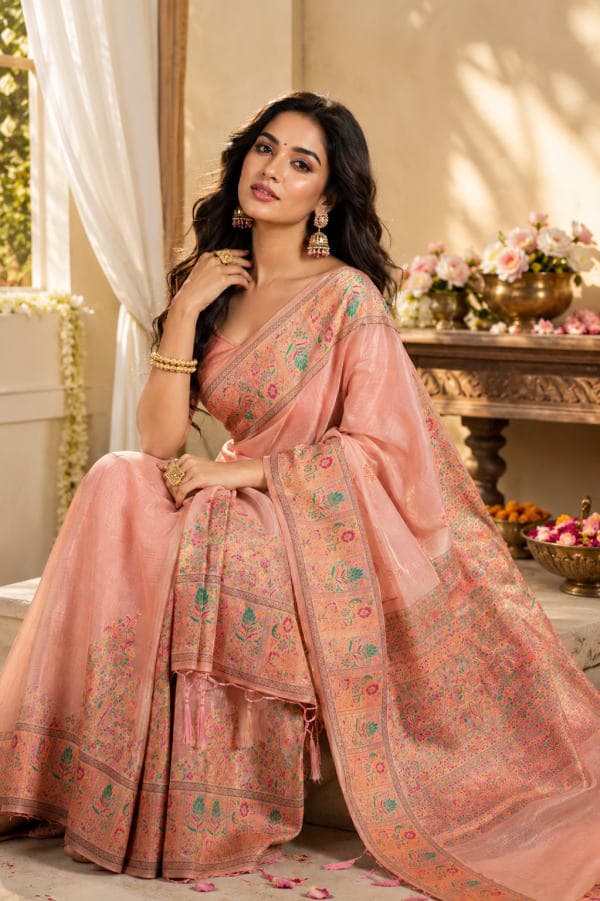
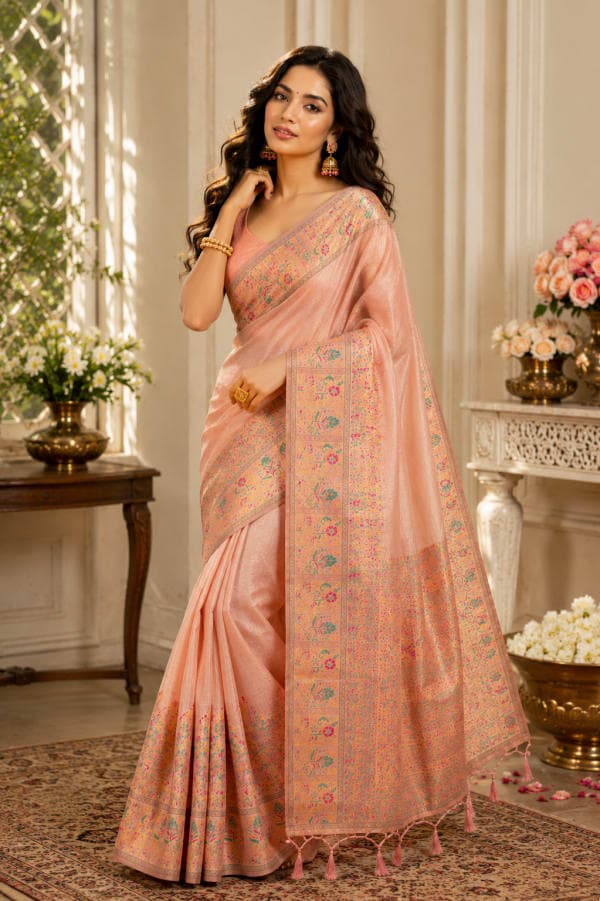
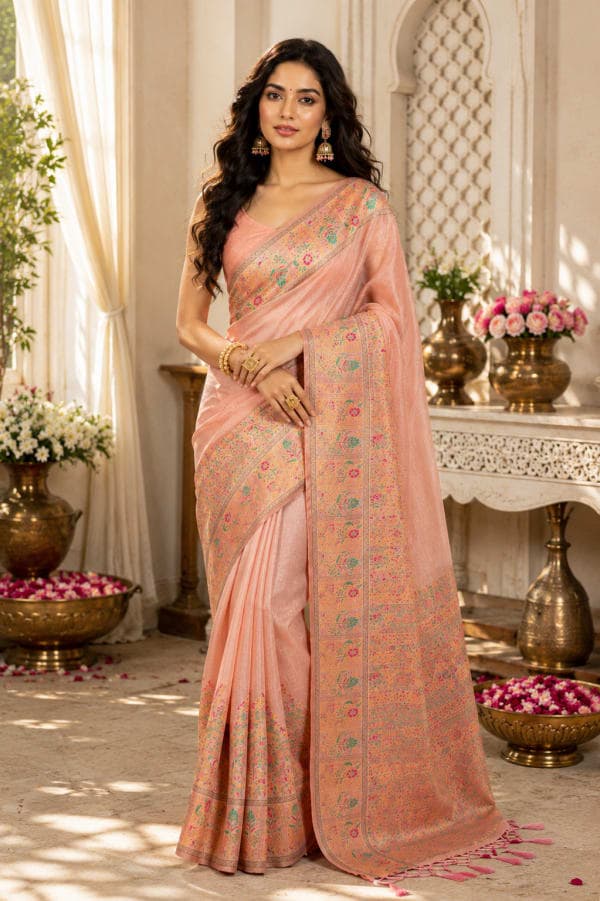
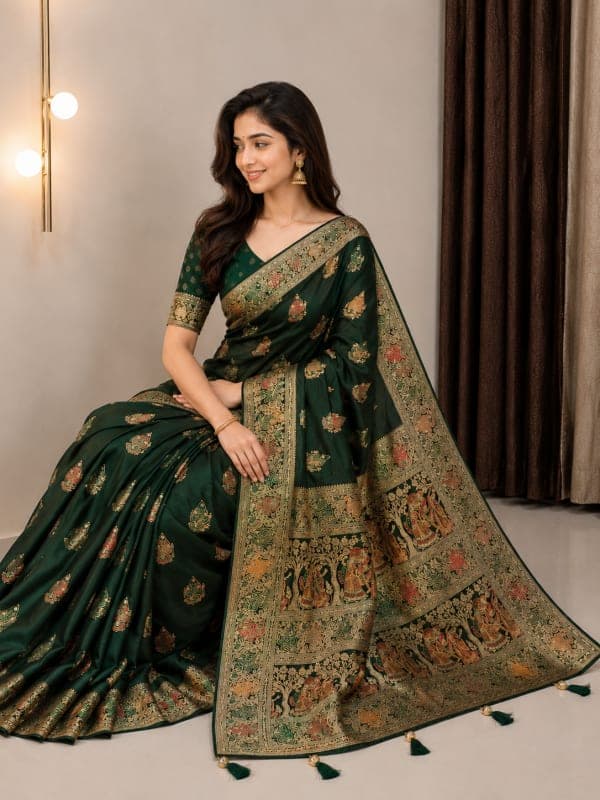
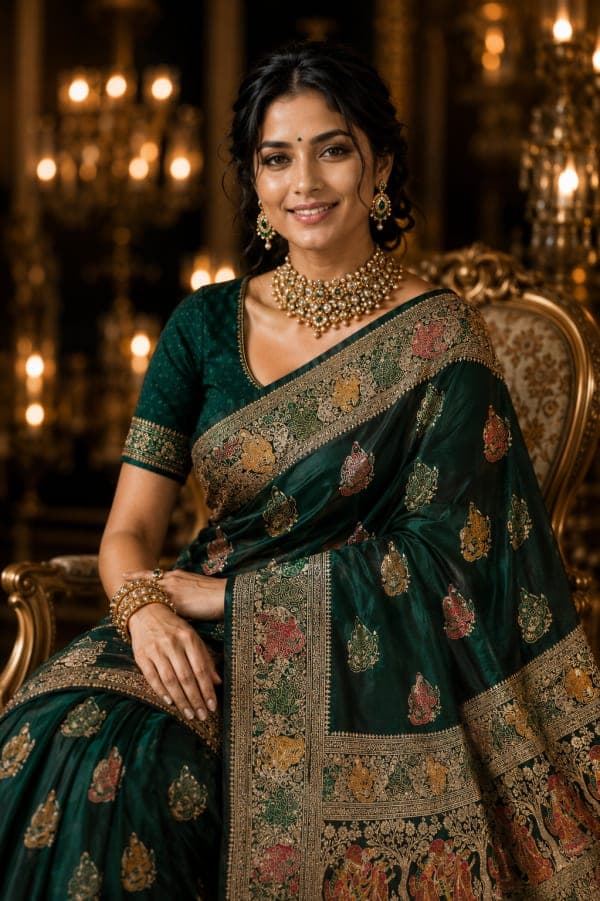
Draping Adjustments That Make the Biggest Difference
A saree is one of the most naturally adaptable garments for fuller figures - small adjustments to pleat placement and pallu length make a noticeably bigger difference than the saree itself.
Pleat Width and Placement
Slightly wider, fewer pleats (rather than many narrow ones) create a cleaner vertical line that elongates the silhouette. Tuck pleats a touch higher at the waist rather than low on the hip for a more streamlined effect.
Pallu Length and Draping
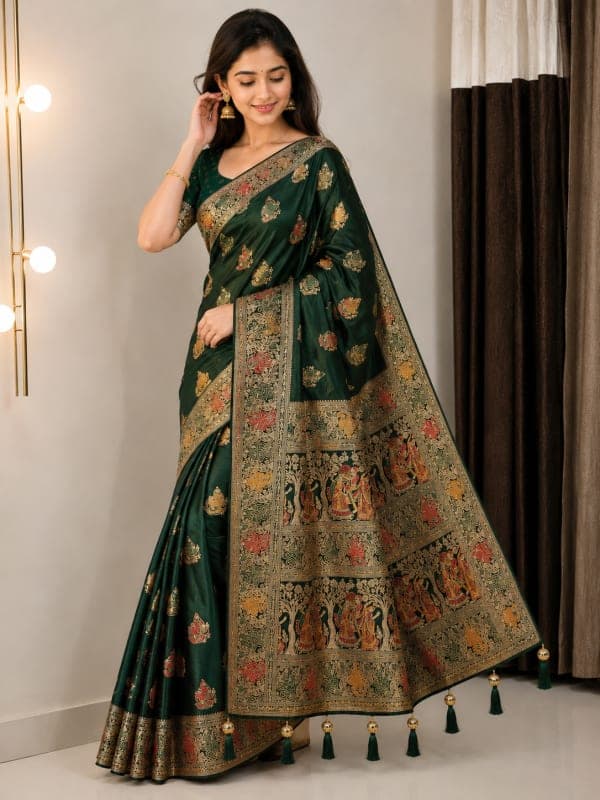
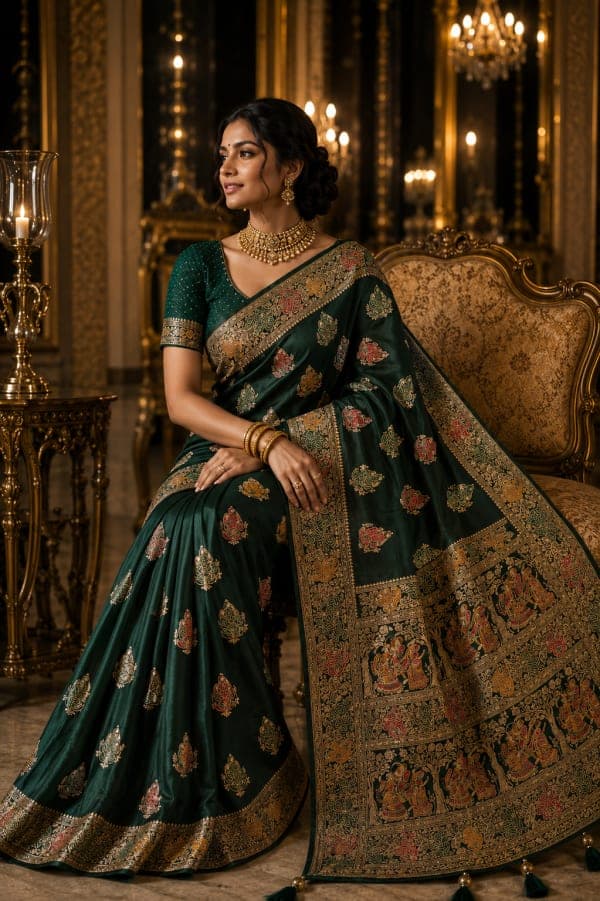
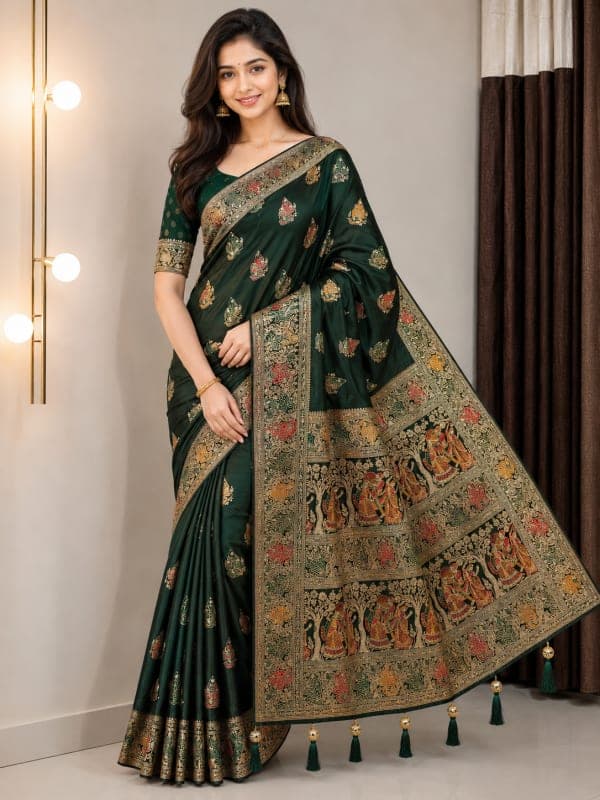
A longer pallu, draped to fall past the hip rather than stopping at the waist, creates visual length. Pinning it at the shoulder (rather than letting it hang loose) keeps the line clean and intentional.
Fabric Choice
Fabrics with natural drape and some weight - silk-cotton blends, georgette, and lighter silk - fall more smoothly over curves than very stiff or very sheer fabrics. Avoid fabrics that cling or that stand away from the body stiffly.
Blouse Fit
A well-fitted (not tight) blouse that sits smoothly at the natural waist, with three-quarter or full sleeves if preferred, generally flatters more than a very cropped or very fitted style - though this is entirely about personal comfort and preference, not a rule.
Color and Print
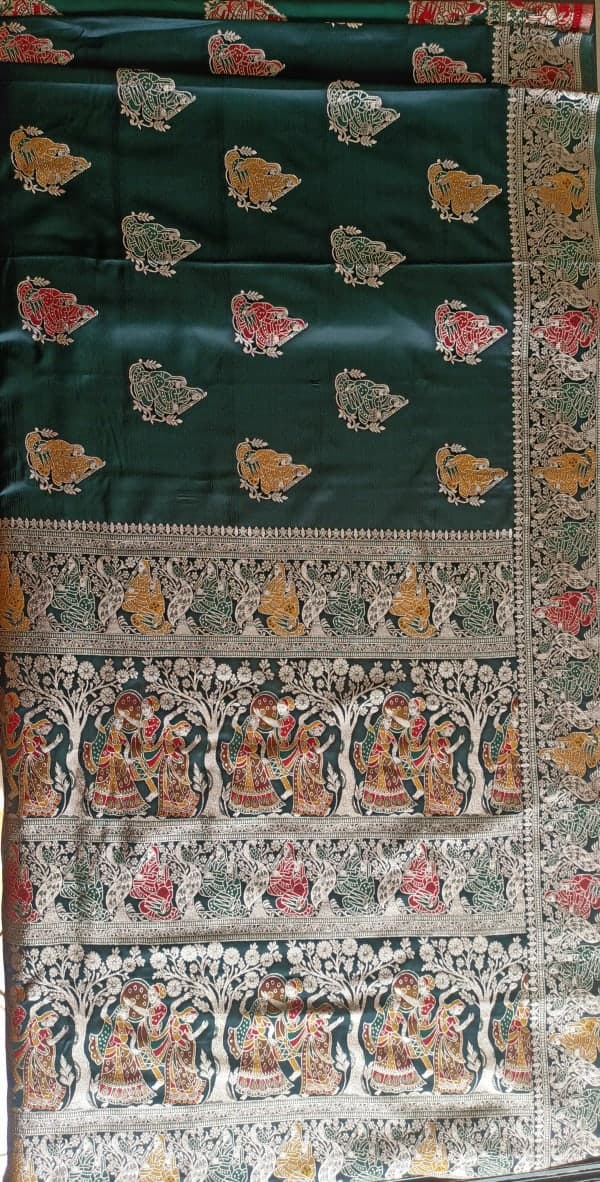
Vertical prints, subtle borders, and richer solid colors tend to elongate and flatter, while very large, busy horizontal patterns can visually shorten the frame - though ultimately any print can be styled well with the right drape.
Quick Answer: Do plus-size wearers need a different saree length?
Not usually a different total length, but the draping technique (pleat width, tuck height) matters more than for straighter frames - see our full draping guide for the base technique to adapt.
Browse fabrics with good natural drape in our Sarees collection.