



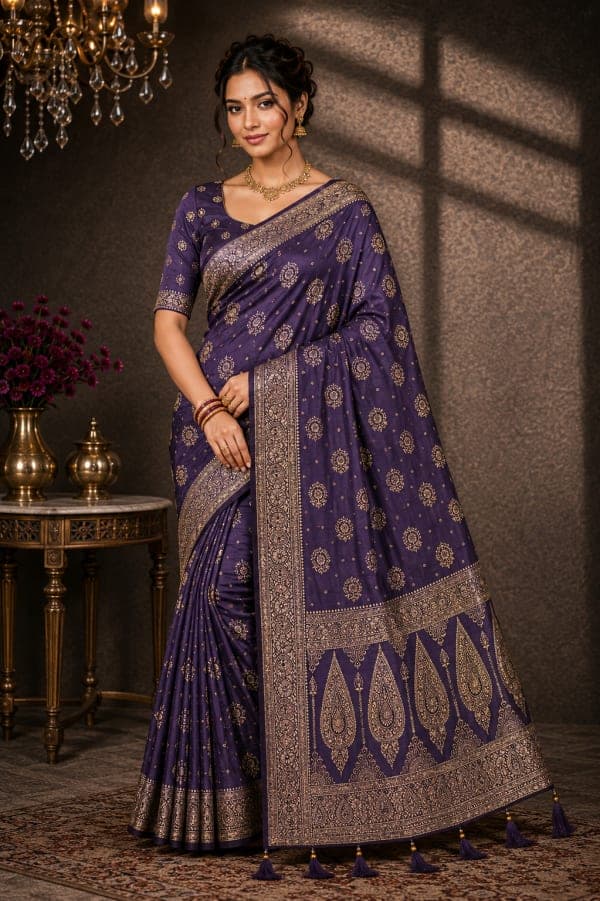
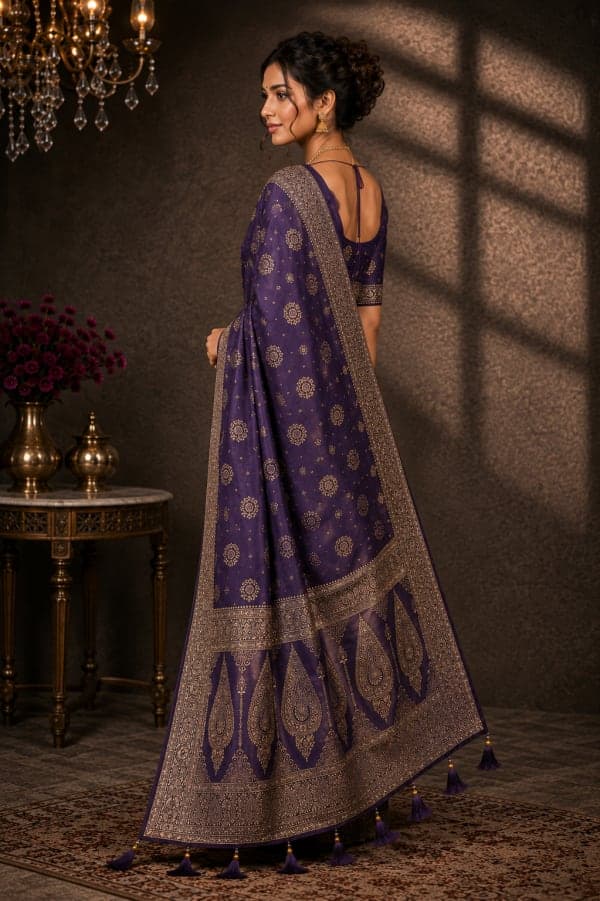
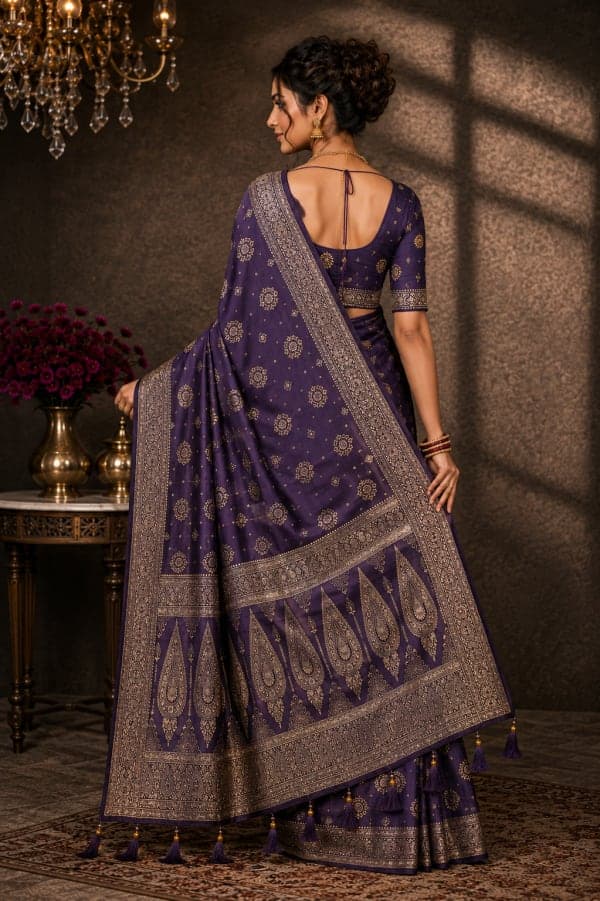

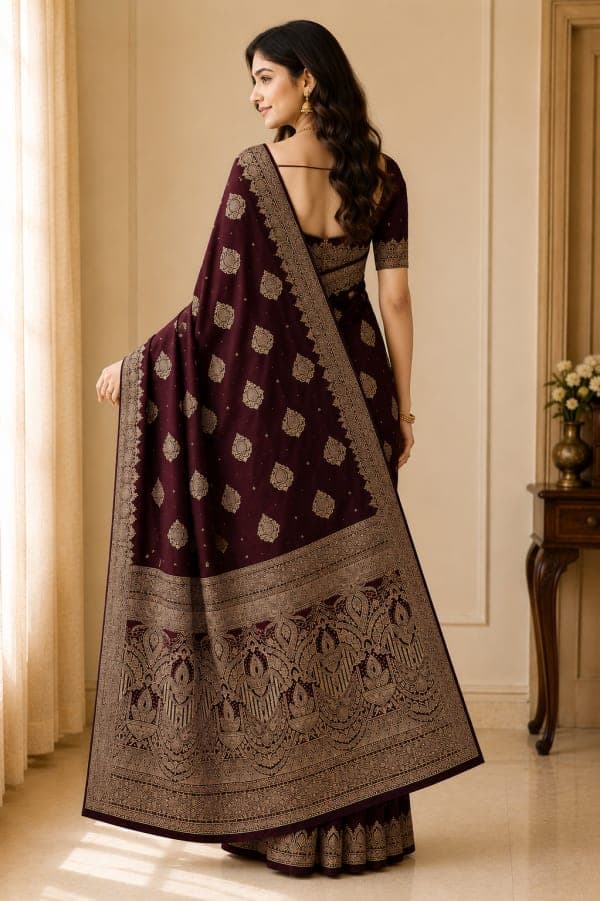





Two Completely Different Production Methods
A handloom saree is woven by hand on a manual loom, often taking days to weeks per piece depending on complexity. A power loom saree is machine-woven, dramatically faster and more consistent, which is what makes affordable sarees possible at scale.
Visual and Tactile Differences
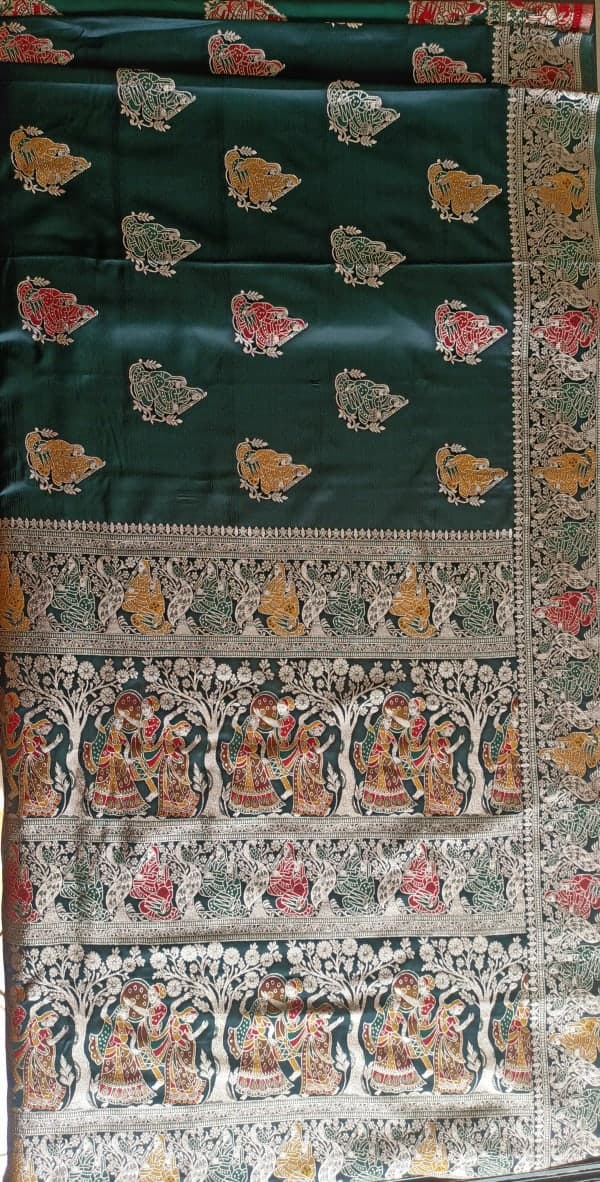
Handloom sarees often have subtle, natural irregularities in the weave - a sign of authenticity rather than a flaw - while power loom sarees have a more uniform, perfectly consistent pattern throughout.
Durability
Handloom weaving tends to produce a slightly denser, stronger fabric due to the tighter and more deliberate weaving process, which is part of why heirloom sarees passed down for decades are so often handloom pieces.
Price Difference
Handloom sarees cost significantly more, reflecting the labor time - a single Patola double-ikat saree, for example, can take months to weave by hand. Power loom versions of similar-looking designs can be produced in a fraction of the time and cost.
Is Power Loom "Fake"?
No - power loom sarees are a legitimate, different product, not counterfeits. The issue only arises when a power loom saree is deceptively marketed as handloom. Honest labeling (which is required by Indian handloom mark regulations for genuine handloom claims) is what matters.
How to Check Which You're Buying
Look for the Handloom Mark (a government-certified label for genuine handloom products) if handloom authenticity matters to you, and don't assume "handwoven" claims without it - ask the seller directly if unclear.
Quick Answer: Is a power loom saree lower quality than handloom?
Not necessarily lower quality - it's a different production method suited to different price points and use cases. A well-made power loom saree can be a completely appropriate, durable everyday choice.
Browse our collection with fabric and weaving details listed on every saree product page.