


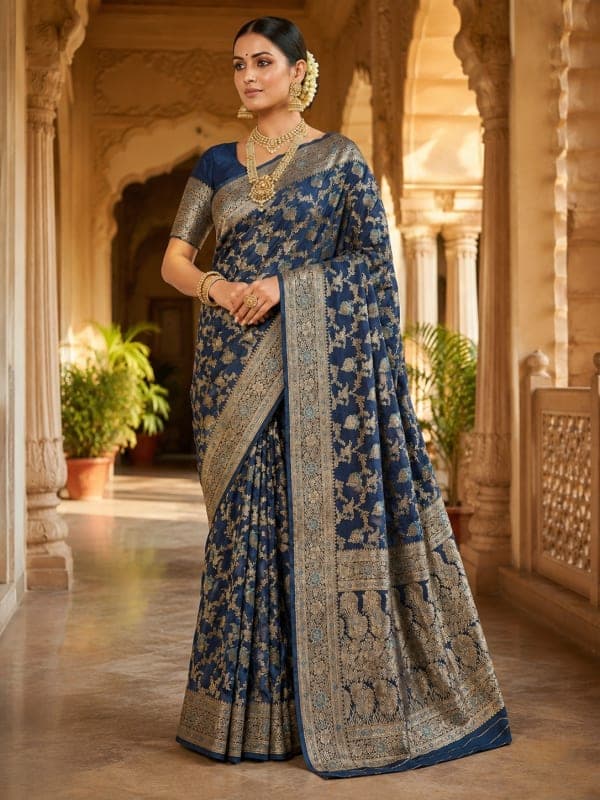
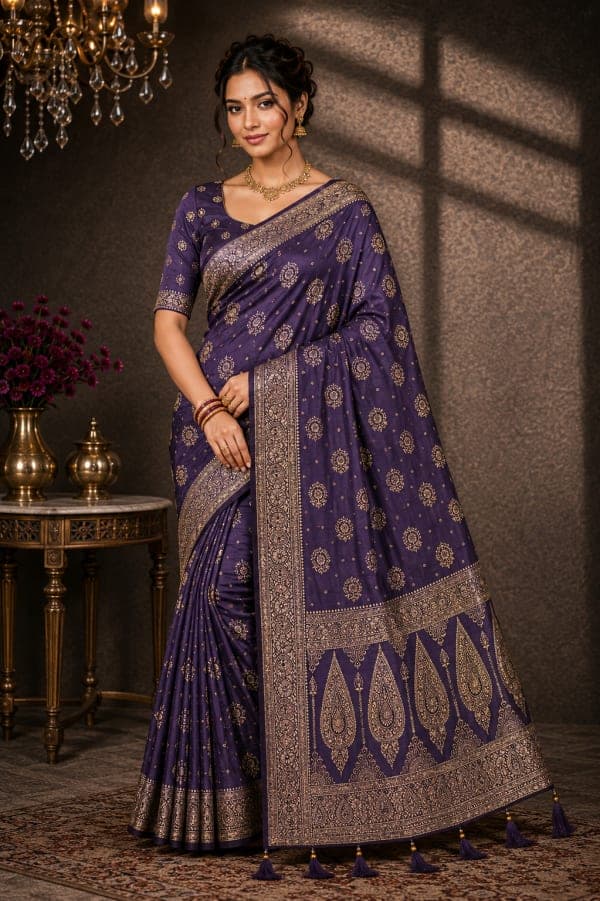
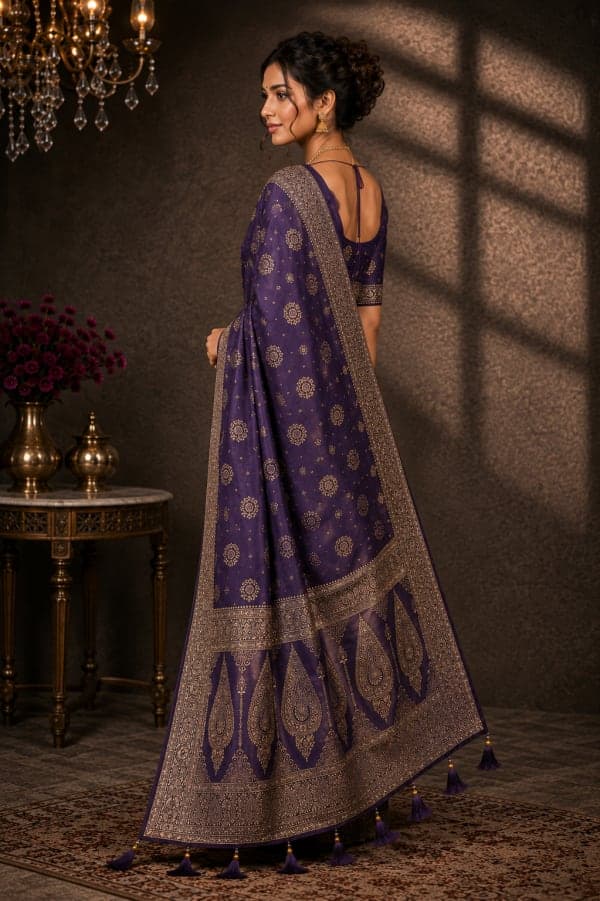
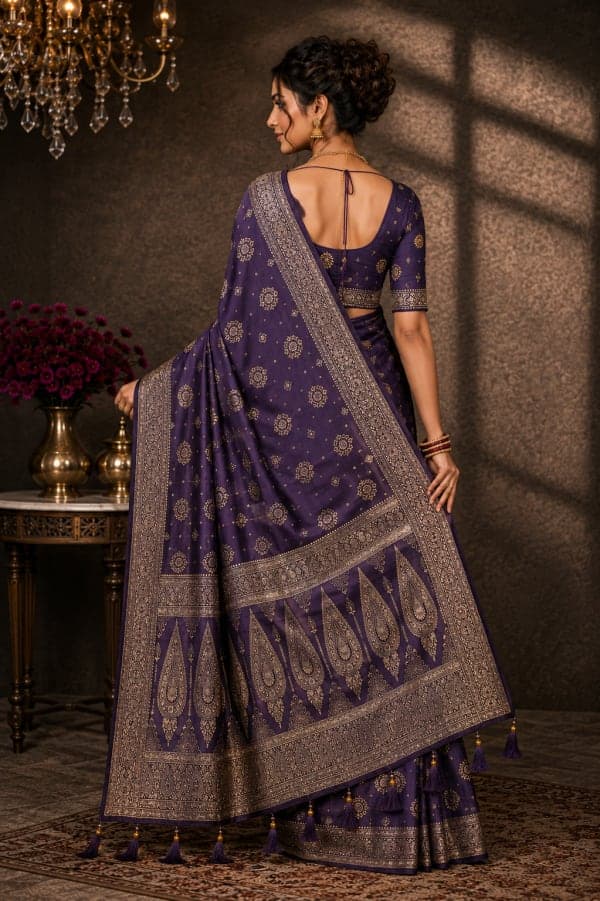
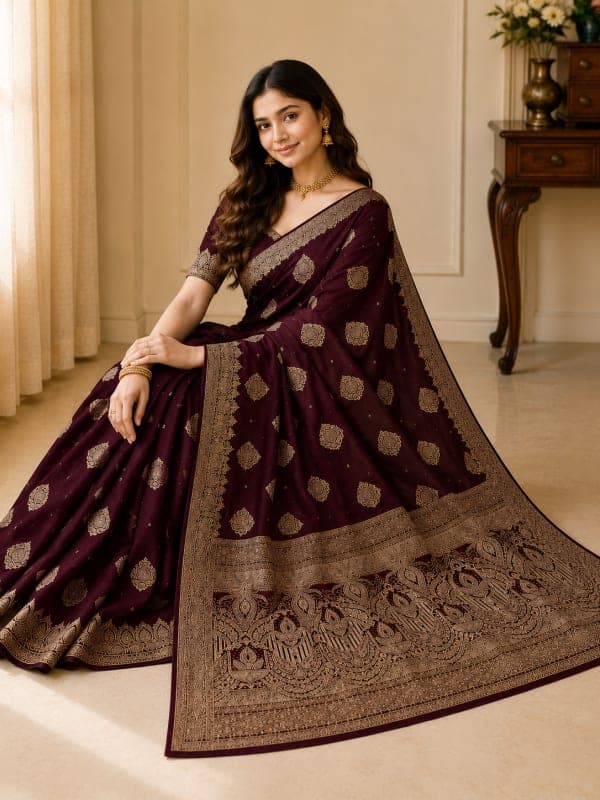
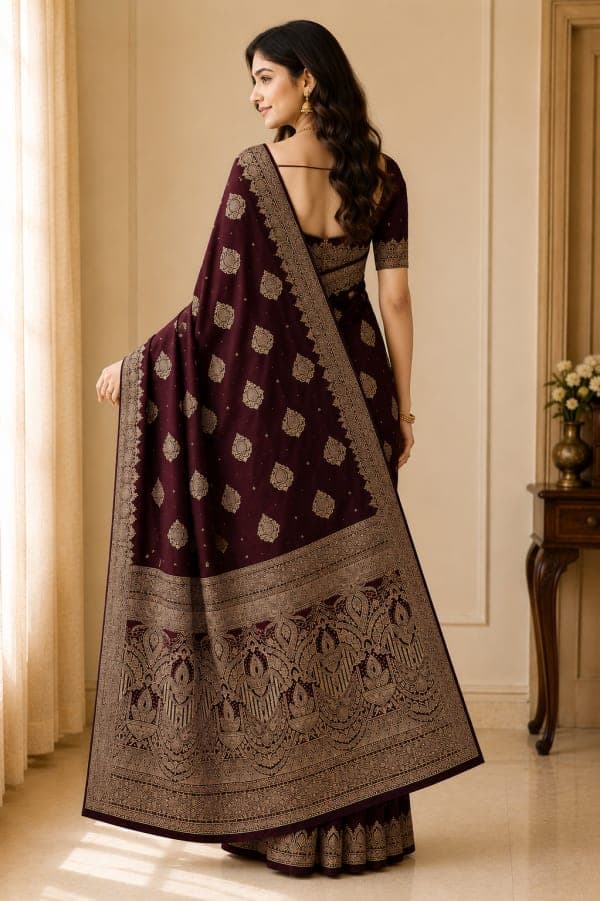
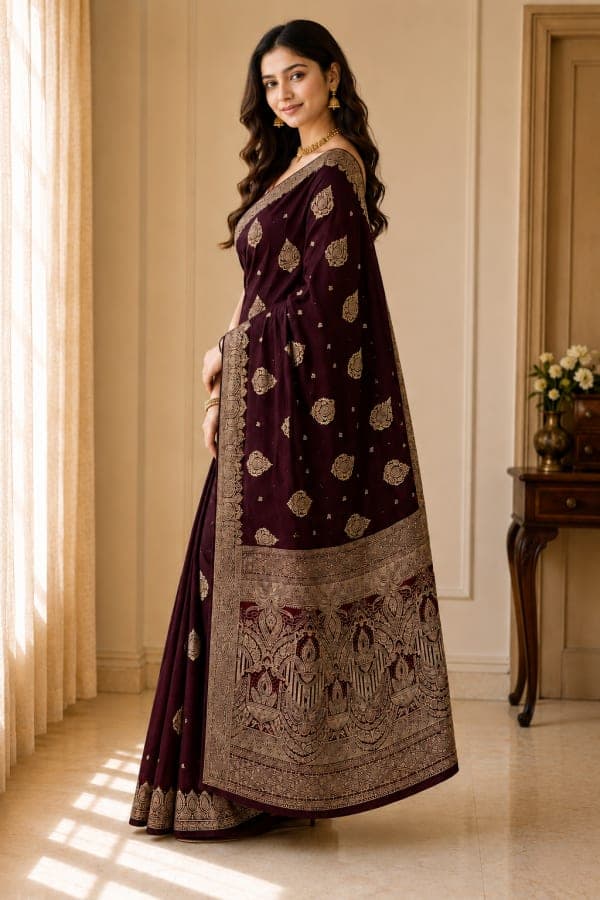
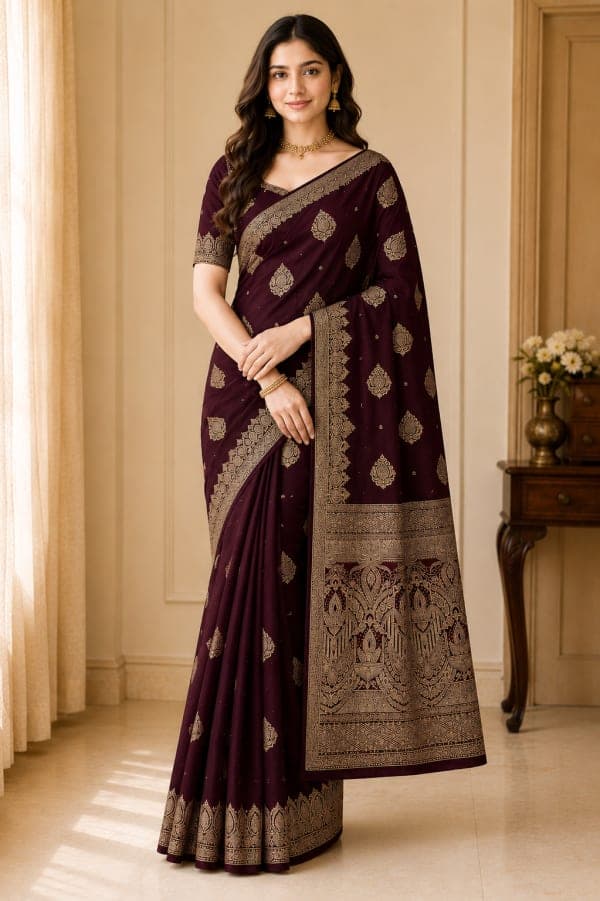
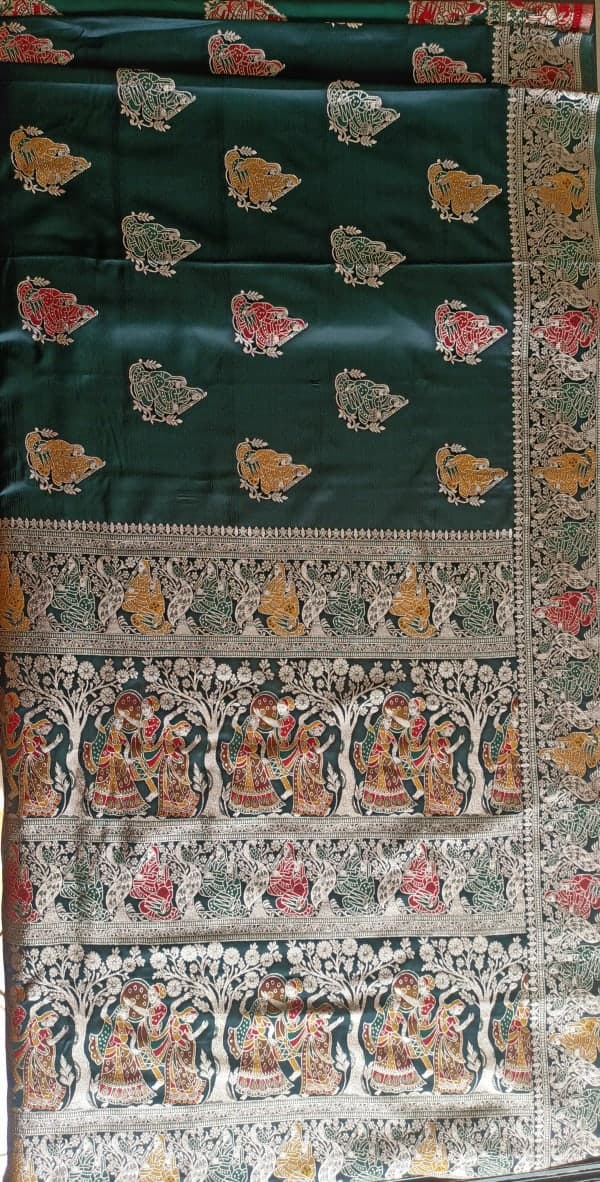
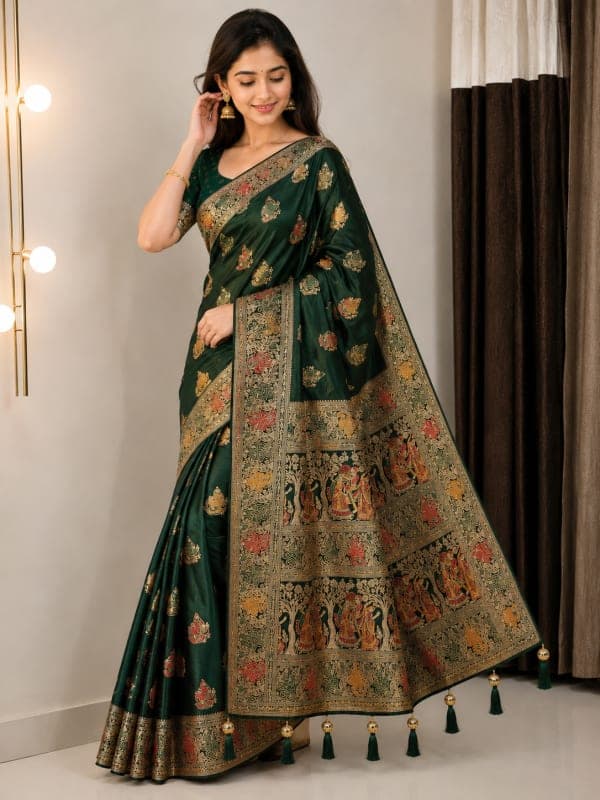
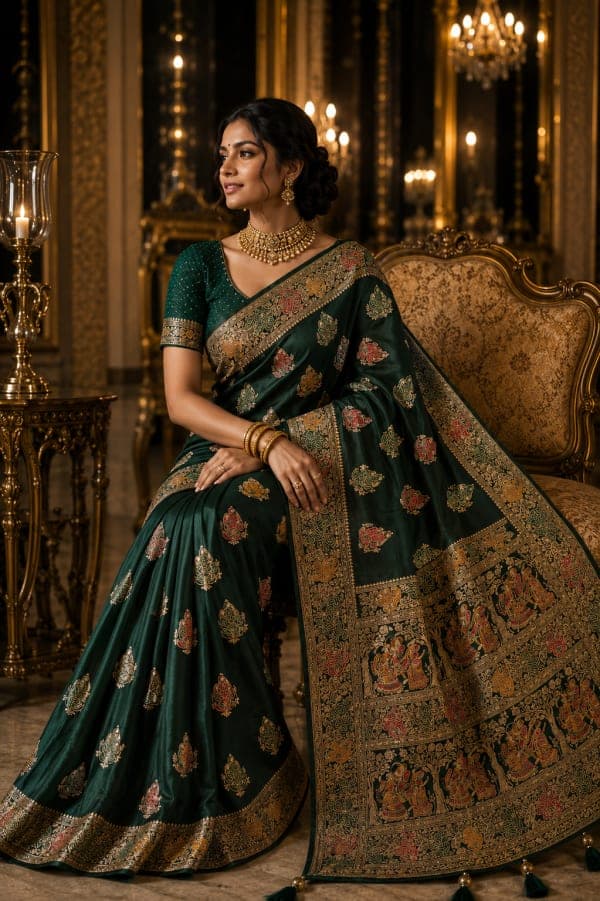
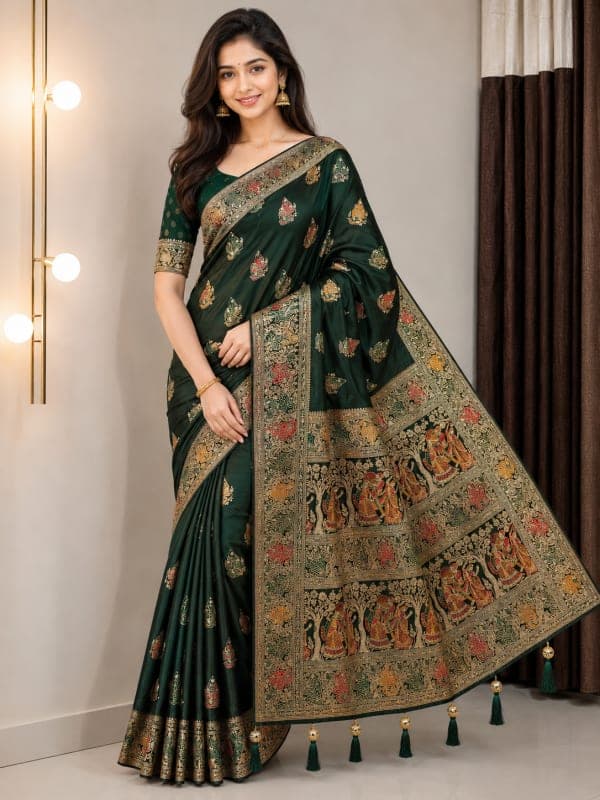
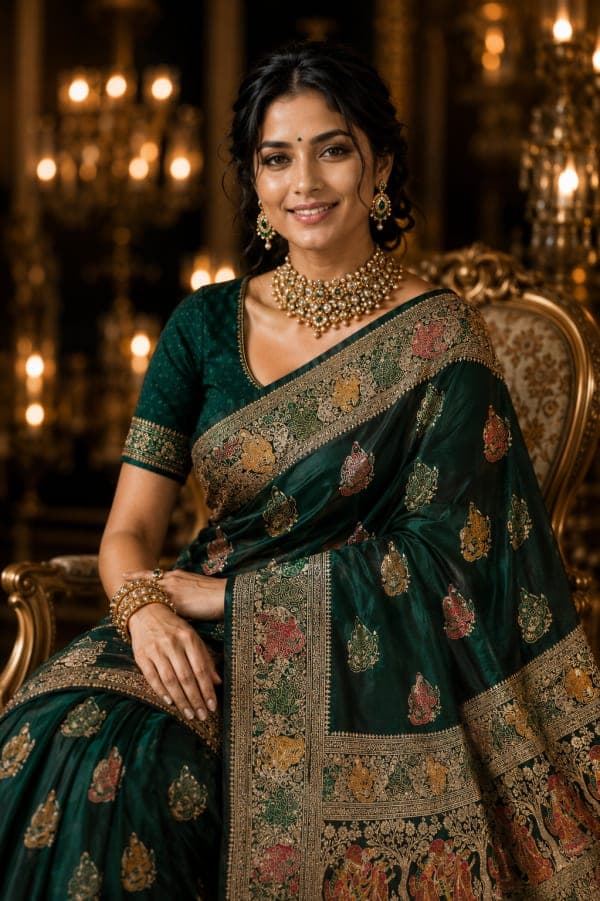
What Zari Actually Is
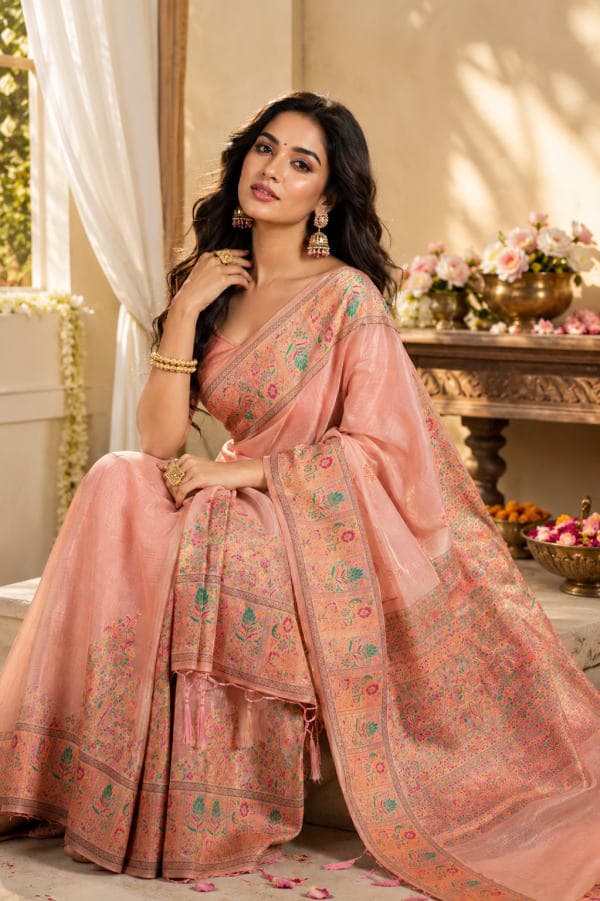
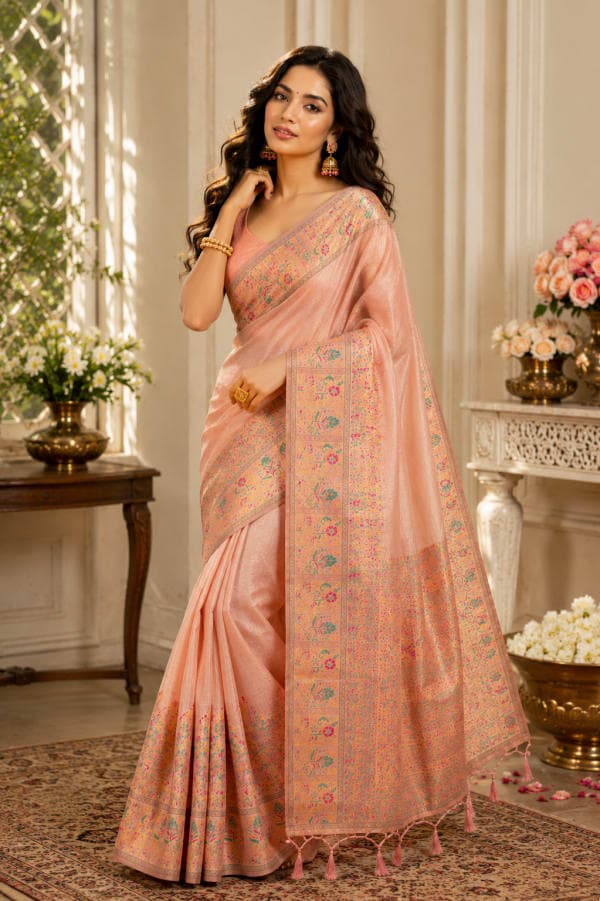
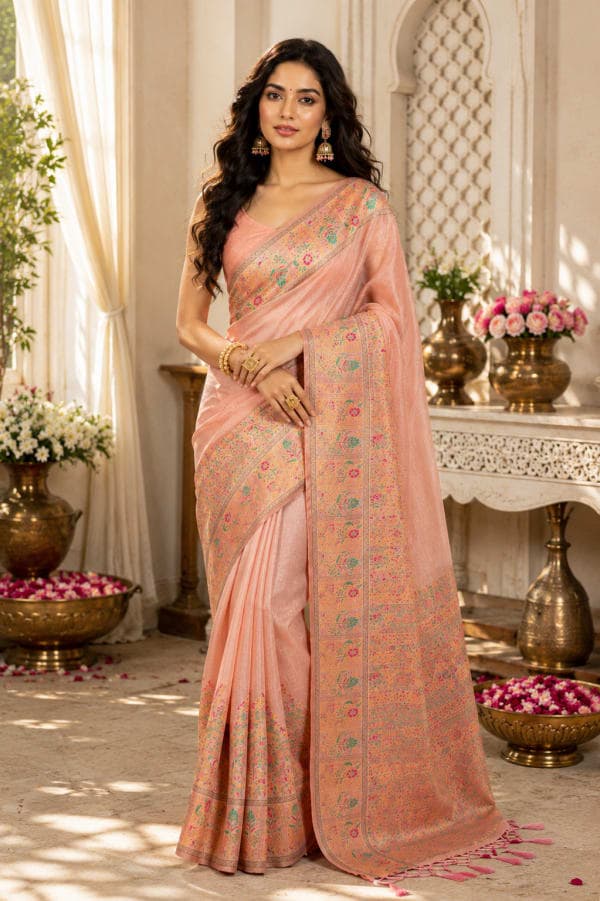
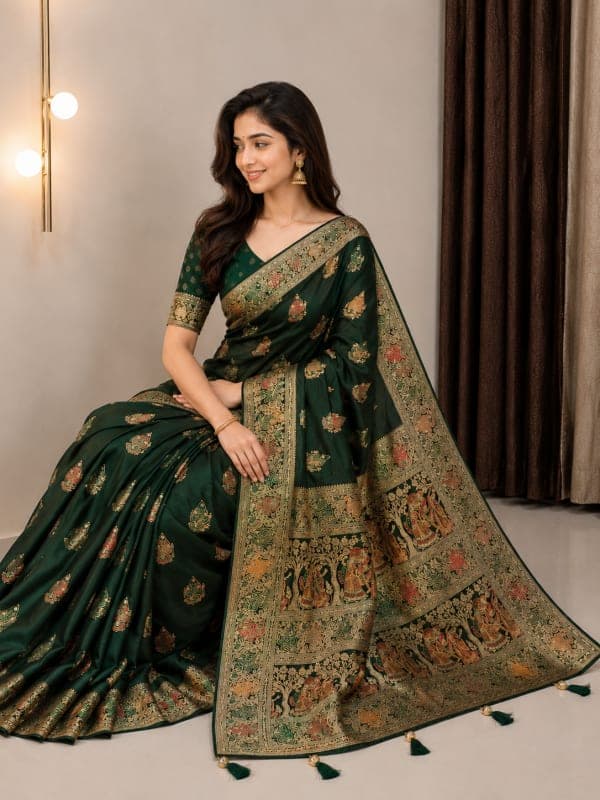
Zari is metallic thread - traditionally fine gold or silver wire, and more commonly today, silk or polyester thread wrapped in a thin metallic coating - used to weave borders, motifs, and pallu designs into a saree.
Touch Test
Genuine zari (real or well-made imitation) feels slightly textured but soft, not sharp or scratchy against skin. Cheap synthetic "zari" often feels stiff, plasticky, or rough.
Tarnish Test
Real metallic-coated zari tarnishes gradually and gracefully over years, developing a slightly muted, antique look. Cheap imitation zari using plastic-based coating tends to flake, peel, or turn dull unevenly within just a few wears.
Weight and Sheen
Authentic zari has a subtle, warm sheen rather than a bright, uniform shine - very "flashy" or mirror-bright metallic thread is often a sign of lower-quality synthetic coating.
The Thread-Pull Check
On a hidden edge or inner seam, gently check if a zari thread frays or unwinds easily - quality zari is wound tightly and resists unraveling; poor-quality zari often frays at the first tug.
Surat's Role in Zari Production
Surat is one of India's largest zari manufacturing hubs, producing everything from budget synthetic-coated thread to high-quality genuine metallic zari - which is exactly why quality varies so much even among "Surat-made" sarees, and why checking the specific saree (not just its city of origin) matters.
Quick Answer: Does "gold zari" mean the thread is made of real gold?
Rarely today - most "gold zari" is silver or synthetic thread with a gold-toned coating (electroplated or dyed), not solid gold. True pure-gold zari exists but is reserved for the most expensive heritage and museum-grade pieces.
Every zari-work saree in our Sarees collection lists the zari type used, so you know exactly what you're getting.