


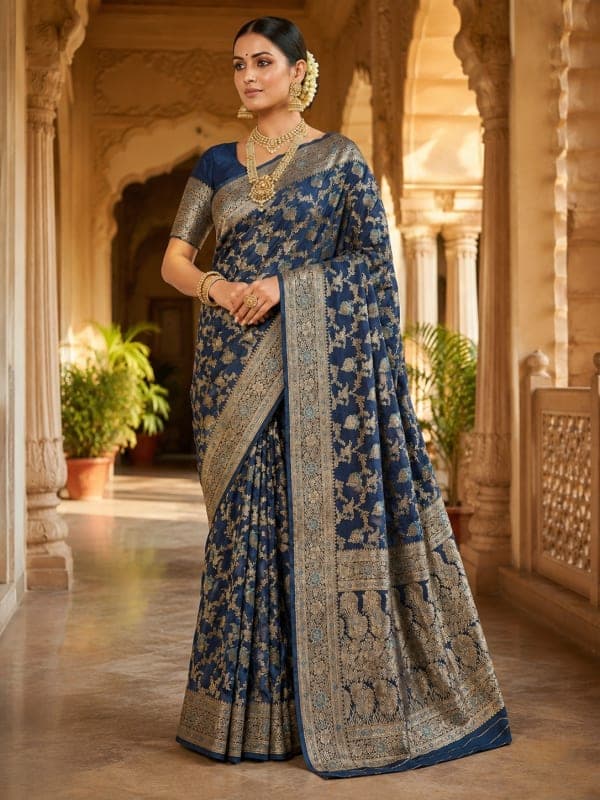
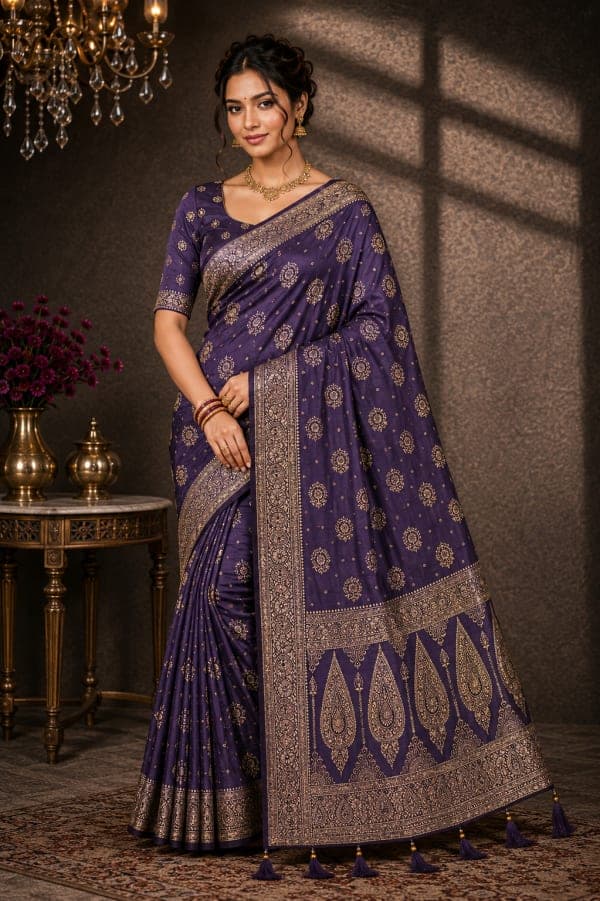
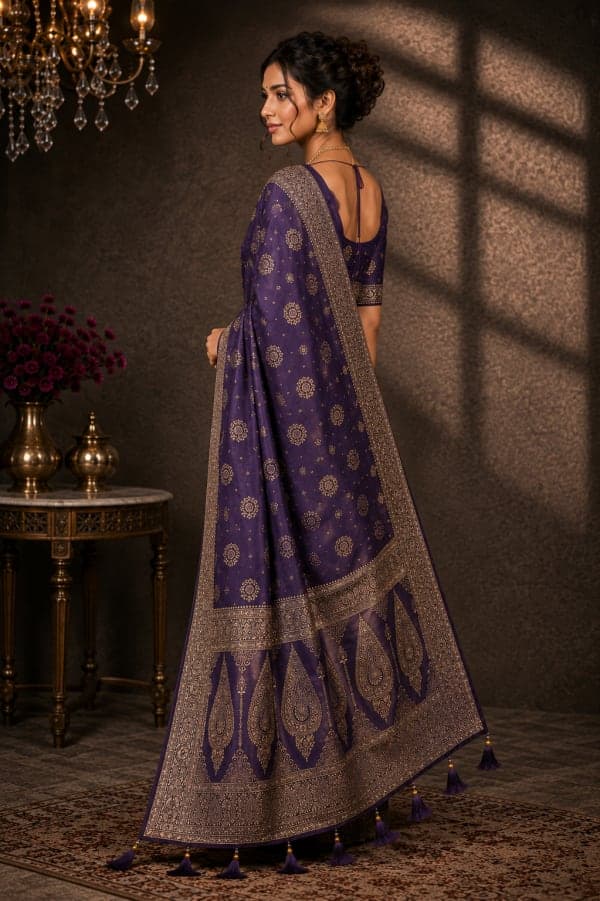
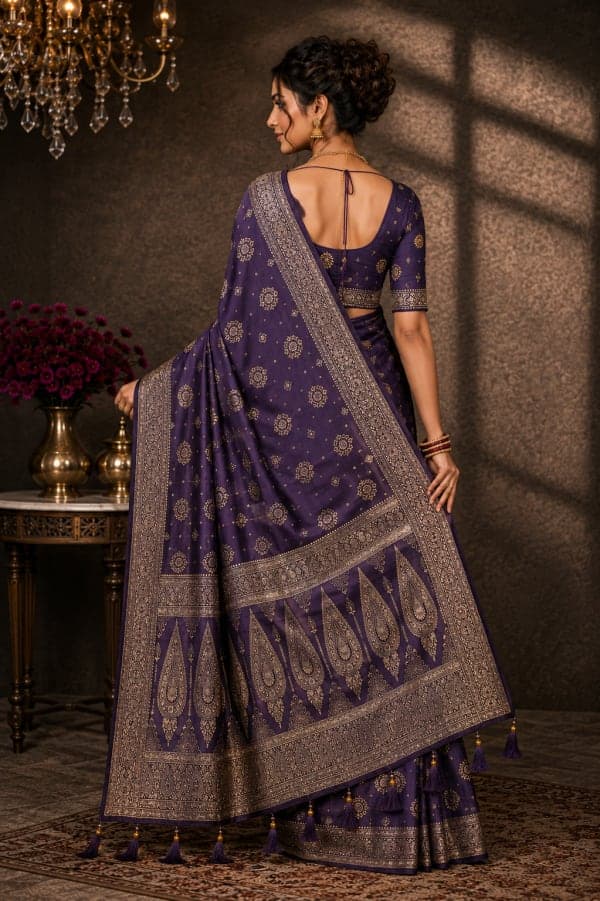
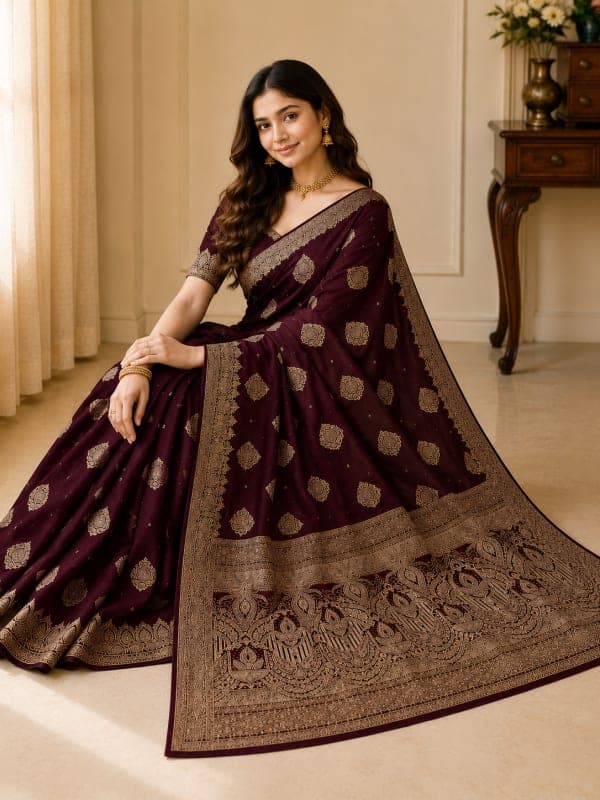
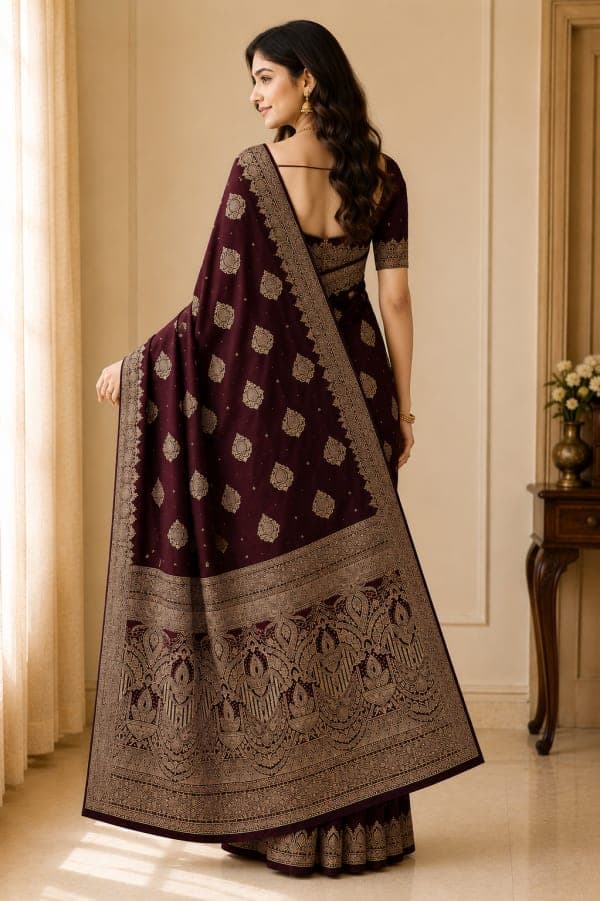
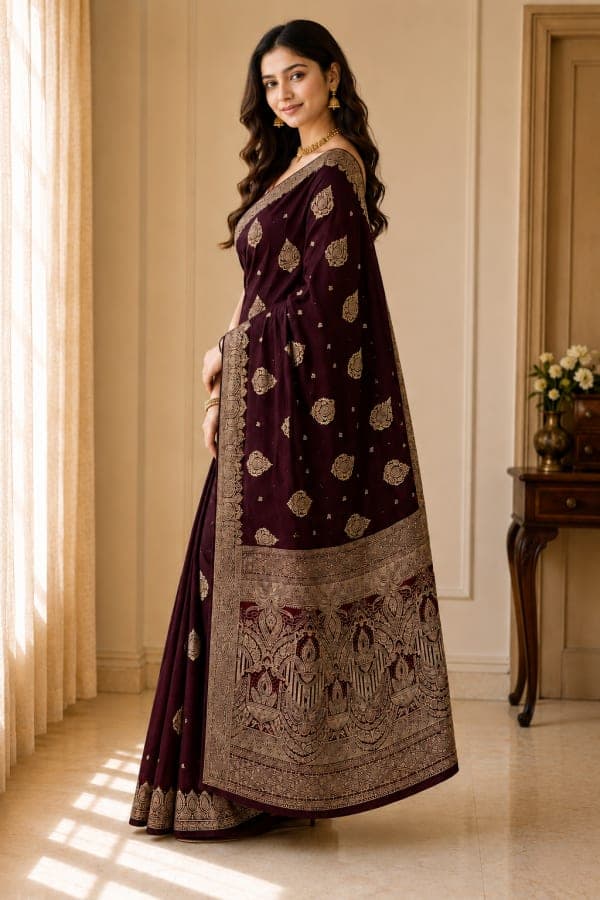
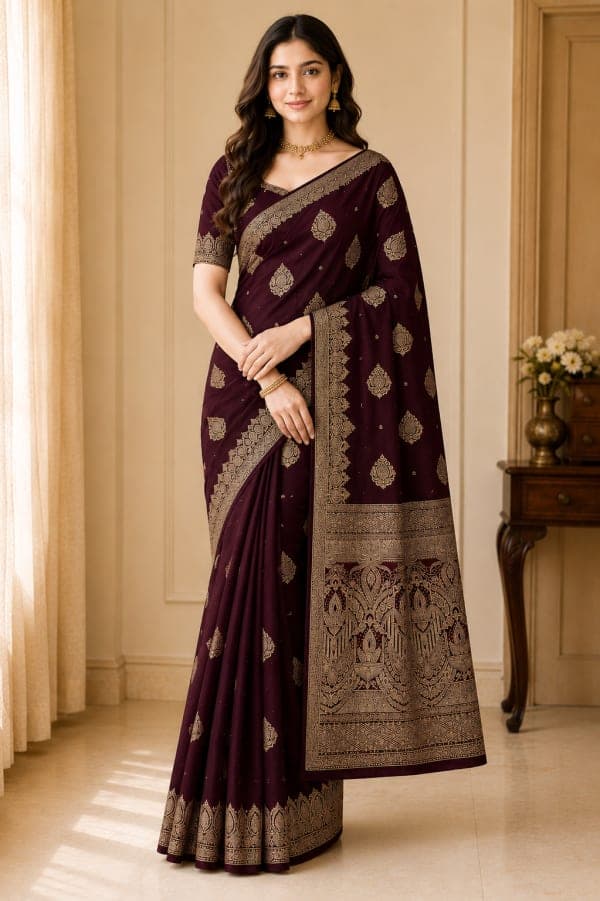
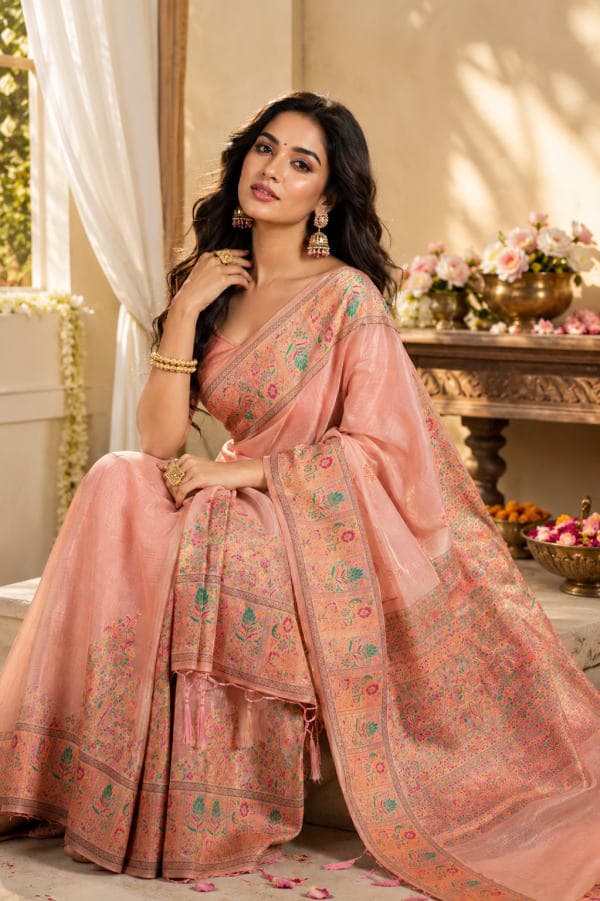
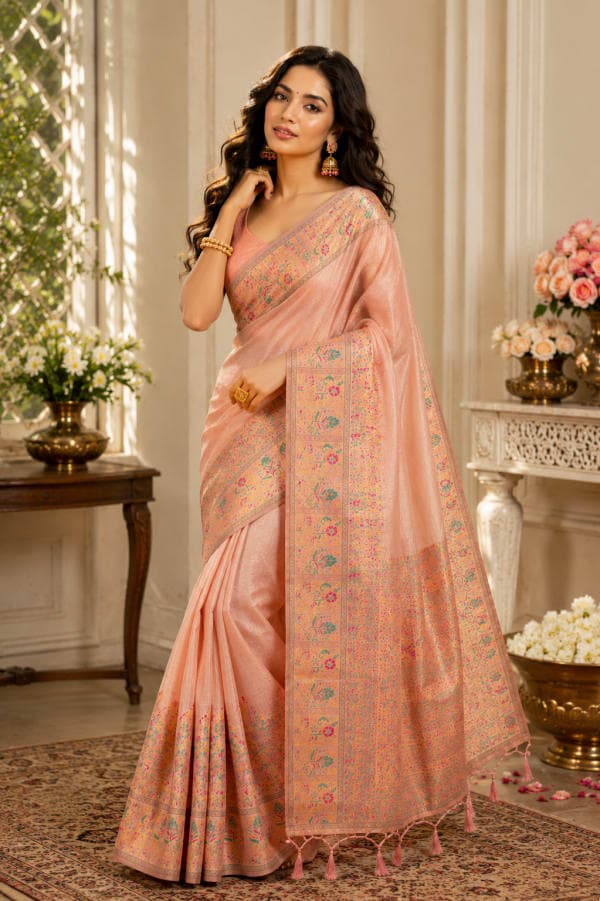
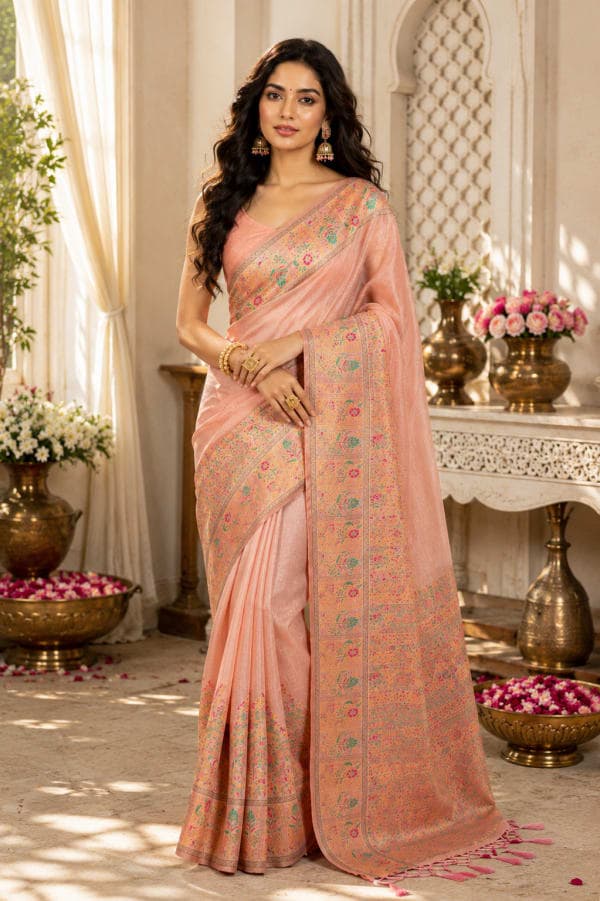
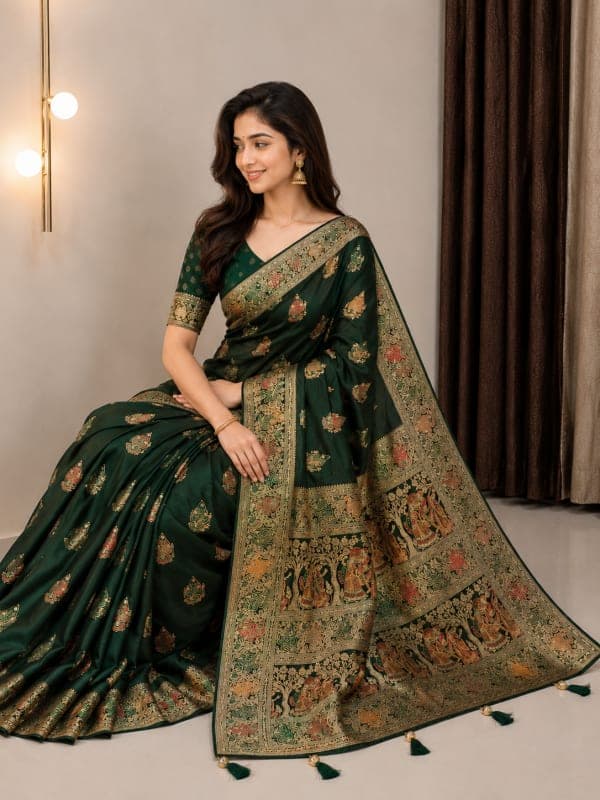
What Makes a Fabric Monsoon-Friendly
Two things matter most during monsoon: how quickly a fabric dries if it gets wet, and how well it resists clinging or losing shape in humidity.
Good Monsoon Choices
- Synthetic-blend georgette: dries quickly and doesn't hold water weight the way natural silk does.
- Cotton-silk blends: breathable in humidity and reasonably quick-drying compared to pure silk.
- Polyester or synthetic sarees: practical for monsoon specifically because of water resistance, even though they're less preferred for other seasons.
What to Avoid During Heavy Monsoon
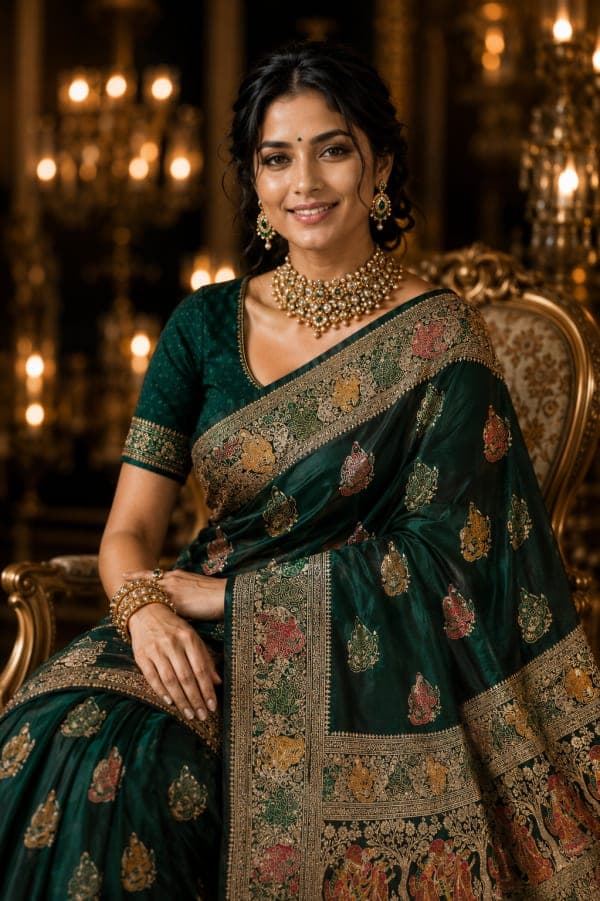
- Pure silk with real zari: water spotting can permanently mark silk, and zari can tarnish faster with repeated moisture exposure.
- Very light chiffon: can cling uncomfortably and show water spots easily.
- Sarees with extensive hand-embroidery: embroidery threads can be damaged by prolonged dampness if not dried promptly.
If Your Saree Gets Caught in Rain
Blot (don't rub) excess water immediately, and hang to air-dry away from direct sun as soon as possible rather than folding it away wet, which encourages mildew and color bleeding, especially in silk.
Footwear and Hemline Consideration
Consider a slightly shorter petticoat/hemline during monsoon travel days to keep the saree edge from dragging through wet streets, and choose a fabric that won't show water stains as visibly as pale pure silk does.
Quick Answer: Is cotton or synthetic better for monsoon?
Synthetic dries faster and resists water damage better, while cotton is more breathable in humidity but slower to dry - many people keep one of each for different monsoon situations (commute vs. indoor event).
Our Sarees collection includes lighter, quick-drying fabric options suited to monsoon wear.